
About Yakov Frenkel
Lived 1894 – 1952 (aged 57). Yakov Frenkel was a Russian theoretical physicist, engineer, nuclear physicist and physicist.
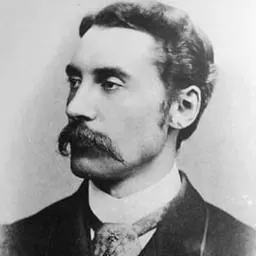
Yakov Il'ich Frenkel (; 10 February 1894 – 23 January 1952) was a Soviet physicist renowned for his works in the field of condensed-matter physics. He is also known as Jacob Frenkel, frequently using the name J. Frenkel in publications in English.
Early years He was born to a Jewish family in Rostov on Don, in the Don Host Oblast of the Russian Empire on 10 February 1894. His father was involved in revolutionary activities and spent some time in internal exile to Siberia; after the danger of pogroms started looming in 1905, the family spent some time in Switzerland, where Yakov Frenkel began his education. In 1912, while studying in the Karl May Gymnasium in St. Petersburg, he completed his first physics work on the Earth's magnetic field and atmospheric electricity. This work attracted Abram Ioffe's attention and later led to collaboration with him. He considered moving to the USA (which he visited in the summer of 1913, supported by money hard-earned by tutoring) but was nevertheless admitted to St. Petersburg University in the winter semester of 1913, at which point any emigration plans ended.
Early scientific career In the last years of the Great War and until 1921 Frenkel was involved (along with Igor Tamm) in the foundation of the University in Crimea (his family moved to Crimea due to the deteriorating health of his mother).
He married Sara Isakovna Gordin in 1920. They had two sons, Sergei and Viktor (Victor). He served as a visiting professor at the University of Minnesota in the United States for a short period of time around 1930. Tatyana Kontorova was then a PhD candidate working with Frenkel.
In 1930 to 1931, Frenkel showed that neutral excitation of a crystal by light is possible, with an electron remaining bound to a hole created at a lattice site identified as a quasiparticle, the exciton. Mention should be made of Frenkel's works on the theory of metals, nuclear physics (the liquid drop model of the nucleus, in 1936), and semiconductors.
In 1930, his son Viktor Frenkel was born. Viktor became a prominent historian of science, writing a number of biographies of prominent physicists including an enlarged version of Yakov Ilich Frenkel, published in 1996.
In 1934, Frenkel outlined the formalism for the multi-configuration self-consistent field method, later rediscovered and developed by Douglas Hartree.
He contributed to semiconductor and insulator physics by proposing a theory, which is now commonly known as the Poole–Frenkel effect, in 1938. "Poole" refers to H. H. Poole (Horace Hewitt Poole, 1886–1962), Ireland. Poole reported experimental results on the conduction in insulators and found an empirical relationship between conductivity and electrical field. Frenkel later developed a microscopic model, similar to the Schottky effect, to explain Poole's results more accurately. In this paper published in USA, Frenkel only very briefly mentioned an empirical relationship as Poole's law. Frenkel cited Poole's paper when he wrote a longer article in a Soviet journal.
During the 1930s, Frenkel and Ioffe opposed dangerous tendencies in Soviet physics, tying science to the materialist ideology, with remarkable courage. Soviet physics, as a result of these actions, never descended to the depths biology did. Still, he subsequently had to forgo publishing several papers, fearing that might have unfortunate consequences.
Literature Victor Frenkel|Victor Yakovlevich Frenkel: Yakov Illich Frenkel. His work, life and letters. (original: (ru) Яков Ильич Френкель, translated by Alexander S. Silbergleit), Birkhäuser, Basel / Boston / Berlin 2001, (English).
Online
Don’t just read it —
keep it.
Full-length biographies made to live with: read them, listen on the way to work, watch them tonight.
- E-book
- Audio
- Video
Instant download · yours to keep · every purchase keeps this site free
Important facts
People in Yakov Frenkel's life
Named in this biography and alive at the same time



Related people
Same field, nearest in time

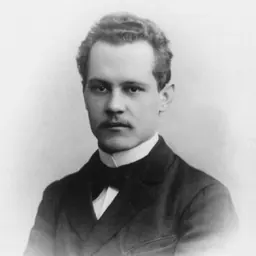
Contemporaries
People whose lives overlapped Yakov Frenkel's
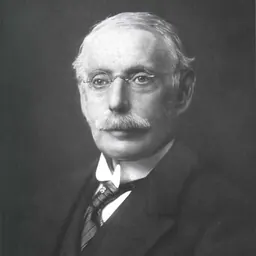

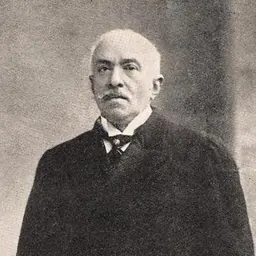

Frequently asked questions
Who was Yakov Frenkel?
Russian physicist (1894–1952)
When was Yakov Frenkel born?
Yakov Frenkel was born on 29 January 1894 in Rostov-on-Don.
When did Yakov Frenkel die?
Yakov Frenkel died on 23 January 1952 in Saint Petersburg.
What was Yakov Frenkel's occupation?
Yakov Frenkel was a theoretical physicist, engineer, nuclear physicist and physicist.
What nationality was Yakov Frenkel?
Yakov Frenkel was Russian.
Sources & further reading
Cite this page
APA: Biography.guide. (2026). Yakov Frenkel. https://biography.guide/yakov-frenkel/
MLA: "Yakov Frenkel." Biography.guide, https://biography.guide/yakov-frenkel/.
Chicago: "Yakov Frenkel." Biography.guide. https://biography.guide/yakov-frenkel/.
Data last updated: 2026-09-26 · Spot an error? Report a correction.
Page generated 2026-09-27 05:15 UTC