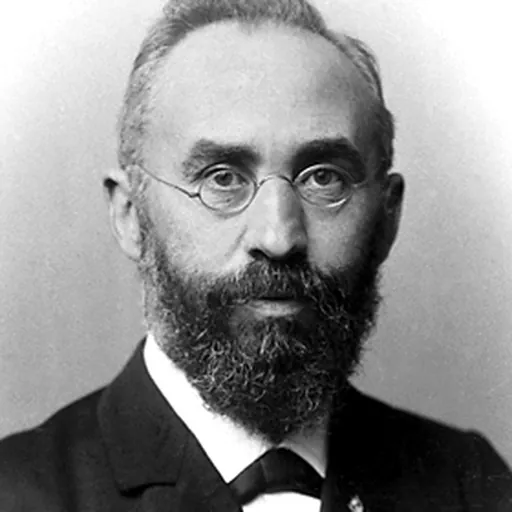
About Hendrik Lorentz
Lived 1853 – 1928 (aged 74). Hendrik Lorentz was a Dutch theoretical physicist, physicist, mathematician, botanist, university teacher and curator, known for Abraham–Lorentz force, Cauchy–Lorentz distribution and Clausius–Mossotti relation.
Early life and education Hendrik Antoon Lorentz was born on 18 July 1853 in Arnhem, Netherlands, the son of Gerrit Frederik Lorentz (1822–1893) and Geertruida van Ginkel (1826–1861). In 1862, after his mother's death, his father married Luberta Hupkes. Despite being raised as a Protestant, he was a freethinker in religious matters and regularly attended Catholic mass at his local French church.
From 1866 to 1869, Lorentz attended the Hogere Burgerschool in Arnhem, a new type of public high school recently established by Johan Thorbecke. His results in school were exemplary; not only did he excel in the physical sciences and mathematics, but also in English, French, and German. In 1870, he passed the exams in classical languages, which were then required for admission to university.
In 1870, Lorentz entered Leiden University, where he was strongly influenced by the teaching of astronomy professor Frederik Kaiser; it was his influence that led Lorentz to become a physicist. The following year, he obtained a B.Sc. in Mathematics and Physics. In 1872, he returned to Arnhem to become a night school teacher, while also continuing his studies at Leiden. In 1875, he received his Ph.D. under Pieter Rijke with a thesis on the reflection and refraction of light, in which he refined the electromagnetic theory of James Clerk Maxwell.
Career In 1878, Lorentz was appointed to the newly established Chair of Theoretical Physics at Leiden University; the position had initially been offered to Johannes van der Waals, but he had just accepted a professorship at the University of Amsterdam. He discovered that the transition from one to another reference frame could be simplified by using a new time variable that he called local time and which depended on universal time and the location under consideration. Although he did not give a detailed interpretation of the physical significance of local time, with it, he could explain the aberration of light and the result of the Fizeau experiment. In 1900 and 1904, Henri Poincaré called local time Lorentz's "most ingenious idea" and illustrated it by showing that clocks in moving frames are synchronized by exchanging light signals that are assumed to travel at the same speed against and with the motion of the frame (see Einstein synchronisation and Relativity of simultaneity). In 1892, with the attempt to explain the Michelson–Morley experiment, he also proposed that moving bodies contract in the direction of motion.
In 1899 and again in 1904, Lorentz added time dilation to his transformations and published what Poincaré in 1905 named Lorentz transformations.
It was apparently unknown to Lorentz that Joseph Larmor had used identical transformations to describe orbiting electrons in 1897. Larmor's and Lorentz's equations look somewhat dissimilar, but they are algebraically equivalent to those presented by Poincaré and Einstein in 1905. known today as the special theory of relativity. Einstein's unique perspective on the topic was not widely understood initially, causing some physicists to confusingly refer to the theory as the Lorentz–Einstein theory.
In 1910, Lorentz's 1906 lectures at Columbia University, were published under the title The Theory of Electrons. Lorentz covered his entire theory of the electron, including his work and that of Einstein on relativity. In this work he spoke affirmatively of Einstein's theory:
Lorentz also gave credit to Poincaré's contributions to relativity.
General relativity Lorentz was one of few scientists who supported Einstein's search for general relativity from the beginning – he wrote several research papers and discussed with Einstein personally and by letter. For instance, he attempted to combine Einstein's formalism with Hamilton's principle (1915), and to reformulate it in a coordinate-free way (1916). Lorentz wrote in 1919:
Quantum mechanics Lorentz gave a series of lectures in the fall of 1926 at Cornell University on the new quantum mechanics; in these he presented Erwin Schrödinger's wave mechanics.
Civil work After World War I, Lorentz was one of the driving forces behind the founding of the Wetenschappelijke Commissie van Advies en Onderzoek in het Belang van Volkswelvaart en Weerbaarheid, a committee which was to harness the scientific potential united in the Royal Netherlands Academy of Arts and Sciences (KNAW) for solving civil problems such as food shortage which had resulted from the war. Lorentz was appointed chair of the committee. However, despite the best efforts of many of the participants the committee would harvest little success. The only exception being that it ultimately resulted in the founding of TNO, the Netherlands Organisation for Applied Scientific Research. Lorentz proposed to start from the basic hydrodynamic equations of motion and solve the problem numerically. This was feasible for a "human computer", because of the quasi-one-dimensional nature of the water flow in the . The Afsluitdijk was completed in 1932, and the predictions of Lorentz and his committee turned out to be remarkably accurate. Amongst others, the funeral was attended by Albert Einstein and Marie Curie.
Recognition Memberships Year Organization Type 1881 Royal Netherlands Academy of Arts and Sciences Member 1905 Royal Society Foreign Member 1906 American Philosophical Society International Member 1906 National Academy of Sciences International Member 1912 American Academy of Arts and Sciences International Honorary Member
Awards Year Organization Award Citation 1902 Royal Swedish Academy of Sciences Nobel Prize in Physics "In recognition of the extraordinary service they rendered by their researches into the influence of magnetism upon radiation phenomena." 1917 Franklin Institute Franklin Medal "For researches which have contributed to our knowledge of the nature of light and the ultimate constitution of matter." 1918 Royal Society Copley Medal "On the ground of his distinguished researches in mathematical physics."
Orders Year Head of state Order 1908 Wilhelm II
Tributes According to his biography published by the Nobel Foundation, "It may well be said that Lorentz was regarded by all theoretical physicists as the world's leading spirit, who completed what was left unfinished by his predecessors and prepared the ground for the fruitful reception of the new ideas based on the quantum theory." 1953: For me personally he meant more than all the others I have met on my life's journey.
Poincaré (1902) said of Lorentz's theory of electrodynamics:
Paul Langevin (1911) said of Lorentz:
It will be Lorentz's main claim to fame that he demonstrated that the fundamental equations of electromagnetism also allow of a group of transformations that enables them to resume the same form when a transition is made from one reference system to another. This group differs fundamentally from the above group as regards transformations of space and time.''''
Lorentz was chairman of the first Solvay Conference held in Brussels in the autumn of 1911. Shortly after the conference, Poincaré wrote an essay on quantum physics which gives an indication of Lorentz's status at the time:
Don’t just read it —
keep it.
Full-length biographies made to live with: read them, listen on the way to work, watch them tonight.
- E-book
- Audio
- Video
Instant download · yours to keep · every purchase keeps this site free
Important facts
more
Lorentz contraction, Lorentz covariance, Lorentz ether theory, Lorentz factor, Lorentz force, Lorentz oscillator model, Lorentz transformation, Lorentzian metric, Rayleigh–Lorentz pendulum, Reciprocity (electromagnetism), Stokes flowPeople in Hendrik Lorentz's life
Named in this biography and alive at the same time
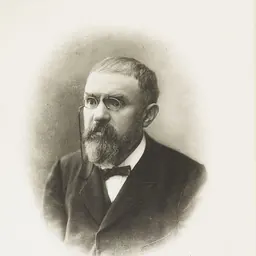
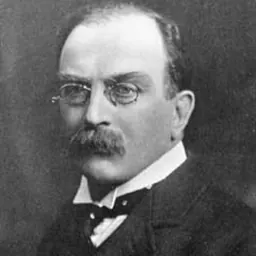




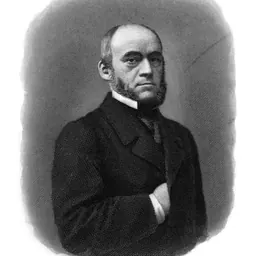
Related people
Same field, nearest in time



Contemporaries
People whose lives overlapped Hendrik Lorentz's


Frequently asked questions
Who was Hendrik Lorentz?
Dutch physicist (1853–1928)
When was Hendrik Lorentz born?
Hendrik Lorentz was born on 18 July 1853 in Arnhem.
When did Hendrik Lorentz die?
Hendrik Lorentz died on 4 February 1928 in Haarlem.
What was Hendrik Lorentz's occupation?
Hendrik Lorentz was a theoretical physicist, physicist, mathematician, botanist, university teacher and curator.
What was Hendrik Lorentz known for?
Hendrik Lorentz was known for Abraham–Lorentz force, Cauchy–Lorentz distribution, Clausius–Mossotti relation, Combining rules, Drude model and EM radiation.
What nationality was Hendrik Lorentz?
Hendrik Lorentz was Dutch.
Sources & further reading
Cite this page
APA: Biography.guide. (2026). Hendrik Lorentz. https://biography.guide/hendrik-lorentz/
MLA: "Hendrik Lorentz." Biography.guide, https://biography.guide/hendrik-lorentz/.
Chicago: "Hendrik Lorentz." Biography.guide. https://biography.guide/hendrik-lorentz/.
Data last updated: 2026-09-23 · Spot an error? Report a correction.
Portrait: Wikimedia Commons · author & licence
Page generated 2026-09-27 05:07 UTC