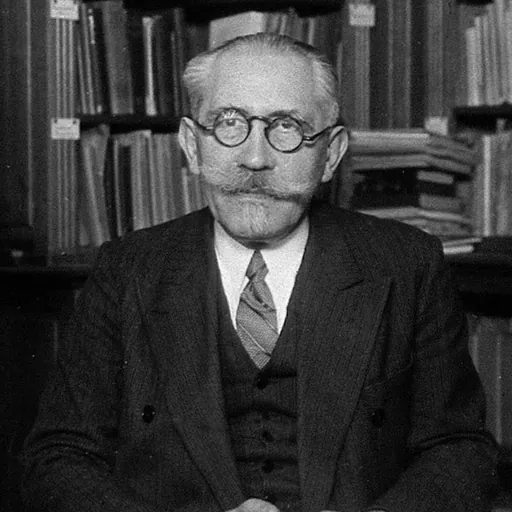
About Paul Langevin
Lived 1872 – 1946 (aged 74). Paul Langevin was a French physicist, chemist, philosopher of science, pedagogue and university teacher, known for Heisenberg–Langevin equations, Langevin dynamics and Langevin equation.
Biography
Paul Langevin was born on 23 January 1872 in Paris. Langevin graduated from ESPCI Paris in 1892 with a degree in Physics. He then studied at the École normale supérieure, where he passed the agrégation in 1897. The following year, he went to the University of Cambridge, where he studied under J. J. Thomson in the Cavendish Laboratory. In 1901, Langevin became a preparator in the Physics Teaching Laboratory at the University of Paris, where he received his Ph.D. the following year, supervised by Pierre Curie. His most famous work was in the use of ultrasound using Pierre Curie's piezoelectric effect. During World War I, he began working on the use of these sounds to detect submarines through echo location,
Personal life In 1898, he married Emma Jeanne Desfosses, and together they had four children, Jean, André, Madeleine and Hélène.
In 1910, he reportedly had an affair with the then-widowed Marie Curie; some decades later, their respective grandchildren, grandson and granddaughter Hélène Langevin-Joliot married one another. He was also noted for being an outspoken opponent of Nazism, and was removed from his post by the Vichy government following the occupation of the country by Nazi Germany. He was later restored to his position in 1944. He died in Paris in 1946, two years after living to see the Liberation of Paris. He is buried near several other prominent French scientists in the Panthéon in Paris.
In 1933, he had a son with physicist Eliane Montel (1898–1993), Paul-Gilbert Langevin, who became a renowned musicologist.
His daughter, Hélène Solomon-Langevin, was arrested for Resistance activity and survived several concentration camps. She was on the same convoy of female political prisoners as Marie-Claude Vaillant-Couturier and Charlotte Delbo.
Submarine detection In 1916 and 1917, Paul Langevin and Chilowsky filed two US patents disclosing the first ultrasonic submarine detector using an electrostatic method (singing condenser) for one patent and thin quartz crystals for the other. The amount of time taken by the signal to travel to the enemy submarine and echo back to the ship on which the device was mounted was used to calculate the distance under water.
In 1916, Lord Ernest Rutherford, working in the UK with his former McGill University PhD student Robert William Boyle, revealed that they were developing a quartz piezoelectric detector for submarine detection. Langevin's successful application of the use of piezoelectricity in the generation and detection of ultrasound waves was followed by further development.
Recognition Awards Year Organization Award Citation 1915 Royal Society Hughes Medal "For his important contributions to, and pre-eminent position in, electrical science." 1940 Royal Society Copley Medal "For his pioneer work on the electron theory of magnetism, his fundamental contributions to discharge of electricity in gases, and his important work in many branches of theoretical physics."
Memberships Year Organization Type 1928 Royal Society Foreign Member 1934 French Academy of Sciences Member
Don’t just read it —
keep it.
Full-length biographies made to live with: read them, listen on the way to work, watch them tonight.
- E-book
- Audio
- Video
Instant download · yours to keep · every purchase keeps this site free
Important facts
People in Paul Langevin's life
Named in this biography and alive at the same time


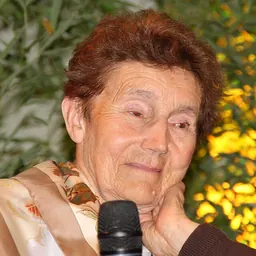
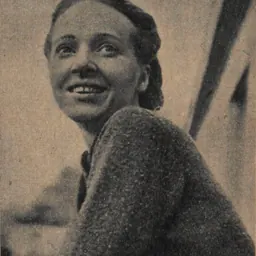



Related people
Same field, nearest in time


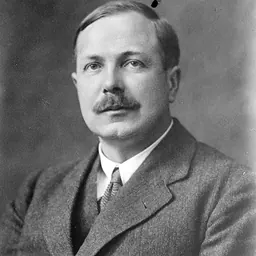
Contemporaries
People whose lives overlapped Paul Langevin's

Frequently asked questions
Who was Paul Langevin?
French physicist, philosopher of science and pedagogue (1872-1946)
When was Paul Langevin born?
Paul Langevin was born on 23 January 1872 in Paris.
When did Paul Langevin die?
Paul Langevin died on 19 December 1946 in Paris.
What was Paul Langevin's occupation?
Paul Langevin was a physicist, chemist, philosopher of science, pedagogue and university teacher.
What was Paul Langevin known for?
Paul Langevin was known for Heisenberg–Langevin equations, Langevin dynamics, Langevin equation, Langevin function and Twin paradox.
What nationality was Paul Langevin?
Paul Langevin was French.
Sources & further reading
Cite this page
APA: Biography.guide. (2026). Paul Langevin. https://biography.guide/paul-langevin-physicist/
MLA: "Paul Langevin." Biography.guide, https://biography.guide/paul-langevin-physicist/.
Chicago: "Paul Langevin." Biography.guide. https://biography.guide/paul-langevin-physicist/.
Data last updated: 2026-09-24 · Spot an error? Report a correction.
Portrait: Wikimedia Commons · author & licence
Page generated 2026-09-27 05:08 UTC