
About George Van Biesbroeck
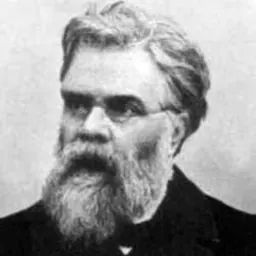
Lived 1880 – 1974 (aged 94). George Van Biesbroeck was an American and Belgian astronomer, known for Astrophotography and Discoverer of minor planets.
George A. Van Biesbroeck (or Georges-Achille Van Biesbroeck, , January 21, 1880 – February 23, 1974) was a Belgian–American astronomer. He worked at observatories in Belgium, Germany and the United States. He specialized in the observation of double stars, asteroids and comets. He is notable for his long career as an observational astronomer.
Life
He was born in Ghent, Belgium on January 21, 1880, to a family of artists. At his father's request he pursued, and in 1902, he received, the 1st degree of Civil Engineering Construction and began work as a civil engineer for the Brussels Department of Roads and Bridges. But his true vocation is not there, it was astronomy, and while performing his official duties as a civil engineer he joined volunteers at the Uccle Observatory. In 1904 he left civil engineering behind and joined the staff at the Royal Observatory of Belgium at Uccle.
He participated in numerous physically grueling astronomical expeditions to remote parts of the world throughout the late 1940s and 1950s. In 1952, at age 72, he traveled to Khartoum in Sudan and set up a 20' telescope to confirm Einstein's Theory of Relativity by noting the change in positions of the stars around the Sun during a total eclipse that year. His measurements were in agreement with Einstein's predictions. His travels to Sudan were the subject of a Time magazine article.
Discoveries
He discovered the periodic comet 53P/Van Biesbroeck, as well as two non-periodic comets: C/1925 W1 (Van Biesbroeck 1) and C/1935 Q1 (Van Biesbroeck 2) .
He also discovered sixteen asteroids between 1922 and 1939 (see adjunct table), One notable star he discovered was the very small red dwarf secondary star, VB 10, also known as Gliese (GJ) 752B, of the primary star, Wolf 1055 (Gliese (GJ) 752A). This star was unique in that its absolute magnitude of 19 was the lowest of any star then known and still thought to be the lowest possible for any star. VB 10 was given the designation of Van Biesbroeck's Star to honor him for this work and his work with double stars.
Later life and death
In 1963 he came to the Lunar and Planetary Laboratory of the University of Arizona in Tucson Arizona to work under Gerard Kuiper. There he used his practical skills as a land surveyor to site the new Catalina Station now under the direction of Steward Observatory and that now houses the 1.6m Kuiper Telescope.
Don’t just read it —
keep it.
Full-length biographies made to live with: read them, listen on the way to work, watch them tonight.
- E-book
- Audio
- Video
Instant download · yours to keep · every purchase keeps this site free
Important facts
People in George Van Biesbroeck's life
Named in this biography and alive at the same time

Related people
Same field, nearest in time

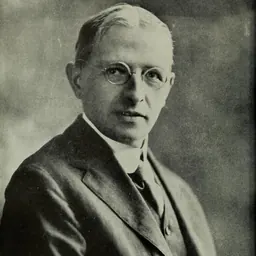


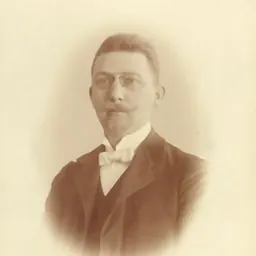
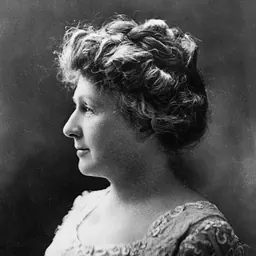
Contemporaries
People whose lives overlapped George Van Biesbroeck's

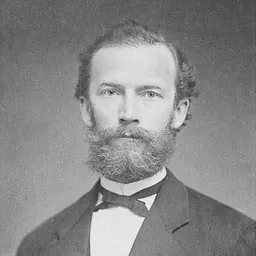



Frequently asked questions
Who was George Van Biesbroeck?
astronomer (1880-1974)
When was George Van Biesbroeck born?
George Van Biesbroeck was born on 21 January 1880 in Ghent.
When did George Van Biesbroeck die?
George Van Biesbroeck died on 23 February 1974 in Tucson.
What was George Van Biesbroeck's occupation?
George Van Biesbroeck was an astronomer.
What was George Van Biesbroeck known for?
George Van Biesbroeck was known for Astrophotography and Discoverer of minor planets.
What nationality was George Van Biesbroeck?
George Van Biesbroeck was American and Belgian.
Sources & further reading
· Wikipedia: George Van Biesbroeck
· DBpedia: George Van Biesbroeck
Cite this page
APA: Biography.guide. (2026). George Van Biesbroeck. https://biography.guide/george-van-biesbroeck/
MLA: "George Van Biesbroeck." Biography.guide, https://biography.guide/george-van-biesbroeck/.
Chicago: "George Van Biesbroeck." Biography.guide. https://biography.guide/george-van-biesbroeck/.
Data last updated: 2026-09-20 · Spot an error? Report a correction.
Page generated 2026-09-27 05:21 UTC