
About Arthur Eddington
Lived 1882 – 1944 (aged 61). Arthur Eddington was a British astronomer, astrophysicist, philosopher, physicist and mathematician, known for Arrow of time, Classical unified field theories and Eddington experiment.
Sir Arthur Stanley Eddington (28 December 1882 – 22 November 1944) was an English astrophysicist and mathematician. The Eddington limit, the natural limit to the luminosity of stars, or the radiation generated by accretion onto a compact object, is named in his honour.
Around 1920, he foreshadowed the discovery and mechanism of nuclear fusion processes in stars in his paper "The Internal Constitution of the Stars". At that time, the source of stellar energy was a complete mystery; Eddington was the first to correctly speculate that the source was fusion of hydrogen into helium.
Eddington wrote a number of articles that announced and explained Einstein's theory of general relativity to the English-speaking world. World War I had severed many lines of scientific communication, and new developments in German science were not well known in England. He also conducted an expedition to observe the solar eclipse of 29 May 1919 on the Island of Príncipe that provided one of the earliest confirmations of general relativity. As a populariser of science, he became known for his popular expositions and interpretations of Einstein's theory. As a philosopher of science, Eddington speculated on the implications of quantum mechanics on mind and matter.
Early years Eddington was born 28 December 1882 in Kendal, Westmorland (now Cumbria), England, the son of Quaker parents, Arthur Henry Eddington, headmaster of the Quaker School, and Sarah Ann Shout.
His father taught at a Quaker training college in Lancashire before moving to Kendal to become headmaster of Stramongate School. He died in the typhoid epidemic which swept England in 1884. His mother was left to bring up her two children with relatively little income. The family moved to Weston-super-Mare where at first Stanley (as his mother and sister always called Eddington) was educated at home before spending three years at a preparatory school. The family lived in a house called Varzin at 42 Walliscote Road. A commemorative plaque on the building explains Eddington's contributions to science.
In 1893 Eddington entered Brynmelyn School. He proved to be a most capable scholar, particularly in mathematics and English literature. His performance earned him a scholarship to Owens College, Manchester (now University of Manchester) in 1898. He spent the first year in a general course, but he turned to physics for the next three years. Eddington was greatly influenced by his physics and mathematics teachers, Arthur Schuster and Horace Lamb. At Manchester, Eddington lived at Dalton Hall, where he came under the lasting influence of the Quaker mathematician J. W. Graham. His progress was rapid, winning him several scholarships, and he graduated with a BSc in physics with First Class Honours in 1902.
Based on his performance at Owens College, he was awarded a scholarship to Trinity College, Cambridge, in 1902. His tutor at Cambridge was Robert Alfred Herman, and in 1904 Eddington became the first ever second-year student to be placed as Senior Wrangler. After receiving his M.A. in 1905, he began research on thermionic emission in the Cavendish Laboratory. This did not go well, and meanwhile he spent time teaching mathematics to first year engineering students. This hiatus was brief. Through a recommendation by E. T. Whittaker, his senior colleague at Trinity College, he secured a position at the Royal Observatory, Greenwich, where he was to embark on his career in astronomy, a career whose seeds had been sown even as a young child when he would often "try to count the stars".
Eddington also investigated the interior of stars through theory and developed the first true understanding of stellar processes. He began this in 1916 with investigations of possible physical explanations for Cepheid variable stars. He began by extending Karl Schwarzschild's earlier work on radiation pressure in Emden polytropic models. These models treated a star as a sphere of gas held up against gravity by internal thermal pressure, and one of Eddington's chief additions was to show that radiation pressure was necessary to prevent collapse of the sphere. He developed his model despite knowingly lacking firm foundations for understanding opacity and energy generation in the stellar interior. However, his results allowed for calculation of temperature, density and pressure at all points inside a star (thermodynamic anisotropy), and Eddington argued that his theory was so useful for further astrophysical investigation that it should be retained despite not being based on completely accepted physics. James Jeans contributed the important suggestion that stellar matter would certainly be ionized, but that was the end of any collaboration between the pair, who became famous for their lively debates.
Eddington defended his method by pointing to the utility of his results, particularly his important mass–luminosity relation. This had the unexpected result of showing that virtually all stars, including giants and dwarfs, behaved as ideal gases. In the process of developing his stellar models, he sought to overturn current thinking about the sources of stellar energy. Jeans and others defended the Kelvin–Helmholtz mechanism, which was based on classical mechanics, while Eddington speculated broadly about the qualitative and quantitative consequences of possible proton–electron annihilation and nuclear fusion processes.
Around 1920, he anticipated the discovery and mechanism of nuclear fusion processes in stars, in his paper "The Internal Constitution of the Stars".
Theory of general relativity
During World War I, Eddington was secretary of the Royal Astronomical Society, which meant he was the first to receive a series of letters and papers from Willem de Sitter regarding Einstein's theory of general relativity. Eddington was one of the few English astronomers with the mathematical skills to understand general relativity, and because of his internationalist and pacifist views inspired by his Quaker religious beliefs, he was one of the few who was interested in pursuing a theory developed by a German physicist. He quickly became the chief supporter and expositor of relativity in Britain. He and Astronomer Royal Sir Frank Dyson organized two expeditions to observe a solar eclipse in 1919 to make the first empirical test of Einstein's theory: the measurement of the deflection of starlight by the Sun's gravitational field. In fact, Dyson's argument for the indispensability of Eddington's expertise in this test was what kept Eddington being conscripted. allegedly confirmed Einstein's theory and were hailed at the time as evidence of general relativity over the Newtonian model. The news was reported in newspapers all over the world as a major story. Afterward, Eddington embarked on a campaign to popularize relativity and the expedition as landmarks both in scientific development and international scientific relations.
It has been claimed that Eddington's observations were of poor quality, and he had unjustly discounted simultaneous observations at Sobral, Brazil, which appeared closer to the Newtonian model, but a 1979 re-analysis with modern measuring equipment and contemporary software validated Eddington's results and conclusions. The quality of the 1919 results was indeed poor compared to later observations but was sufficient to persuade contemporary astronomers. The results from the expedition to Brazil were rejected because of a defect in the telescopes used which, again, was completely accepted and well understood by contemporary astronomers.
The minute book of Cambridge ∇2V Club for the meeting where Eddington presented his observations of the curvature of light around the Sun, confirming Einstein's theory of general relativity. They include the line "A general discussion followed. The President remarked that the 83rd meeting was historic".
Throughout this period, Eddington lectured on relativity and was well known for his ability to explain the concepts in lay terms as well as scientific. He collected these lectures into the Mathematical Theory of Relativity in 1923, which Einstein called "the finest presentation of the subject in any language." Ludwik Silberstein, a physicist who thought of himself as an expert on relativity, approached Eddington at the Royal Society's 6 November 1919 meeting where he had defended Einstein's relativity with his Brazil-Príncipe solar eclipse calculations and ruefully charged Eddington as being of three men who actually understood the theory. When Eddington refrained from replying, Silberstein insisted he not be "so shy". Eddington replied, "Oh, no! I was wondering who the third one might be!"
Cosmology Eddington was heavily involved with the development of the first generation of general relativistic cosmological models. He had been investigating the instability of the Einstein universe when he learned of both Georges Lemaître's 1927 paper postulating an expanding or contracting universe and Edwin Hubble's work on the recession of the spiral nebulae. Eddington felt the cosmological constant must have played the crucial role in the universe's evolution from an Einsteinian steady state to its current expanding state, and most of his cosmological investigations focused on the constant's significance and characteristics. In The Mathematical Theory of Relativity, Eddington interprets the cosmological constant to mean that the universe is "self-gauging".
Fundamental theory and the Eddington number
During the 1920s until his death, Eddington increasingly concentrated on what he called "fundamental theory" which was intended to be a unification of quantum theory, relativity, cosmology, and gravitation. At first he progressed along "traditional" lines, but turned increasingly to an almost numerological analysis of the dimensionless ratios of fundamental constants.
His basic approach was to combine several fundamental constants in order to produce a dimensionless number. In many cases these would result in numbers close to 1040, its square, or its square root. He was convinced that the mass of the proton and the charge of the electron were a "natural and complete specification for constructing a Universe" and that their values were not accidental. One of the discoverers of quantum mechanics, Paul Dirac, also pursued this line of investigation, which has become known as the Dirac large numbers hypothesis.
A somewhat damaging statement in his defence of these concepts involved the fine-structure constant, α. At the time it was measured to be very close to 1/136, and Eddington argued that the value should in fact be exactly 1/136 for epistemological reasons. Later measurements placed the value much closer to 1/137, at which point he switched his line of reasoning to argue that one more should be added to the degrees of freedom, so that the value should in fact be exactly 1/137, the Eddington number. Some critics at the time started calling him "Arthur Adding-one". This change of stance detracted from Eddington's credibility in the physics community. As of 2022 the CODATA value is stated to be 1/
Eddington believed he had identified an algebraic basis for fundamental physics, which he termed "E-numbers" (representing a certain group – a Clifford algebra). These in effect incorporated spacetime into a higher-dimensional structure. While his theory has long been neglected by the general physics community, similar algebraic notions underlie many modern attempts at a Grand Unified Theory. Moreover, Eddington's emphasis on the values of the fundamental constants, and specifically upon dimensionless numbers derived from them, is nowadays a central concern of physics. In particular, he predicted a number of hydrogen atoms in the Universe ≈ , or equivalently the half of the total number of particles protons + electrons. He did not complete this line of research before his death in 1944; his book Fundamental Theory was published posthumously in 1948.
Eddington number for cycling Eddington is credited with devising a measure of a cyclist's long-distance riding achievements. The Eddington number in the context of cycling is defined as the maximum number E such that the cyclist has cycled at least E miles on at least E days. For example, an Eddington number of 70 would imply that the cyclist has cycled at least 70 miles in a day on at least 70 occasions. Achieving a high Eddington number is difficult, since moving from, say, 70 to 75 will (probably) require more than five new long-distance rides, since any rides shorter than 75 miles will no longer be included in the reckoning. Eddington's own life-time E-number was 84. The Eddington number for cycling is analogous to the h-index that quantifies both the actual scientific productivity and the apparent scientific impact of a scientist.
Ian Barbour in his book Issues in Science and Religion (1966) cites Eddington's The Nature of the Physical World (1928) for a text that argues the uncertainty principle provides a scientific basis for "the defense of the idea of human freedom" and his Science and the Unseen World (1929) for support of philosophical idealism, "the thesis that reality is basically mental". Charles De Koninck points out that Eddington believed in objective reality existing apart from our minds but was using the phrase "mind-stuff" to highlight the inherent intelligibility of the world: that our minds and the physical world are made of the same "stuff" and that our minds are the inescapable connection to the world. As De Koninck quotes Eddington,
Science Against Einstein and others who advocated determinism, indeterminism—championed by Eddington—says that a physical object has an ontologically undetermined component that is not due to the epistemological limitations of physicists' understanding. The uncertainty principle, then, would not necessarily be due to hidden variables but to an indeterminism in nature itself. Eddington agrees with the tenet of logical positivism that "the meaning of a scientific statement is to be ascertained by reference to the steps which would be taken to verify it".
Popular and philosophical writings Eddington wrote a parody of The Rubaiyat of Omar Khayyam, recounting his 1919 solar eclipse experiment. It contains the following quatrain:
In addition to his textbook The Mathematical Theory of Relativity, during the 1920s and 30s, Eddington gave numerous lectures, interviews, and radio broadcasts on relativity and quantum mechanics. Many of these were gathered into books, including The Nature of the Physical World and New Pathways in Science. His use of literary allusions and humour help make these difficult subjects more accessible. One familiar image drawn by Eddington consists of his "two tables", which represent a paradox concerned with what really exists: one table is the familiar and commonplace one, with properties of extension, colour, and permanence, it is "substantial" in the sense that it is constituted of "substance"; the other is his 'scientific' one, nothing but myriad minute particles in empty space: the table which "modern physics has by delicate test and remorseless logic assured me . . . is the only one which is really there ... wherever 'there' may be." He began the lectures where he discusses this paradox in 1927 with an allusion to these two tables: The second table is mostly emptiness, with numerous electric charges moving around at great speed, and this table is not "substantial" in any way. Eddington portrays the two tables as a recent innovation: physicists "used to borrow the raw material of [their] world from the familiar world", but for the new concepts, such as the electron, quantum or potential, there is no "familiar counterpart to these things" in "the world of commonplace experience".
Eddington's books and lectures were immensely popular with the public because of his clear exposition and for his willingness to discuss the philosophical and religious implications of physics. He argued for a deeply rooted philosophical harmony between scientific investigation and religious mysticism, and also that the positivist nature of relativity and quantum physics provided new room for personal religious experience and free will. Unlike many other spiritual scientists, he rejected the idea that science could provide proof of religious propositions. His popular writings made him a household name in Great Britain between the world wars.
Death and legacy Eddington died of cancer in the Evelyn Nursing Home, Cambridge, on 22 November 1944. He was unmarried. His body was cremated at Cambridge Crematorium (Cambridgeshire) on 27 November; his remains were buried in the grave of his mother in the Ascension Parish Burial Ground in Cambridge.
Cambridge University's North West Cambridge development has been named Eddington in his honour. Eddington is played by David Tennant in the television film Einstein and Eddington, with Einstein played by Andy Serkis. The film was notable for its groundbreaking portrayal of Eddington as a somewhat repressed gay man. It was first broadcast in 2008.
Actor Paul Eddington was a relative, mentioning in his autobiography (in light of his own weakness in mathematics) "what I then felt to be the misfortune" of being related to "one of the foremost physicists in the world". Paul's father Albert and Sir Arthur were second cousins, both great-grandsons of William Eddington (1755–1806).
Honours
Awards and honors Smith's Prize (1907) International Honorary Member of the American Academy of Arts and Sciences (1922) Bruce Medal of Astronomical Society of the Pacific (1924) Henry Draper Medal of the National Academy of Sciences (1924) Gold Medal of the Royal Astronomical Society (1924) International Member of the United States National Academy of Sciences (1925) Foreign membership of the Royal Netherlands Academy of Arts and Sciences (1926) Prix Jules Janssen of the Société astronomique de France (French Astronomical Society) (1928) Royal Medal of the Royal Society (1928) Knighthood (1930) International Member of the American Philosophical Society (1931) Order of Merit (1938) Honorary member of the Norwegian Astronomical Society (1939) Hon. Freeman of Kendal, 1930
Named after him Lunar crater Eddington asteroid 2761 Eddington Royal Astronomical Society's Eddington Medal Eddington mission, now cancelled Eddington Tower, halls of residence at the University of Essex Eddington Astronomical Society, an amateur society based in his hometown of Kendal Eddington, a house (group of students, used for in-school sports matches) of Kirkbie Kendal School Eddington, a new suburb of North West Cambridge, opened in 2017 Eddington Community Interest Company (CIC), 2003. A Community Centre focusing on Climate Information and projects, including a Waste Food Community Café and Larder, in partnership with SLACC (South Lakes Action on Climate Change), converting the former United Reform Church in Kendal
Service Gave the Swarthmore Lecture in 1929 Chairman of the National Peace Council 1941–1943 President of the International Astronomical Union; of the Physical Society, 1930–32; of the Royal Astronomical Society, 1921–23 The song "In Transit", from the 2023 album Signs Of Life by Neil Gaiman and Fourplay String Quartet was written in memory of him.
Publications 1914. Stellar Movements and the Structure of the Universe. London: Macmillan: :File:Eddington - Stellar Movements and the Structure of the Universe, 1914.pdf 1918. Report on the relativity theory of gravitation. London, Fleetway Press, Ltd. 1920. Space, Time and Gravitation: An Outline of the General Relativity Theory. Cambridge University Press. 1922. The Theory of Relativity and its Influence on Scientific Thought 1923. 1952. The Mathematical Theory of Relativity. Cambridge University Press. 1925. The Domain of Physical Science. 2005 reprint: 1926. Stars and Atoms. Oxford: British Association. 1926. The Internal Constitution of Stars. Cambridge University Press. 1928. The Nature of the Physical World. MacMillan. 1935 replica edition: , University of Michigan 1981 edition: (1926–27 Gifford lectures) 1929. Science and the Unseen World. US Macmillan, UK Allen & Unwin. 1980 Reprint Arden Library . 2004 US reprint – Whitefish, Montana : Kessinger Publications: . 2007 UK reprint London, Allen & Unwin (Swarthmore Lecture), with a new foreword by George Ellis. 1930. Why I Believe in God: Science and Religion, as a Scientist Sees It. Arrow/scrollable preview. 1933. The Expanding Universe: Astronomy's 'Great Debate', 1900–1931. Cambridge University Press. 1935. New Pathways in Science. Cambridge University Press. 1936. Relativity Theory of Protons and Electrons. Cambridge Univ. Press. 1939. Philosophy of Physical Science. Cambridge University Press. (1938 Tarner lectures at Cambridge) 1946. Fundamental Theory. Cambridge University Press.
Don’t just read it —
keep it.
Full-length biographies made to live with: read them, listen on the way to work, watch them tonight.
- E-book
- Audio
- Video
Instant download · yours to keep · every purchase keeps this site free
Important facts
more
Eddington–Dirac number, Eddington–Finkelstein coordinates, Radiation zone, Radiative transferPeople in Arthur Eddington's life
Named in this biography and alive at the same time






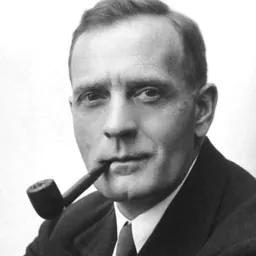
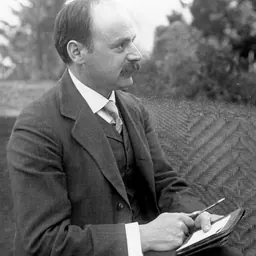
Related people
Same field, nearest in time
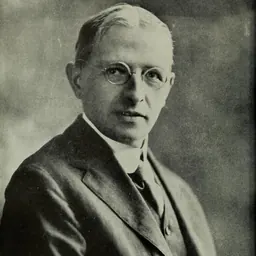
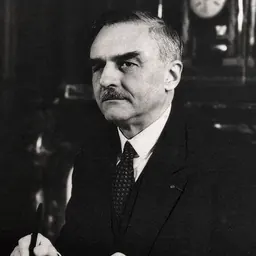

Contemporaries
People whose lives overlapped Arthur Eddington's



Frequently asked questions
Who was Arthur Eddington?
British astrophysicist (1882-1944)
When was Arthur Eddington born?
Arthur Eddington was born on 28 December 1882 in Kendal.
When did Arthur Eddington die?
Arthur Eddington died on 22 November 1944 in Cambridge.
What was Arthur Eddington's occupation?
Arthur Eddington was an astronomer, astrophysicist, philosopher, physicist and mathematician.
What was Arthur Eddington known for?
Arthur Eddington was known for Arrow of time, Classical unified field theories, Eddington experiment, Eddington limit, Eddington number and Eddington valve.
What nationality was Arthur Eddington?
Arthur Eddington was British.
Sources & further reading
Cite this page
APA: Biography.guide. (2026). Arthur Eddington. https://biography.guide/arthur-eddington/
MLA: "Arthur Eddington." Biography.guide, https://biography.guide/arthur-eddington/.
Chicago: "Arthur Eddington." Biography.guide. https://biography.guide/arthur-eddington/.
Data last updated: 2026-09-20 · Spot an error? Report a correction.
Page generated 2026-09-27 05:20 UTC