
Horace Lamb
English mathematician (*1849 – †1934)
About Horace Lamb
Lived 1849 – 1934 (aged 85). Horace Lamb was a British mathematician, physicist and university teacher, known for Lamb surface, Lamb vector and Lamb waves.
Sir Horace Lamb (27 November 1849 – 4 December 1934 ) was a British applied mathematician and author of several influential texts on classical physics, among them Hydrodynamics and Dynamical Theory of Sound (1910). Both of these books remain in print. The word vorticity was not coined by Lamb—it appears in English scientific literature as early as the 1880s (for example, in the Philosophical Magazine), and the underlying mathematical concept was introduced by Hermann von Helmholtz in 1858—though Lamb's influential work helped to popularise the term in the English-speaking world.
Biography
Early life and education Lamb was born in Stockport, Cheshire, the son of John Lamb and his wife Elizabeth, née Rangeley.
In 1867, he gained a classical scholarship at Queens' College, Cambridge. Since Lamb's inclination, however, was to pursue a career in engineering, he chose to decline the offer, and instead worked for a year at the Owens College in nearby Manchester, as a means of developing his mathematical proficiency further. Among his professors were James Clerk Maxwell and George Gabriel Stokes. He was soon elected both a Fellow and a tutor in the college.
University of Cambridge, 1872–75 By 1874, Lamb had become thoroughly invested in his work at Trinity, preparing there an innovative and original series of lectures on the subject of hydrodynamics for third-year students. Richard Glazebrook, a final-year student at the time, wrote of them that they were 'a revelation', and praised Lamb for his lucid presentation of the properties of liquids in rotational motion. applying Maxwell's equations to the problem of oscillatory current flow in spherical conductors, an early examination of what was later to be known as the skin effect. Lamb was elected a Fellow of the Royal Society in 1884.
University of Manchester, 1885–1920
Lamb was appointed to the Chair of Mathematics at Owens College, Manchester, in 1885 and which became the Beyer Chair in 1888, a position Lamb held until retirement in 1920 (Owens College was merged with the Victoria University of Manchester in 1904). His Hydrodynamics appeared in 1895 (6th ed. 1933), and other works included An Elementary Course of Infinitesimal Calculus (1897, 3rd ed. 1919), Propagation of Tremors over the Surface of an Elastic Solid (1904), The Dynamical Theory of Sound (1910, 2nd ed. 1925), Statics (1912, 3rd ed. 1928), Dynamics (1914), Higher Mechanics (1920) and The Evolution of Mathematical Physics (1924).
Later years, 1920–1934
In 1932 Lamb, in an address to the British Association for the Advancement of Science, wittily expressed on the difficulty of explaining and studying turbulence in fluids. He reportedly said, "I am an old man now, and when I die and go to heaven there are two matters on which I hope for enlightenment. One is quantum electrodynamics, and the other is the turbulent motion of fluids. And about the former I am rather optimistic."
Lamb is also known for description of special waves in thin solid layers. These are now known as Lamb waves.
Family Lamb married Elizabeth Foot (1845−1930), his former headmaster's sister-in-law, in 1875 and had seven children, including the classicist Walter Lamb, the painter Henry Lamb and the archaeologist Dorothy Lamb. His son Ernest, a professor of engineering at Queen Mary College in London, was the father of the climatologist Hubert Lamb and the grandfather of the Liberal Democrat politician Norman Lamb.
Lamb died in 1934 and was buried at the Ascension Parish Burial Ground in Cambridge, with his wife.
Honours and awards Lamb was elected a Fellow of the Royal Society in 1884, was twice vice-president, received its Royal Medal in 1902 and, its highest honour, the Copley Medal in 1924. He was president of the London Mathematical Society 1902–1904, president of the Manchester Literary and Philosophical Society, and president of the British Association in 1925. He was knighted in 1931. A room in the Alan Turing Building at the University of Manchester is named in his honour and in 2013 the Sir Horace Lamb Chair was created at Manchester. A building at the University of Adelaide also bears his name.
Publications
Don’t just read it —
keep it.
Full-length biographies made to live with: read them, listen on the way to work, watch them tonight.
- E-book
- Audio
- Video
Instant download · yours to keep · every purchase keeps this site free
Important facts
more
Volume viscosityPeople in Horace Lamb's life
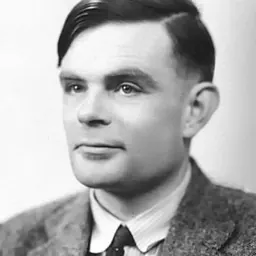
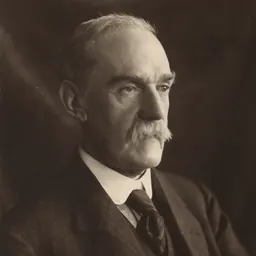
Named in this biography and alive at the same time





Related people
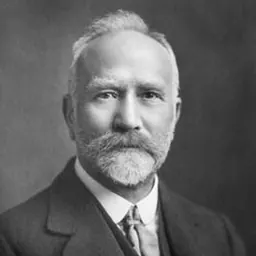
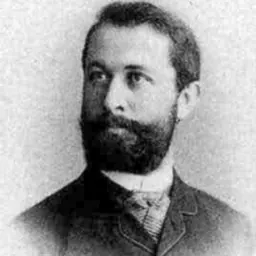
Same field, nearest in time



Contemporaries
People whose lives overlapped Horace Lamb's



Frequently asked questions
Who was Horace Lamb?
English mathematician (*1849 – †1934)
When was Horace Lamb born?
Horace Lamb was born on 27 November 1849 in Stockport.
When did Horace Lamb die?
Horace Lamb died on 4 December 1934 in Cambridge.
What was Horace Lamb's occupation?
Horace Lamb was a mathematician, physicist and university teacher.
What was Horace Lamb known for?
Horace Lamb was known for Lamb surface, Lamb vector, Lamb waves, Lamb–Chaplygin dipole, Lamb–Oseen vortex and Skin effect.
What nationality was Horace Lamb?
Horace Lamb was British.
Sources & further reading
Cite this page
APA: Biography.guide. (2026). Horace Lamb. https://biography.guide/horace-lamb/
MLA: "Horace Lamb." Biography.guide, https://biography.guide/horace-lamb/.
Chicago: "Horace Lamb." Biography.guide. https://biography.guide/horace-lamb/.
Data last updated: 2026-09-20 · Spot an error? Report a correction.
Page generated 2026-09-27 05:17 UTC