
Heike Kamerlingh Onnes
Dutch physicist, Nobel prize winner
About Heike Kamerlingh Onnes
Lived 1853 – 1926 (aged 72). Heike Kamerlingh Onnes was a Dutch physicist, inventor, university teacher and scientist, known for Enthalpy, Equation of state and Kamerlingh Onnes Award.
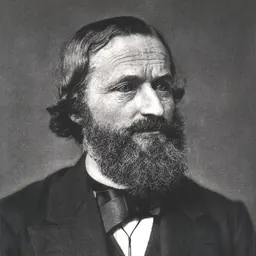
Biography Heike Kamerlingh Onnes was born on 21 September 1853 in Groningen, Netherlands, the son of Harm Kamerlingh Onnes, a brickworks owner, and Anna Gerdina Coers of Arnhem. In 1870, Kamerlingh Onnes attended the University of Groningen, where he earned his B.Sc. the following year. From 1871 to 1873, he studied under Robert Bunsen and Gustav Kirchhoff at the University of Heidelberg. He then returned to Groningen, obtaining an M.Sc. in 1878. The following year, he received his Ph.D. with a thesis on Earth's rotation.
In 1878, Kamerlingh Onnes became an assistant to Johannes Bosscha, the Director of the Delft Polytechnic, for whom he substituted as a lecturer in 1881 and 1882. In 1882, he was appointed Professor of Experimental Physics and Meteorology at Leiden University.
For further research on low-temperature, Kamerlingh Onnes needed large amounts of helium. This he obtained in 1911 from Welsbach's company, which processed thorianite to produce thorium for gas mantles. Helium is produced as a side product. Previously, he obtained helium from processing monazite, and used the processed monazite (which still contained thorium) to trade for the helium. On Earth, helium is usually found in coexistence with radioactive material, since it is a product of radioactive decay.
Discovery of superconductivity In 1911, Kamerlingh Onnes measured the electrical conductivity of pure metals (mercury, and later tin and lead) at very low temperatures. Some scientists, such as Lord Kelvin, believed that electrons flowing through a conductor would come to a complete halt or, in other words, metal resistivity would become infinitely large at absolute zero. Others, including Kamerlingh Onnes, felt that a conductor's electrical resistance would steadily decrease and drop to nil. Augustus Matthiessen said that when the temperature decreases, the metal conductivity usually improves or in other words, the electrical resistivity usually decreases with a decrease of temperature.
On 8 April 1911, Kamerlingh Onnes found that at 4.2 K the resistance in a solid mercury wire immersed in liquid helium suddenly vanished. He immediately realized the significance of the discovery (as became clear when his notebook was deciphered a century later). He reported that "Mercury has passed into a new state, which on account of its extraordinary electrical properties may be called the superconductive state." He published more articles about the phenomenon, initially referring to it as "supraconductivity," and later adopting the modern-day term "superconductivity." On the same day, he noted that "Just before the lowest temperature [about 1.8 K] was reached, the boiling suddenly stopped and was replaced by evaporation in which liquid visibly shrank" which was the first observation of superfluidity of the surrounding helium bath.
Family In 1887, Kamerlingh Onnes married Maria Adriana Wilhelmina Elisabeth Bijleveld, with whom he had one child, named Albert. His brother, Menso Kamerlingh Onnes (1860–1925), was a painter and the father of another painter, Harm Kamerlingh Onnes. Their sister, Jenny, married Floris Verster (1861–1927), also a painter.
Recognition Memberships Year Organization Type 1883 Royal Netherlands Academy of Arts and Sciences Member 1914 American Philosophical Society International Member 1916 Royal Society Foreign Member 1920 National Academy of Sciences International Member
Awards Year Organization Award Citation 1910 Accademia dei XL Matteucci Medal — 1912 Royal Society Rumford Medal "On the ground of his researches at low temperatures." 1913 Royal Swedish Academy of Sciences Nobel Prize in Physics "For his investigations on the properties of matter at low temperatures which led, inter alia, to the production of liquid helium."
Commemoration Some of the instruments Kamerlingh Onnes devised for his experiments can be seen at the Boerhaave Museum in Leiden. The apparatus he used to first liquefy helium is on display in the lobby of the physics department at Leiden University, where the low-temperature lab is also named in his honor. His student and successor as director of the lab Willem Hendrik Keesom was the first person who was able to solidify helium, in 1926. The former Kamerlingh Onnes laboratory building is currently the Law Faculty at Leiden University and is known as "Kamerlingh Onnes Gebouw" (Kamerlingh Onnes Building), often shortened to "KOG". The current science faculty has a "Kamerlingh Onnes Laboratorium" named after him, as well as a plaque and several machines used by Kamerling Onnes in the main hall of the physics department.
The Kamerlingh Onnes Award (1948) and the Kamerlingh Onnes Prize (2000) were established in his honor, recognizing further advances in low-temperature science.
The Onnes effect referring to the creeping of superfluid helium is named in his honor.
Kamerlingh Onnes crater on the Moon is named after him.
Kamerlingh Onnes is credited with coining the term enthalpy.
Kamerlingh Onnes' discovery of superconductivity was named an IEEE Milestone in 2011.
Selected publications Kamerlingh Onnes, H., "Nieuwe bewijzen voor de aswenteling der aarde." Ph.D. dissertation. Groningen, Netherlands, 1879. Kamerlingh Onnes, H., "Algemeene theorie der vloeistoffen." Amsterdam Akad. Verhandl; 21, 1881. Kamerlingh Onnes, H., "On the Cryogenic Laboratory at Leyden and on the Production of Very Low Temperature." Comm. Phys. Lab. Univ. Leiden; 14, 1894. Kamerlingh Onnes, H., "Théorie générale de l'état fluide." Haarlem Arch. Neerl.; 30, 1896. Kamerlingh Onnes, H., "Further experiments with liquid helium. C. On the change of electric resistance of pure metals at very low temperatures, etc. IV. The resistance of pure mercury at helium temperatures." Comm. Phys. Lab. Univ. Leiden; No. 120b, 1911. Kamerlingh Onnes, H., "Further experiments with liquid helium. D. On the change of electric resistance of pure metals at very low temperatures, etc. V. The disappearance of the resistance of mercury." Comm. Phys. Lab. Univ. Leiden; No. 122b, 1911. Kamerlingh Onnes, H., "Further experiments with liquid helium. G. On the electrical resistance of pure metals, etc. VI. On the sudden change in the rate at which the resistance of mercury disappears." Comm. Phys. Lab. Univ. Leiden; No. 124c, 1911. Kamerlingh Onnes, H., "On the Lowest Temperature Yet Obtained." Comm. Phys. Lab. Univ. Leiden; No. 159, 1922.
Don’t just read it —
keep it.
Full-length biographies made to live with: read them, listen on the way to work, watch them tonight.
- E-book
- Audio
- Video
Instant download · yours to keep · every purchase keeps this site free
Important facts
People in Heike Kamerlingh Onnes's life
Named in this biography and alive at the same time





Related people
Same field, nearest in time


Contemporaries
People whose lives overlapped Heike Kamerlingh Onnes's



Frequently asked questions
Who was Heike Kamerlingh Onnes?
Dutch physicist, Nobel prize winner (1853-1926)
When was Heike Kamerlingh Onnes born?
Heike Kamerlingh Onnes was born on 21 September 1853 in Groningen.
When did Heike Kamerlingh Onnes die?
Heike Kamerlingh Onnes died on 21 February 1926 in Leiden.
What was Heike Kamerlingh Onnes's occupation?
Heike Kamerlingh Onnes was a physicist, inventor, university teacher and scientist.
What was Heike Kamerlingh Onnes known for?
Heike Kamerlingh Onnes was known for Enthalpy, Equation of state, Kamerlingh Onnes Award, Liquid helium, Onnes-effect and Superconductivity.
What nationality was Heike Kamerlingh Onnes?
Heike Kamerlingh Onnes was Dutch.
Sources & further reading
· Wikipedia: Heike Kamerlingh Onnes
· DBpedia: Heike Kamerlingh Onnes
Cite this page
APA: Biography.guide. (2026). Heike Kamerlingh Onnes. https://biography.guide/heike-kamerlingh-onnes/
MLA: "Heike Kamerlingh Onnes." Biography.guide, https://biography.guide/heike-kamerlingh-onnes/.
Chicago: "Heike Kamerlingh Onnes." Biography.guide. https://biography.guide/heike-kamerlingh-onnes/.
Data last updated: 2026-09-26 · Spot an error? Report a correction.
Page generated 2026-09-27 05:16 UTC