
About Johannes Bosscha
Lived 1831 – 1911 (aged 79). Johannes Bosscha was a Dutch university teacher and physicist.
Johannes Bosscha Jr. (18 November 1831 – 15 April 1911) was a Dutch physicist.
Bosscha came from a family long known for their academic achievements. His great-grandfather and grandfather were classical scholars. His father, Johannes Bosscha Sr. (1797–1874), was a professor of history and literature and also was minister of church-state relationships in two governments (1853–1861). From 1844–1848 Johannes Jr. attended a Latin school in Amsterdam, after which he enrolled at Leiden University. In 1854 he obtained his doctoral degree (promotor Pieter Rijke) with a thesis on galvanometry. After a brief sojourn in Berlin he returned to the physics department in Leiden.
Here he made important investigations on galvanic polarization and the rapidity of sound waves. He initiated the mechanical theory of electrolysis, and he was one of the first (1855) to suggest the possibility of sending two messages simultaneously over the same wire. In 1858 he published "Conservation of Energy in Galvanic Currents", in which he applied the recently formulated first law of thermodynamics to electrical phenomena.
In 1860, Boscha became chair of natural sciences at the Koninklijke Militaire Academie in Breda and in 1863 became a member of the Royal Netherlands Academy of Arts and Sciences. In that year Thorbecke appointed him as inspector of secondary education for the southern part of the country, in which capacity he had much influence on Thorbecke's newly introduced schooling system, insisting, for example, on specialized classrooms for physics and chemistry. In 1873 he accepted the chair of the physics department at the Polytechnic School in Delft, which would turn into the Delft University of Technology. In 1875, he published a three-volume Leerboek der natuurkunde (Textbook of Physics) in which no higher math was used and which saw many editions.
In 1878 Boscha became director of the Polytechnic School. Heike Kamerlingh Onnes was his assistant from 1878 to 1882, after which Kamerlingh Onnes became professor at Leiden University. In 1885 Boscha needed to resign as director because of poor health.
His Verspreide Geschriften (Diverse Writings) were published in three volumes (Leyden, 1902).
Personal life In 1855 he married Paulina Emilia Kerkhoven in the town of Voorst. They had four daughters and two sons. The Bosscha Observatory on Java has been named after his son Karel Albert Rudolf Bosscha (1865–1928), who contributed much to the technical development of Indonesia.
Don’t just read it —
keep it.
Full-length biographies made to live with: read them, listen on the way to work, watch them tonight.
- E-book
- Audio
- Video
Instant download · yours to keep · every purchase keeps this site free
Important facts
People in Johannes Bosscha's life
Named in this biography and alive at the same time

Related people
Same field, nearest in time

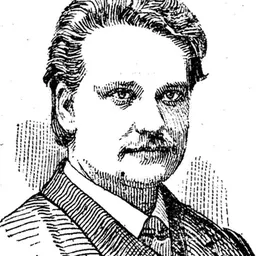
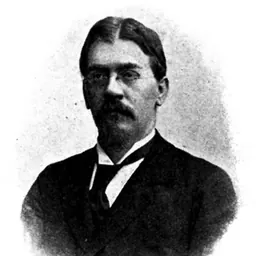
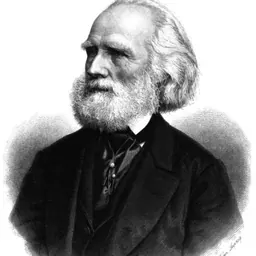

Contemporaries
People whose lives overlapped Johannes Bosscha's






Frequently asked questions
Who was Johannes Bosscha?
Dutch physicist (1831-1911)
When was Johannes Bosscha born?
Johannes Bosscha was born on 18 November 1831 in Breda.
When did Johannes Bosscha die?
Johannes Bosscha died on 15 April 1911 in Heemstede.
What was Johannes Bosscha's occupation?
Johannes Bosscha was a university teacher and physicist.
What nationality was Johannes Bosscha?
Johannes Bosscha was Dutch.
Sources & further reading
Cite this page
APA: Biography.guide. (2026). Johannes Bosscha. https://biography.guide/johannes-bosscha/
MLA: "Johannes Bosscha." Biography.guide, https://biography.guide/johannes-bosscha/.
Chicago: "Johannes Bosscha." Biography.guide. https://biography.guide/johannes-bosscha/.
Data last updated: 2026-09-27 · Spot an error? Report a correction.
Page generated 2026-09-27 05:17 UTC