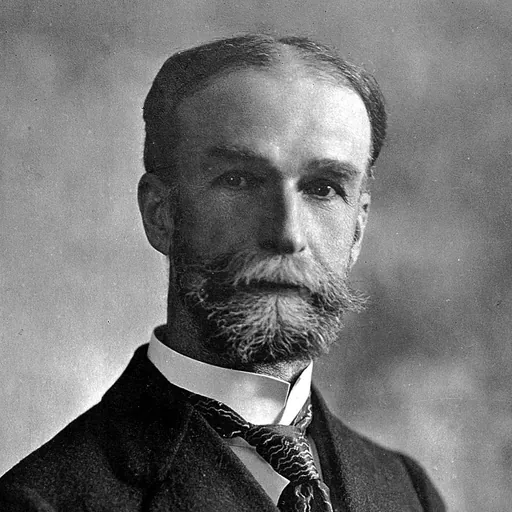
About Theobald Smith
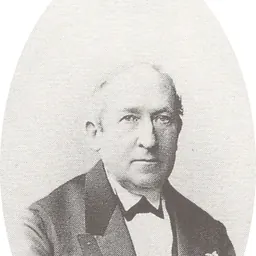
Lived 1859 – 1934 (aged 75). Theobald Smith was an American university teacher, veterinarian, pathologist and physician, known for Babesia and Salmonella.
Theobald Smith FRS(For) HFRSE (July 31, 1859 – December 10, 1934) was a pioneering epidemiologist, bacteriologist, pathologist and professor. Smith is widely considered to be America's first internationally-significant medical research scientist.
Smith's research work included the study of babesiosis (originally known as Texas cattle fever) and the more-general epidemiology of cattle diseases caused by tick borne diseases. He also described the bacterium Salmonella enterica (formerly called Salmonella choleraesuis), a species of Salmonella, named for the Bureau of Animal Industry chief Daniel E. Salmon. Additional work in studying the phenomena of anaphylaxis led to it being referred to as the Theobald Smith phenomenon.
He received a Bachelor of Philosophy degree from Cornell University in 1881, followed by an MD from Albany Medical College in 1883.
Research Smith became the Inspector of the newly created Bureau of Animal Industry (BAI) in 1884. Established by Congress to combat a wide range of animal diseases—from infectious disease of swine to bovine pneumonia, Texas cattle fever to glanders—Smith worked under Daniel E. Salmon, a veterinarian and Chief of the BAI. Smith also discovered the bacterial type species which would eventually form the genus Salmonella. After two years of work studying the efficacy of bacterial vaccination in pigs, Smith erroneously believed he had found the causative agent of hog cholera.
Smith turned his attention to Texas fever, a debilitating cattle disease; this work is detailed in a chapter in Microbe Hunters, by Paul de Kruif. In 1889, he along with the veterinarian F.L. Kilbourne discovered Babesia bigemina, the tick-borne protozoan parasite responsible for Texas fever. This marked the first time that an arthropod had been definitively linked with the transmission of an infectious disease and presaged the eventual discovery of insects such as ticks and mosquitoes as important vectors in a number of diseases.
Smith also taught at Columbian University in Washington, D.C. (now George Washington University) from 1886 to 1895, establishing the school's Department of Bacteriology. In 1887, Smith began research on water sanitation in his spare time, investigating the level of fecal coliform contamination in the nearby Potomac River. Over the next five years, Smith expanded his studies to include the Hudson River and its tributaries.
While Smith's work at the BAI had been highly productive, he found the rigid federal government bureaucracy stiffing and complained about the lack of leadership from his supervisor. In 1895 Smith moved to Cambridge, Massachusetts to accept a dual appointment serving as professor of comparative pathology at Harvard University as well as directing the pathology lab at the Massachusetts State Board of Health.
Law of declining virulence
Smith's best-known contribution was the notion, long since disproved, that there would be a “delicate equilibrium” between hosts and pathogens such that they would develop a "mutually benign relationship" over time.
Awards and honors Smith was elected to the American Academy of Arts and Sciences in 1896, the United States National Academy of Sciences in 1908, and the American Philosophical Society in 1915. In 1933, Smith was awarded the Royal Society's prestigious Copley Medal "For his original research and observation on diseases of animals and man."
Publications Parasitism and Disease (1934)
Other discoveries Observed differences between human and bovine tuberculosis (1895). Discussed the possibility of mosquitos as a malaria transmission vector (1899). Variation and bacterial pathogenesis (1900). Discovered anaphylaxis (1903), which is also sometimes referred to as "Theobald Smith's phenomenon". Brucellosis infections Used toxin/antitoxin as a vaccine for diphtheria (1909). In the process of investigating an epidemic of infectious abortions of cattle in 1919, Smith described the bacteria responsible for fetal membrane disease in cows now known as Campylobacter fetus.
Don’t just read it —
keep it.
Full-length biographies made to live with: read them, listen on the way to work, watch them tonight.
- E-book
- Audio
- Video
Instant download · yours to keep · every purchase keeps this site free
Important facts
People in Theobald Smith's life
Named in this biography and alive at the same time


Related people
Same field, nearest in time

Contemporaries
People whose lives overlapped Theobald Smith's



Frequently asked questions
Who was Theobald Smith?
American epidemiologist (1859–1934)
When was Theobald Smith born?
Theobald Smith was born on 31 July 1859 in Albany.
When did Theobald Smith die?
Theobald Smith died on 10 December 1934 in New York City.
What was Theobald Smith's occupation?
Theobald Smith was a university teacher, veterinarian, pathologist and physician.
What was Theobald Smith known for?
Theobald Smith was known for Babesia and Salmonella.
What nationality was Theobald Smith?
Theobald Smith was American.
Sources & further reading
Cite this page
APA: Biography.guide. (2026). Theobald Smith. https://biography.guide/theobald-smith/
MLA: "Theobald Smith." Biography.guide, https://biography.guide/theobald-smith/.
Chicago: "Theobald Smith." Biography.guide. https://biography.guide/theobald-smith/.
Data last updated: 2026-09-23 · Spot an error? Report a correction.
Portrait: Wikimedia Commons · author & licence
Page generated 2026-09-27 05:07 UTC