
About Virginia Gildersleeve
Lived 1877 – 1965 (aged 87). Virginia Gildersleeve was an American university teacher, college head, philologist and scholar of English, known for Academic, Dean (education) and United Nations Charter.
Virginia Crocheron Gildersleeve (October 3, 1877 – July 7, 1965) was an American academic, the long-time dean of Barnard College, co-founder of the International Federation of University Women, and the only woman delegated by United States to the April 1945 San Francisco United Nations Conference on International Organization, which negotiated the charter for and creation of the United Nations.
Biography Virginia Gildersleeve was born in New York City into a prominent New York family. Her father, Henry Alger Gildersleeve, was a jurist who served on the state Supreme court. She attended the Brearley School and following her graduation in 1895, went on to attend Barnard College, a member of the Seven Sisters affiliated with Columbia University. She completed her studies in 1899 and received a fellowship to undertake research for her Master of Arts degree in medieval history at Columbia University. She taught English part-time at Barnard for several years. She declined a full-time position and took a leave of absence to undertake her Ph.D. in English and comparative literature at Columbia for three years. When she completed her studies in 1908, she was appointed a lecturer in English in 1908 by Barnard and Columbia; by 1910, she had become an assistant professor and, in 1911, she was made dean of Barnard College.
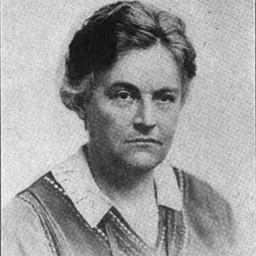
In 1918 Gildersleeve, Caroline Spurgeon, and Rose Sidgwick met while the two English women were on an academic exchange to the United States. They discussed founding an international association of university women, and in 1919, founded the International Federation of University Women. Gildersleeve and Spurgeon developed a close friendship and annually, shared a rental summer home.
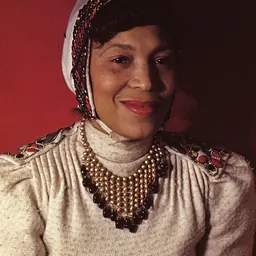
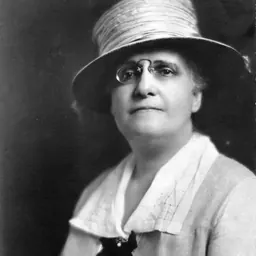
Barnard only had a few African-American students during Gildersleeve's tenure. Zora Neale Hurston was a pioneer in 1925, who attended Barnard with assistance from her literary mentor Fannie Hurst and Barnard College co-founder Annie Nathan Meyer. In the early 1940s, out of her own pocket, Dean Gildersleeve paid for the full scholarship of at least one African-American student from Harlem. Enrollment of Jewish students at Columbia College had reached 40 percent before World War I. Gildersleeve opposed religious exclusivity and refused to openly categorize Barnard students, but reportedly took steps to reduce the number of Jewish students. In the 1930s, roughly 20 percent of Barnard students were Jewish, compared to 6 to 10 percent at most other women's colleges. According to Gildersleeve's biographer Rosalind Rosenberg, at that time, both Columbia and Barnard began recruiting students from outside New York City. They evaluated applicants on the basis of psychological tests, interviews, and letters of recommendation, as well as academic criteria. In the two decades before World War II, this process of selective admissions reduced the percentage of Jewish students at Columbia to match the 20 percent at Barnard.
In 1942, early in World War II, Gildersleeve was instrumental in founding the WAVES ("Women Accepted for Volunteer Emergency Service"). Its second in command was Gildersleeve's companion, English Professor Elizabeth Reynard. All of its members—90,000 in all—were college graduates.
In 1945, President Franklin D. Roosevelt named Gildersleeve to the U.S. delegation to write the United Nations Charter. Gildersleeve learned of her appointment from her cook-housekeeper, who heard it on the radio. She was the only woman named to the U.S. delegation. The delegates were instructed to address two issues: 1) the need to prevent future wars through the creation of a Security Council; and 2) the need to enhance human welfare, which they accomplished through the establishment of the United Nations Economic and Social Council (ECOSOC). Gildersleeve sought and received drafting responsibility for the work of this second council—the one, as she put it, in charge of "doing things rather than preventing things from being done." She was able to insert into the charter the following goals for people around the world: "higher standards of living, full employment, and conditions of economic and social progress and development." She also persuaded the delegates to adopt the following aim for the United Nations: "universal respect for human rights and fundamental freedoms for all without distinction as to race, sex, language, or religion." She insisted for the charter to require the appointment of the Commission on Human Rights, which under the direction of Eleanor Roosevelt, wrote the Universal Declaration of Human Rights three years later.
Some historians consider Gildersleeve to have been "the most influential leader" of the Christian "anti-Zionist lobby" of her era. Gildersleeve wrote that "after (her) retirement from the Deanship at Barnard, (she) devoted (her)self mainly to the Middle East", describing herself as "struggling ardently against" the creation of and, later, the continued existence of the Jewish State. She blamed her failure to prevent the creation of the State of Israel on "the Zionist control of the media of communication." Gildersleeve repeatedly testified before congressional committees and lobbied members of Congress and President Harry Truman to deny American political, military, and financial support to Israel. According to the historian Robert Moats Miller of the University of North Carolina, the group was funded by the Central Intelligence Agency and ARAMCO. Miller states that Gildersleeve's "sympathies were indeed overwhelmingly with the Arabs."
Tributes In 1969, eleven members of the International Federation of University Women founded the Virginia Gildersleeve International Fund (VGIF).(See http://www.vgif.org ). To date, the fund has awarded more than 400 grants for a total project aid disbursement of more than US$1.8 million to women's groups in low-per-capita-income countries. Priority is given to income generation and community development projects that enhance and exercise women's educational, vocational, and leadership skills. Project activities range from seminars, conferences, and training workshops, to community-action projects.
Published works
(essays)
Don’t just read it —
keep it.
Full-length biographies made to live with: read them, listen on the way to work, watch them tonight.
- E-book
- Audio
- Video
Instant download · yours to keep · every purchase keeps this site free
Important facts
People in Virginia Gildersleeve's life
Named in this biography and alive at the same time



Related people
Same field, nearest in time

Contemporaries
People whose lives overlapped Virginia Gildersleeve's


Frequently asked questions
Who was Virginia Gildersleeve?
American academic (1877-1965)
When was Virginia Gildersleeve born?
Virginia Gildersleeve was born on 3 October 1877 in New York City.
When did Virginia Gildersleeve die?
Virginia Gildersleeve died on 7 July 1965 in Centerville.
What was Virginia Gildersleeve's occupation?
Virginia Gildersleeve was a university teacher, college head, philologist and scholar of English.
What was Virginia Gildersleeve known for?
Virginia Gildersleeve was known for Academic, Dean (education) and United Nations Charter.
What nationality was Virginia Gildersleeve?
Virginia Gildersleeve was American.
Sources & further reading
· Wikipedia: Virginia Gildersleeve
· DBpedia: Virginia Gildersleeve
Cite this page
APA: Biography.guide. (2026). Virginia Gildersleeve. https://biography.guide/virginia-gildersleeve/
MLA: "Virginia Gildersleeve." Biography.guide, https://biography.guide/virginia-gildersleeve/.
Chicago: "Virginia Gildersleeve." Biography.guide. https://biography.guide/virginia-gildersleeve/.
Data last updated: 2026-09-25 · Spot an error? Report a correction.
Page generated 2026-09-27 05:12 UTC