
About Paul de Kruif
Lived 1890 – 1971 (aged 80). Paul de Kruif was an American microbiologist, writer and author.
Paul Henry de Kruif (, rhyming with "life") (March 2, 1890 – February 28, 1971) was an American microbiologist and writer. Publishing as Paul de Kruif, he is known for his 1926 book, Microbe Hunters. This book was not only a bestseller for a lengthy period after publication, but has remained high on lists of recommended reading for science and has been an inspiration for many aspiring physicians and scientists.
Biography
Early life De Kruif was born March 2, 1890, in Zeeland, Michigan. In 1912, he graduated from the University of Michigan with a bachelor's degree, and he remained there to obtain a Ph.D., which was granted in 1916. He immediately entered service as a private in Mexico on the Pancho Villa Expedition and afterwards served as a lieutenant and a captain in World War I in France. Because of his service in the Sanitary Corps, he had occasional contacts with leading French biologists of the period.
Career After returning to the University of Michigan as an assistant professor, De Kruif briefly worked for the Rockefeller Institute (for Medical Research). He then became a full-time writer.
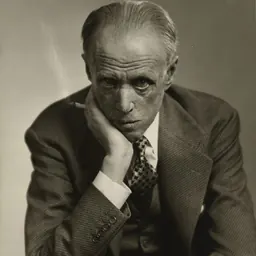
De Kruif assisted Sinclair Lewis with his Pulitzer Prize-winning novel Arrowsmith (1925) by providing the scientific and medical information required by the plot, along with character sketches. Even though Lewis was listed as the sole author, De Kruif's contribution was significant, and he received 25 percent of the royalties. Many believe the characters in the novel represent people known to De Kruif, with Martin Arrowsmith (a physician, unlike de Kruif) possibly representing himself.
While working for the Rockefeller Institute, De Kruif submitted an anonymous entry about modern medicine, for a book entitled Civilization. In the article, he decried the state of contemporary medical practice, which, because it lacked scientifically sound practices, he called "medical Ga-Ga-ism". De Kruif decried doctors as providing only a "mélange of religious ritual, more or less accurate folk-lore, and commercial cunning". When it was discovered that De Kruif was the author of the essay, he was fired from the Rockefeller Institute.
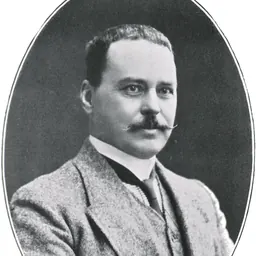
Ronald Ross, one of the scientists featured in Microbe Hunters, took exception to how he was described, so the British edition deleted that chapter to avoid a libel suit.
De Kruif was a staff writer for the Ladies' Home Journal, Country Gentleman, and Reader's Digest, contributing articles on science and medicine. He also served on commissions to promote research into infantile paralysis (polio).
De Kruif's book "Hunger Fighters" (1928) featured the story of Joseph Goldberger's experiments with inducing pellagra in convicts in a US prison (proving that the disease was caused by improper diet and not any kind of microbe); this chapter of the de Kruif book was, ironically, later cited by Nazi scientists as one of the inspirations for their own proposal to use convicts for their infamous medical experiments.
The Sweeping Wind, De Kruif's last book, is his autobiography.
De Kruif died February 28, 1971, in Holland, Michigan.
Works
Our Medicine Men (1922) Microbe Hunters (1926) Hunger Fighters (1928) Seven Iron Men (1929) Men Against Death (1932) Why Keep Them Alive (1937) The Fight for Life (1938) The Male Hormone (1945) Health is Wealth (1940) Kaiser Wakes the Doctors (1940) Life Among the Doctors (1949) A Man Against Insanity (1957) The Sweeping Wind (1962)
Selected articles "How We Can Help Feed Europe", in Reader's Digest, Sept. 1945 (p. 50-52). About the Meals for Millions Foundation and their Multi-Purpose Food.
Don’t just read it —
keep it.
Full-length biographies made to live with: read them, listen on the way to work, watch them tonight.
- E-book
- Audio
- Video
Instant download · yours to keep · every purchase keeps this site free
Important facts
People in Paul de Kruif's life
Named in this biography and alive at the same time

Related people
Same field, nearest in time





Contemporaries
People whose lives overlapped Paul de Kruif's



Frequently asked questions
Who was Paul de Kruif?
American microbiologist (1890–1971)
When was Paul de Kruif born?
Paul de Kruif was born on 2 March 1890 in Zeeland.
When did Paul de Kruif die?
Paul de Kruif died on 28 February 1971 in Holland.
What was Paul de Kruif's occupation?
Paul de Kruif was a microbiologist, writer and author.
What nationality was Paul de Kruif?
Paul de Kruif was American.
Sources & further reading
Cite this page
APA: Biography.guide. (2026). Paul de Kruif. https://biography.guide/paul-de-kruif/
MLA: "Paul de Kruif." Biography.guide, https://biography.guide/paul-de-kruif/.
Chicago: "Paul de Kruif." Biography.guide. https://biography.guide/paul-de-kruif/.
Data last updated: 2026-09-20 · Spot an error? Report a correction.
Page generated 2026-09-27 05:01 UTC