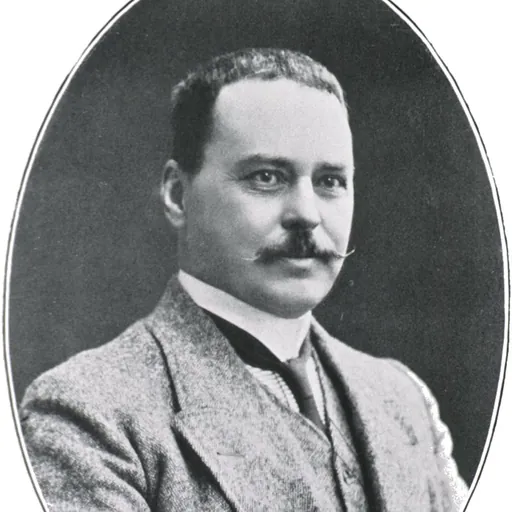
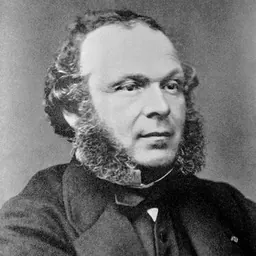
Ronald Ross
British doctor, Nobel laureate, writer, and artist
About Ronald Ross
Lived 1857 – 1932 (aged 75). Ronald Ross was a British physician, mathematician, epidemiologist, poet, novelist and malariologist, known for Malaria.
Early life and education
Ross was born in Almora, then in the North-Western Provinces of Company-ruled India, north west of Nepal.
Although Ross wanted to become a writer, his father arranged enrollment at St Bartholomew's Hospital Medical College in London, in 1874. Not fully committed, he spent most of his time composing music, and writing poems and plays. He left in 1880. In 1879 he had passed the examinations for the Royal College of Surgeons of England, and he worked as a ship's surgeon on a transatlantic steamship while studying for the licenciate of the Society of Apothecaries. He qualified on second attempt in 1881, and after a four-month training at Army Medical School, was appointed a surgeon in the Indian Medical Service on 5 April 1881, assigned to the Madras Presidency. Even before his luggage was cleared in the custom office, he went straight for Bombay Civil Hospital, looking for malarial patients and started making blood films.
Discovery of malaria-causing mosquito
Ross made his first important step in May 1895 when he observed the early stages of malarial parasite inside a mosquito stomach. However, his enthusiasm was interrupted as he was deployed to Bangalore to investigate an outbreak of cholera. Bangalore had no regular cases of malaria. He confided to Manson stating, "I am thrown out of employment and have 'no work to do'." But in April he had a chance to visit Sigur Ghat near the hill station of Ooty, where he noticed a mosquito on the wall in a peculiar posture, and for this he called it "dappled-winged" mosquito, not knowing the species. In May 1896, he was given a short leave that enabled him to visit a malaria-endemic region around Ooty. In spite of his daily quinine prophylaxis, he was down with severe malaria three days after his arrival. In June he was transferred to Secunderabad. in the Indian Medical Gazette and subsequently in the December 1897 issue of British Medical Journal. In the evening he composed the following poem for his discovery (originally unfinished, sent to his wife on 22 August, and completed a few days later):
This day relenting God Hath placed within my hand A wondrous thing; and God Be praised. At His command, Seeking His secret deeds With tears and toiling breath, I find thy cunning seeds, O million-murdering Death. I know this little thing A myriad men will save. O Death, where is thy sting? Thy victory, O Grave?
Discovery of malaria transmission in birds
In September 1897, Ross was transferred to Bombay, from where he was subsequently sent to malaria-free Kherwara in Rajputana (now Rajasthan). Frustrated by lack of work, he threatened to resign from the service as he felt that it was a death blow to his research. It was only on the representation of Patrick Manson that the government arranged for his continued service in Calcutta on "special duty".
Ross immediately carried out research in malaria and Visceral leishmaniasis (also known as kala azar), for which he was assigned. He was given the use of Surgeon-Lieutenant-General Cunningham's laboratory for his research. He had no success with malarial patients because they were always immediately given medication. He built a bungalow with a laboratory at Mahanad village, where he would stay from time to time to collect mosquitoes in and around the village. He employed Mahomed (or Muhammed) Bux and Purboona (who deserted him after the first payday). As Calcutta was not a malarious place, Manson persuaded him to use birds, as being used by other scientists such as Vasily Danilewsky in Russia and William George MacCallum in America. Ross complied but with a complaint that he "did not need to be in India to study bird malaria". By March he began to see results on bird parasites, very closely related to the human malarial parasites.
Using more convenient model of birds (infected sparrows), by July 1898 Ross established the importance of culex mosquitoes as intermediate hosts in avian malaria. On 4 July he discovered that the salivary gland was the storage sites of malarial parasites in the mosquito. By 8 July he was convinced that the parasites are released from the salivary gland during biting. He later demonstrated the transmission of malarial parasite from mosquitoes (in this case Culex species) to healthy sparrows from an infected one, thus, establishing the complete life cycle of malarial parasite.
In September 1898 he went to southern Assam in (northeast India) to study an epidemic of Visceral leishmaniasis. He was invited to work there by Graham Col Ville Ramsay, the second Medical Officer of the Labac Tea Estate Hospital. (His microscope and medicals tools are still preserved, and his sketches of mosquitoes are still on display at the hospital.) However, he utterly failed as he believed that the kala-azar parasite (Leishmania donovani, the very scientific name he later gave in 1903) was transmitted by a mosquito, which he refers to as Anopheles rossi (scientific name given by G.M. Giles). (It is now known that kala azar is transmitted by sandflies.)
England
In 1899, Ross resigned from the Indian Medical Service and went to England to join the faculty of the Liverpool School of Tropical Medicine as a lecturer. He continued to work on prevention of malaria in different parts of the world, including West Africa, the Suez Canal zone, Greece, Mauritius, Cyprus, and in the areas affected by the First World War. He also established organisations for fighting malaria in India and Sri Lanka. In 1902, Ross was awarded the Cameron Prize for Therapeutics of the University of Edinburgh. He was appointed as Professor and Chair of Tropical Medicine of the Liverpool School of Tropical Medicine in 1902, which he held up to 1912. In 1912 he was appointed Physician for Tropical Diseases at King's College Hospital in London, and simultaneously hold the Chair of Tropical Sanitation in Liverpool. He remained in these posts until 1917 when he became (honorary) Consultant in Malariology in British War Office. He travelled to Thessaloniki and Italy in November to advise and on the way, "in a landlocked bay close to the Leucadian Rock (where Sappho is supposed to have drowned herself)", his ship escaped a torpedo attack. Between 1918 and 1926 he worked as Consultant in Malaria in the Ministry of Pensions and National Insurance.
Ross developed mathematical models for the study of malaria epidemiology, which he initiated in his report on Mauritius in 1908. He elaborated the concept in his book The Prevention of Malaria in 1910 (2nd edition in 1911) and further elaborated in a more generalised form in scientific papers published by the Royal Society in 1915 and 1916; some of his epidemiology work was developed with mathematician Hilda Hudson. These papers represented a profound mathematical interest which was not confined to epidemiology, but led him to make material contributions to both pure and applied mathematics.
Ross was one of the supporters of Sir William Osler in the founding of the History of Medicine Society in 1912, and in 1913 was the history of medicine section's vice-president. Between 1913 and 1917, he received some financial support from Sir Edwin Durning-Lawrence, and led experiments at the Marcus Beck laboratory in the Royal Society of Medicine building at 1 Wimpole Street, London.
Ross Institute and Hospital for Tropical Diseases
The Ross Institute and Hospital for Tropical Diseases was founded in 1926 and established at Bath House, a grand house with keeper's lodge and large grounds adjacent to Tibbet's Corner at Putney Heath. The hospital was opened by the then Prince of Wales, the future King Edward VIII. Ross assumed the post of Director-in-Chief until his death.
When the 1902 Nobel Prize for Physiology or Medicine was considered, the Nobel Committee initially intended the prize to be shared between Ross and Grassi, however Ross accused Grassi of deliberate fraud. The weight of favour ultimately fell on Ross, largely due to the influences of Robert Koch, the appointed neutral arbitrator in the committee; as reported, "Koch threw the full weight of his considerable authority in insisting that Grassi did not deserve the honor".
Personal life and death Ronald Ross was noted to be eccentric and egocentric, described as an "impulsive man" or an "impulsive genius." His professional life appeared to be in constant feud with his students, colleagues, and fellow scientists. His personal vendetta with G. B. Grassi became a legendary tale in science. He was openly envious of his mentor Patrick Manson's affluence from private practices. His Memories of Sir Patrick Manson (1930) was a direct attempt to belittle Manson's influences on his works on malaria.
Ross was frequently embittered by lack of government support (what he called "administrative barbarism") and the Royal College of Physicians and Surgeons of Glasgow.
In 1889 Ross married Rosa Bessie Bloxam (d.1931). They had two daughters, Dorothy (1891–1947) and Sylvia (1893–1925), and two sons, Ronald Campbell (1895–1914) and Charles Claye (1901–1966). His wife died in 1931. Ronald and Sylvia pre-deceased him too: Ronald was killed at the Battle of Le Cateau on 26 August 1914. Ross died at the hospital of his namesake after a long illness and asthma attack. He was buried at the nearby Putney Vale Cemetery, next to his wife.
Legacy
A small memorial on the walls of SSKM Hospital, Calcutta commemorates Ross's discovery. The memorial was unveiled by Ross himself, in the presence of Lord Lytton, on 7 January 1927. The laboratory where Ross worked has been transferred into a malaria clinic named after him. There is also a plaque on the outer wall.
Sir Ronald Ross is one of 23 names to feature on the frieze of London School of Hygiene & Tropical Medicine, pioneers chosen for their contributions to public health.
A novel, The Calcutta Chromosome by Amitav Ghosh, published in 1995 is based on the life of Ross in Calcutta.
Sir Ronald Ross Institute of Parasitology is the building in Begumpet where Ross made the discovery that malaria was transmitted by the female anopheles mosquito on 20 August. 20 August later came to known as the World Mosquito Day. The lab has been transformed into a small museum exhibiting photos of Ross and his family. Various charts and diagrams explain Ross' work on malaria and its transmission.
20 August is celebrated by London School of Hygiene & Tropical Medicine as World Mosquito Day to commemorate Ross's discovery in 1897. Additionally, Ross's name, along with 22 other pioneers of public health and tropical medicine, appears on the School's Frieze. The papers of Sir Ronald Ross are now preserved by the London School of Hygiene and Tropical Medicine
Ronald Ross Primary School near Wimbledon Common is named after him. The school's crest includes a mosquito in one quarter.
Sir Ronald Ross Institute of Parasitology was established in memory of Ronald Ross in Hyderabad, under Osmania University.
In 2010 the University of Liverpool named its new biological science building "The Ronald Ross Building" in his honour. His grandson David Ross inaugurated it. The building is home to the university's facility for the Institute of Infection and Global Health.
Don’t just read it —
keep it.
Full-length biographies made to live with: read them, listen on the way to work, watch them tonight.
- E-book
- Audio
- Video
Instant download · yours to keep · every purchase keeps this site free
Important facts
People in Ronald Ross's life
Named in this biography and alive at the same time



Related people
Same field, nearest in time



Contemporaries
People whose lives overlapped Ronald Ross's


Frequently asked questions
Who was Ronald Ross?
British doctor, Nobel laureate, writer, and artist (1857–1932)
When was Ronald Ross born?
Ronald Ross was born on 13 May 1857 in Almora.
When did Ronald Ross die?
Ronald Ross died on 16 September 1932 in London.
What was Ronald Ross's occupation?
Ronald Ross was a physician, mathematician, epidemiologist, poet, novelist and malariologist.
What was Ronald Ross known for?
Ronald Ross was known for Malaria.
What nationality was Ronald Ross?
Ronald Ross was British.
Sources & further reading
Cite this page
APA: Biography.guide. (2026). Ronald Ross. https://biography.guide/ronald-ross/
MLA: "Ronald Ross." Biography.guide, https://biography.guide/ronald-ross/.
Chicago: "Ronald Ross." Biography.guide. https://biography.guide/ronald-ross/.
Data last updated: 2026-09-21 · Spot an error? Report a correction.
Portrait: Wikimedia Commons · author & licence
Page generated 2026-09-27 05:00 UTC