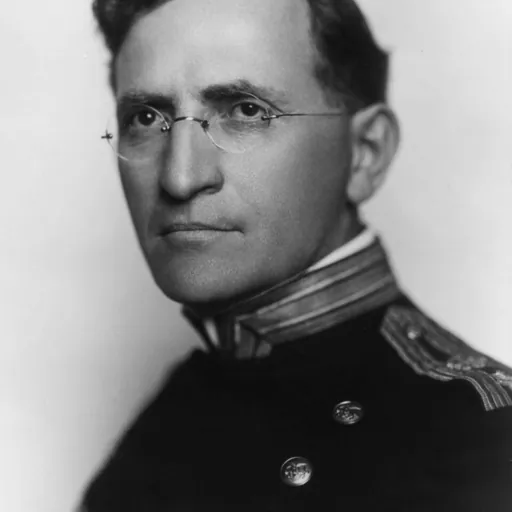
About Joseph Goldberger
Lived 1874 – 1929 (aged 54). Joseph Goldberger was an American epidemiologist and physician.
Joseph Goldberger (, ) (July 16, 1874 – January 17, 1929) was an American physician and epidemiologist in the United States Public Health Service (PHS). As a public health official, he was an advocate for scientific and social recognition of the links between poverty and disease. His early work with arriving immigrants at Ellis Island made him a standout investigator for detecting infectious diseases and he became a well-known epidemiologist.
Professional career Setting up a private medical practice in Wilkes-Barre, Pennsylvania, Goldberger soon became intellectually restless. He joined the U.S. Marine Hospital Service (later known as the U.S. Public Health Service or PHS) in 1899, serving first post at the Port of New York, where he conducted health inspections of newly arrived immigrants.
From 1902–1906, Goldberger held a number of PHS epidemiology posts—in Mexico, Puerto Rico, Mississippi and Louisiana. He was involved in PHS efforts to combat yellow fever, typhus, dengue fever, and typhoid fever. He gave a particularly noted lecture in Boston, Massachusetts on the effects of parasites in disease transmission. In 1909, Goldberger published his research on an acarine mite-based parasitic infection common among poor, inner-city populations. He also worked with John F. Anderson investigating the transmission of measles and typhus. Previously it had been rather rare in the United States, but an epidemic broke out in 1906, primarily in the South, and continued until the 1940s.
Pellagra was a painful skin disease commonly found in tropical regions. Some physicians at the time believed that the disease arose in consequence of bad genes, airborne germs, or miasma resulting from poor sanitary conditions. Goldberger's theory that pellagra was associated with diet contradicted the most widely accepted medical opinion that pellagra was an infectious disease. The germ theory of disease had recently become popular in not only the medical field but also the public's consciousness. As a result, the germ theory was often generalized to far more ailments than it actually caused. Goldberger, in contrast, suspected that diet was the true cause, which he came to believe through his observation that hospital staff who worked closely with pellagra patients did not fall sick themselves. Upon his death, Goldberger's wife received a $125-a-month pension thanks to a special congressional bill that recognized the value of his work.
Goldberger's pellagra experiments were featured in Paul de Kruif's book "Hunger Fighters". (1928) Ironically, Nazi scientists, including Georg August Weltz who were among the first to propose that criminals be used for very high-altitude experiments cited de Kruif's book and his description of Goldberger's experiments with convict volunteers as the inspiration for their own infamous experiments with witting and unwitting convict subjects.
Goldberger was nominated four times for the Nobel Prize (1916, 1925, and twice in 1929).
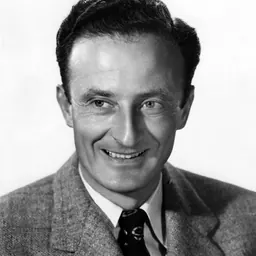
In 1940, John Nesbitt produced a short film about Goldberger titled A Way in the Wilderness, directed by Fred Zinnemann and starring Shepperd Strudwick.
The story of Goldberger's research on pellagra was featured in the 2008 Michael Mosley BBC Four documentary mini-series Medical Mavericks: The History of Self-Experimentation and on a 2012 episode of the Science Channel TV show, Dark Matters: Twisted But True.
The radio program Cavalcade of America in 1940 had an episode called "The Red Death" about Goldberger's research on pellagra starring Ray Collins and Agnes Moorehead.
Goldberger's papers are held at the National Library of Medicine in Bethesda, Maryland.
Don’t just read it —
keep it.
Full-length biographies made to live with: read them, listen on the way to work, watch them tonight.
- E-book
- Audio
- Video
Instant download · yours to keep · every purchase keeps this site free
Important facts
People in Joseph Goldberger's life
Named in this biography and alive at the same time






Related people
Same field, nearest in time



Contemporaries
People whose lives overlapped Joseph Goldberger's


Frequently asked questions
Who was Joseph Goldberger?
Slovak-American epidemiologist (1874-1929)
When was Joseph Goldberger born?
Joseph Goldberger was born on 16 July 1874 in Giraltovce.
When did Joseph Goldberger die?
Joseph Goldberger died on 17 January 1929 in Washington, D.C..
What was Joseph Goldberger's occupation?
Joseph Goldberger was an epidemiologist and physician.
What nationality was Joseph Goldberger?
Joseph Goldberger was American.
Sources & further reading
· Wikipedia: Joseph Goldberger
Cite this page
APA: Biography.guide. (2026). Joseph Goldberger. https://biography.guide/joseph-goldberger/
MLA: "Joseph Goldberger." Biography.guide, https://biography.guide/joseph-goldberger/.
Chicago: "Joseph Goldberger." Biography.guide. https://biography.guide/joseph-goldberger/.
Data last updated: 2026-09-23 · Spot an error? Report a correction.
Portrait: Wikimedia Commons · author & licence
Page generated 2026-09-27 05:05 UTC