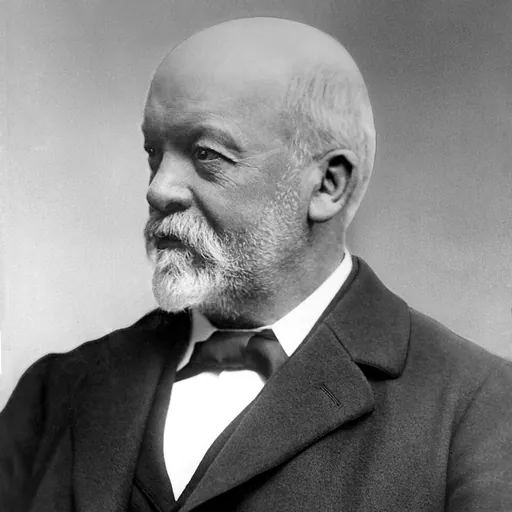
About Gottlieb Daimler
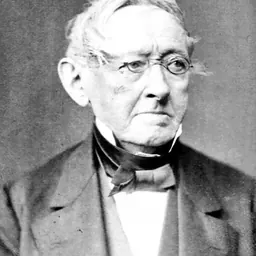
Lived 1834 – 1900 (aged 65). Gottlieb Daimler was an engineer, inventor, industrialist and entrepreneur, known for Daimler Motoren Gesellschaft.
Gottlieb Wilhelm Daimler (; 17 March 1834 – 6 March 1900) was a German engineer, industrial designer and industrialist. He was a pioneer of internal-combustion engines and automobile development. He invented the high-speed liquid petroleum-fueled engine.
Daimler and his lifelong business partner Wilhelm Maybach were two inventors whose goal was to create small, high-speed engines to be mounted in any kind of locomotion device. In 1883 they designed a horizontal cylinder layout compressed charge liquid petroleum engine that fulfilled Daimler's desire for a high speed engine which could be throttled, making it useful in transportation applications. This engine was called Daimler's Dream.
Early life and education (1834–1862)
Gottlieb Wilhelm Daimler was born on 17 March 1834 in the town of Schorndorf near Stuttgart, Kingdom of Württemberg, a federal state of the German Confederation, in what is now Germany. His parents were Johannes Däumler (Daimler), a baker, and his wife Frederika. By the age of 13 (1847), he had completed six years of primary studies in Lateinschule and became interested in engineering.
After completing secondary school in 1848, Daimler had trained as a gunsmith under Master Gunsmith Hermann Raithel. In 1852 he ended the training with the trade examination. He graduated in 1852, passing the craft test with a pair of engraved double-barreled pistols. at Beyer, Peacock & Company, Manchester, whose partner Beyer was from Saxony. While in London, he visited the 1862 International Exhibition, where one of the exhibits was a steam carriage. Geislingen an der Steige, where he designed tools, mills, and turbines. In 1863, he joined the Bruderhaus Reutlingen, a Christian Socialist toolmaker, as inspector and later executive. While there, he met Wilhelm Maybach, then a 15-year-old orphan. reorganized as Gasmotoren-Fabrik Deutz, management picked Daimler as factory manager, bypassing even Otto, and Daimler joined the company in August, bringing in Maybach as chief designer. Daimler, who wanted to make his own engine, feared Otto's patent would prevent it. Daimler hired an attorney who found that a prior art patent for a four stroke engine had been issued in Paris in 1862 to Beau De Rochas, a French public works engineer.
Meanwhile, serious personal differences arose between Daimler and Otto, reportedly with Otto being jealous of Daimler, because of his university background and knowledge. Daimler wanted to build small engines that could be applied to transportation but Otto had no interest in this. When Otto excluded Daimler from his engine patents there was great animosity between the two. Daimler was fired in 1880, receiving 112,000 Gold marks in Deutz-AG shares in compensation for the patents of both Daimler and Maybach. Maybach resigned later and followed Daimler.
Independent inventor of small, high speed engines (1882)
At Cannstatt, Daimler and the more creative thinking Maybach since electrical systems functioned too slowly.
Daimler and Maybach spent long hours debating how best to fuel Otto's four-stroke design, and turned to a commonly available petroleum fraction. The main distillates of petroleum at the time were lubricating oil, kerosene (burned as lamp fuel), and ligroin (petroleum naphtha or heavy naphtha), which up to then was used mainly as a cleaner and was sold in pharmacies. " [i.e. ligroin and similar petroleum fractions] of a kind common and readily available at pharmacies (chemist's) at the time", as described by antique car expert Michael Plag. "This is a combustible fuel called n-hexane."
Dream engine (1883) In late 1883, Daimler and Maybach patented the first of their engines fueled by ligroin. This engine was patented on 16 December 1883. It achieved Daimler's goal of being small and running fast enough to be useful at 750 rpm. Improved designs in the next four years brought that up to 900 rpm. hot tube ignition system (patent 28022) cam operated exhaust valves, allowing high speed operation
weight of around
About sixty miles away in Mannheim, Karl Benz built an automobile using an integral design for a motorized vehicle with one of his own engines. He was granted a patent for his motorwagen on 29 January 1886.
When this proved the engine capable of driving a vehicle, Daimler devised a single and ordered a Wimpff und Söhne four-seater phaeton to house it. DMG expanded, but it changed. The newcomers, not believing in automobile production, ordered the creation of additional stationary engine building capacity, and considered merging DMG with Otto's Deutz-AG.
In 1892, DMG finally sold its first automobile. DMG developed the high-speed inline-two Phönix, for which Maybach invented a spray carburettor.
The disputes with Lorenz continued. Daimler attempted to buy 102 extra shares to get a majority holding, but was forced out of his post as technical director. The corporation was 400,000 Gold marks in debt. The other directors threatened to declare bankruptcy if Daimler didn't sell them all his shares and all his personal patent rights from the previous thirty years. Daimler accepted the offer, receiving 66,666 Gold Marks, and resigned in 1893.
In 1894 at the Hermann Hotel, Maybach together with Daimler and his son Paul designed a third engine called the "Phoenix" and had DMG make it. It featured: four cylinders cast in one block arranged vertically and parallel camshaft operated exhaust valves a spray nozzle carburetor, patented by Maybach in 1893 an improved belt drive system
This is probably the same internal-combustion engine referred to by the American author and historian Henry Brooks Adams, who describes the "Daimler motor" and its great speed from his visit to the 1900 Paris Exposition in his autobiography.
Daimler and Maybach continued to work together. They built a four-cylinder engine with Maybach' spray nozzle carburetor. It was in the first organized automobile race, the "Paris to Rouen" and defeated all the entries from DMG. Frederick Simms, German-born long-time friend of Gottlieb Daimler insisted that Daimler be brought back into the company making it a condition of his payment of £17,500 for the transfer of his Daimler licenses to the British Daimler Company which would stabilize the corporation's finances, that Daimler, now aged sixty, should return to DMG. Gottlieb Daimler received 200,000 goldmarks in shares, plus a 100,000 bonus. Simms received the right to use the name "Daimler" as his brand name for Daimler Company products. In 1895, the year DMG assembled its 1,000th engine, Maybach returned as General Inspector, receiving 30,000 shares.
During this period, they agreed to licenses to build Daimler engines around the world, which included: France, from 1890, under a licence held by Louise Sarazin: Panhard et Levassor and Peugeot, the United States, from 1891, under Daimler Motor Company of Long Island City in a partnership with American and German piano maker Steinway & Sons the United Kingdom, from 1893, by Frederick Simms' Daimler Motor Syndicate transferred in 1896 to the Daimler Motor Company Austria, by Austro-Daimler
Daimler died in 1900, and in 1907 Maybach resigned from DMG.
Founding of Daimler-Benz Daimler had developed the first liquid petroleum vehicle in 1885 and Karl Benz had developed the first purpose-built automobile using a 2 cycle engine of his own design a few months later. Daimler never met Karl Benz during the period of invention. In 1896 Daimler (DMG) sued Benz & Cie for violating his 1883 patent on hot tube ignition. Daimler won and Benz had to pay royalties to DMG. Daimler did not meet Karl Benz while they were in court in Mannheim. Later at the founding of the Central European Motor Car Association Daimler and Benz still did not speak to each other.
Years after Daimler died, the two companies did cooperate in many ways. After many years of cooperation, on 28 June 1926 representatives of Daimler-Motoren-Gesellschaft (DMG) and Benz & Cie signed the agreement for the merger of the two oldest automobile manufacturers in the world. The resulting new company was named Daimler-Benz AG.
Honours Gottlieb Daimler was accepted into the Automotive Hall of Fame in 1978. Between 1993 and July 2008 Daimler had a stadium named after him in Stuttgart, Germany. The former Gottlieb-Daimler-Stadion was the venue for six matches in the 2006 FIFA World Cup in Germany.
Gottlieb Daimler's motto was Das Beste oder nichts ("The best or nothing at all"; "Nothing but the best"). Mercedes-Benz adopted this motto as their slogan in 2010.
Don’t just read it —
keep it.
Full-length biographies made to live with: read them, listen on the way to work, watch them tonight.
- E-book
- Audio
- Video
Instant download · yours to keep · every purchase keeps this site free
Important facts
People in Gottlieb Daimler's life
Named in this biography and alive at the same time
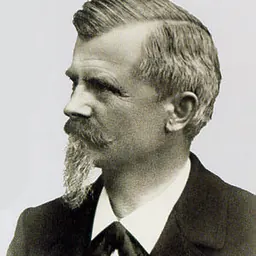
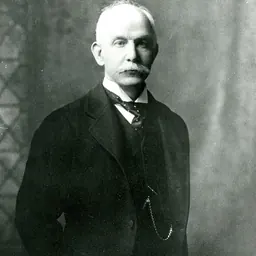

Related people
Same field, nearest in time

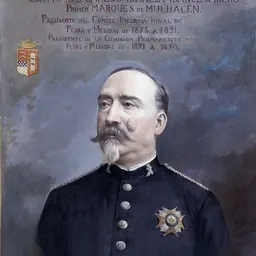
Contemporaries
People whose lives overlapped Gottlieb Daimler's




Frequently asked questions
Who was Gottlieb Daimler?
German engineer and industrialist (1834–1900)
When was Gottlieb Daimler born?
Gottlieb Daimler was born on 17 March 1834 in Schorndorf.
When did Gottlieb Daimler die?
Gottlieb Daimler died on 6 March 1900 in Bad Cannstatt.
What was Gottlieb Daimler's occupation?
Gottlieb Daimler was an engineer, inventor, industrialist and entrepreneur.
What was Gottlieb Daimler known for?
Gottlieb Daimler was known for Daimler Motoren Gesellschaft.
What nationality was Gottlieb Daimler?
Gottlieb Daimler's recorded nationality: Kingdom of Württemberg.
Sources & further reading
Cite this page
APA: Biography.guide. (2026). Gottlieb Daimler. https://biography.guide/gottlieb-daimler/
MLA: "Gottlieb Daimler." Biography.guide, https://biography.guide/gottlieb-daimler/.
Chicago: "Gottlieb Daimler." Biography.guide. https://biography.guide/gottlieb-daimler/.
Data last updated: 2026-09-24 · Spot an error? Report a correction.
Portrait: Wikimedia Commons · author & licence
Page generated 2026-09-27 05:08 UTC