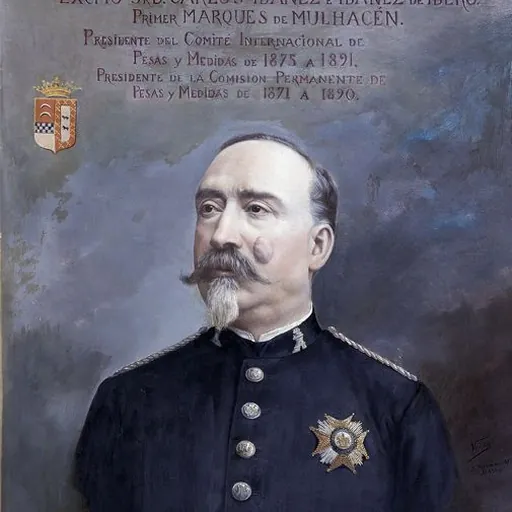
About Carlos Ibáñez de Ibero
Lived 1825 – 1891 (aged 65). Carlos Ibáñez de Ibero was a Spanish engineer, inventor, geographer, military personnel, geologist and director, known for International Committee for Weights and Measures.
Carlos Ibáñez e Ibáñez de Ibero, 1st Marquis of Mulhacén, (14 April 1825 – 28 or 29 January 1891) was a Spanish divisional general and geodesist. He represented Spain at the 1875 Conference of the Metre Convention and was the first president of the International Committee for Weights and Measures. As a forerunner geodesist and president of the International Geodetic Association, he played a leading role in the worldwide dissemination of the metric system. His activities resulted in the distribution of a platinum and iridium prototype of the metre to all States parties to the Metre Convention during the first meeting of the General Conference on Weights and Measures in 1889.
He was born in Barcelona. According to Spanish tradition, his surname was a combination of his father's first surname, Martín Ibáñez y de Prado and of his mother's first surname, Carmen Ibáñez de Ibero y González del Río. The following year Ibáñez was appointed to undertake this task.
Ibáñez and Saavedra went to Paris to supervise the production by Jean Brunner of a measuring instrument they had devised and which was calibrated against the legal metre (443.296 lines of the toise). It was compared with Borda's double-toise N°1 which was the main reference for measuring all geodetic bases in France and whose length was by definition 3.8980732 metres at a specified temperature. The four-metre-long Spanish measuring instrument, which became known as the Spanish Standard (French: Règle espagnole), was replicated in order to be used in Egypt. In 1863, Ibáñez and Ismail Effendi Mustafa compared the Spanish Standard with the Egyptian Standard in Madrid. These comparisons were essential for metrological traceability. Moreover, because of thermal expansion, geodesists tried to assess temperature effect on standards in the field in order to avoid observational errors. Ibáñez and his colleagues wrote a monograph which was translated into French by Aimé Laussedat. The experiment, in which the results of two methods were compared, was a landmark in the controversy between French and German geodesists about the length of geodesic triangulation bases, and empirically validated the method of General Johann Jacob Bayer, founder of the Central European Arc Measurement.
From 1865 to 1868 Ibáñez added the survey of the Balearic Islands with that of the Iberian Peninsula. For this work, he devised a new instrument, which allowed much faster measurements. Finally, this second version of the appliance, called the Ibáñez apparatus, was used in Switzerland to measure the geodetic bases of Aarberg, Weinfelden and Bellinzona. In June 1886, following these operations, Ibáñez's apparatus was recalibrated on Brunner's international bimetallic apparatus (itself calibrated on the international prototype metre) at the International Bureau of Weights and Measures (BIPM). Assuming a linear thermal expansion coefficient of 11.6·10−6 °C-1 for steel, the difference between the legal metre (defined as 443.296 lines of the Toise of Peru) and the international metre (defined as the length of the Mètre des Archives) must be related to a temperature error of approximately 1.3 °C during the manufacturing of Borda apparatus, which was used for baseline measurements of the Arc measurement of Delambre and Méchain. At the time it was the world's biggest geographic institute. Jean Brunner displayed the Ibáñez-Brunner apparatus at the Exposition Universelle of 1855. Copies of the Spanish standard were also made for France and Germany. These standards would be used for the most important operations of European geodesy. This is why Antoine Yvon Villarceau verified the geodetic operations at eight points of the Paris meridian arc from 1861 to 1866. Some of the errors in the operations of Delambre and Méchain were then corrected. From 1870 to 1894, François Perrier, then Jean-Antonin-Léon Bassot proceeded to a new survey. This connection was a remarkable enterprise where triangles with a maximum length of 270 km were observed from mountain stations (Mulhacén, Tetica, Filahoussen, M'Sabiha) over the Mediterranean Sea. The radius of curvature of this arc is not uniform, being, in the mean, about 600 metres greater in the northern than in the southern part. according to a preliminary discussion between Johann Jacob Baeyer, Adolphe Hirsch and Carlos Ibáñez e Ibáñez de Ibero. In November 1869 the French government issued invitations to join the International Metre Commission. He was elected president of the Permanent Committee of the International Metre Commission in 1872. He represented Spain at the 1875 conference of the Metre Convention and at the first General Conference on Weights and Measures in 1889. At the first meeting of the International Committee for Weights and Measures, he was elected chairman of the committee, a position he held from 1875 to 1891.
As Carlos Ibáñez e Ibáñez de Ibero stated, the International prototype metre would form the basis of the new international system of units, but it would no longer have any relation to the dimensions of the Earth that geodesists were trying to determine. It would be no more than the material representation of the unity of the system.
The European Arc Measurement decided the creation of an international geodetic standard at the General Conference held in Paris in 1875. Thus, the Commission resolved to acquire, at common expense, a measuring instrument which was to be used either to measure new bases in countries which did not have their own device or to repeat previous measurements. The comparisons of the new results with those provided by the old national standards would make it possible to obtain their equation. The apparatus would to be calibrated at the International Bureau of Weights and Measures (BIPM), using the prototype metre. The system with a microscope and bimetallic rulers, which had given such brilliant results in Spain, was proposed.
The progresses of metrology combined with those of gravimetry through improvement of Kater's pendulum led to a new era of geodesy. If precision metrology had needed the help of geodesy, it could not continue to prosper without the help of metrology. It was then necessary to define a single unit to express all the measurements of terrestrial arcs, and all determinations of the gravitational acceleration by the means of pendulum. Metrology had to create a common unit, adopted and respected by all civilized nations. It was thus crucial to compare at controlled temperatures with great precision and to the same unit all the standards for measuring geodesic bases, and all the pendulum rods. Only when this series of metrological comparisons would be finished with a probable error of a thousandth of a millimetre would geodesy be able to link the works of the different nations with one another, and then proclaim the result of the measurement of the Globe.
The reversible pendulum built by the Repsold brothers was used in Switzerland in 1865 by Émile Plantamour for the measurement of gravitational acceleration in six stations of the Swiss geodetic network. Following the example set by this country and under the patronage of the International Geodetic Association, Austria, Bavaria, Prussia, Russia and Saxony undertook gravity determinations on their respective territories. As the figure of the Earth could be inferred from variations of gravitational field, the United States Coast Survey's direction instructed Charles Sanders Peirce in the spring of 1875 to proceed to Europe for the purpose of making pendulum experiments to chief initial stations for operations of this sort, to bring the determinations of gravitational acceleration in America into communication with those of other parts of the world; and also for the purpose of making a careful study of the methods of pursuing these researches in the different countries of Europe.
President of the Permanent Commission of the European Arc Measurement from 1874 to 1886, Ibáñez became the first president of the International Geodetic Association (1887–1891) after the death of Johann Jacob Baeyer. For metrology the matter of expansibility was fundamental; as a matter of fact the temperature measuring error related to the length measurement in proportion to the expansibility of the standard and the constantly renewed efforts of metrologists to protect their measuring instruments against the interfering influence of temperature revealed clearly the importance they attached to the expansion-induced errors. It was common knowledge, for instance, that effective measurements were possible only inside a building, the rooms of which were well protected against the changes in outside temperature, and the very presence of the observer created an interference against which it was often necessary to take strict precautions. Thus, the Contracting States also received a collection of thermometers which accuracy made it possible to ensure that of length measurements. Its origins can be traced back to a series of international statistical congresses, the first of which was chaired by Adolphe Quetelet and held in Brussels in 1853, following the Great Exhibition of 1851 organized in London at the initiative of Prince Albert of Saxe-Coburg-Gotha, husband of Queen Victoria. As a leading scientist of his time, Ibáñez was one of the 81 initial members of the International Statistical Institute and delegate of Spain to the first ISI session (now called World Statistic Congress) in Rome in 1887. The 81 founding members of the ISI constituted the elite of statisticians of that era within government administrations and scientific academies.
It was known that the Mètre des Archives was about one-fifth of a millimeter too short compared to its 1791 definition—that is, compared to the "true distance" between the pole and the equator—but this fact did not trigger the movement that would lead to a new definition of the metre. Rather, the metrological quality of the geodetic standards calibrated on the Toise of Peru was gradually proving insufficient to meet the growing need for accuracy in geodetic measurements. Since the metre was originally defined, each time a new measurement is made, with more accurate instruments, methods or techniques, it is said that the metre is based on some error, from calculations or measurements. When Ibáñez took part to the measurement of the West Europe-Africa Meridian-arc, mathematicians like Legendre and Gauss had developed new methods for processing data, including the "least squares method" which allowed to compare experimental data tainted with observational errors to a mathematical model. By measuring the latitude of two stations in Barcelona, Méchain had found that the difference between these latitudes was greater than predicted by direct measurement of distance by triangulation. Nevertheless, it was an unfavourable vertical deflection which gave an inaccurate determination of Barcelona's latitude and a metre "too short" compared to a more general definition taken from the average of a large number of arcs. The geoid is not a surface of revolution and none of its meridians is identical to another, in other words, the theoretical definition of the metre was inaccessible and misleading at the time of Delambre and Mechain arc measurement, as the geoid is a ball, which on the whole can be assimilated to an ellipsoid of revolution, but which in detail differs from it so as to prohibit any generalization and any extrapolation from the measurement of a single meridian arc. This was also the result of the Metre Convention of 1875, when the metre was adopted as an international scientific unit of length for the convenience of continental European geodesists. Indeed, before invar's discovery, geodesists tried to assess temperature effect on measuring devices in order to avoid observational errors.
In the absence of a standard temperature scale, inconsistencies arose when attempting to link geodetic surveys from different countries to create a European geodetic network. In 1886, Adolphe Hisch, secretary of the International Committee for Weights and Measures (CIPM) and of the International Geodetic Association, proposed that all the toises that had served as geodetic standards in Europe during the 19th century be compared at the BIPM with the Toise of Peru and with the new international metre so that the measurements made until then could be used to measure the Earth. The result of these comparisons made it possible to reduce the arcs measured in Germany to the metre. The discordance of which remained between the triangles common to the German and French networks could be reduced to which was at the limit of accuracy of geodetic surveys at the time. In fact, the length of Bessel's Toise, which according to the then legal ratio between the metre and the Toise of Peru, should be equal to 1.9490348 m, would be found to be 26.2·10−6 m greater during measurements carried out by Jean-René Benoît at the BIPM. It was the consideration of the divergences between the different toises used by geodesists that led the European Arc Measurement to consider, at the meeting of its Permanent Commission in Neuchâtel in 1866, the founding of a World Institute for the Comparison of Geodetic Standards, the first step towards the creation of the BIPM. Careful comparisons with several standard toises showed that the international metre calibrated on the Mètre des Archives was not exactly equal to the legal metre or 443.296 lines of the toise, but, in round numbers, of the length smaller,
The BIPM's thermometry work led to the discovery of special alloys of iron-nickel, in particular invar, for which its director, the Swiss physicist Charles Édouard Guillaume, was granted the Nobel Prize for physics in 1920. In 1900, the International Committee for Weights and Measures responded to a request from the International Association of geodesy and included in the work program of the International Bureau of Weights and Measures the study of measurements by invar's wires. Edvard Jäderin, a Swedish geodesist, had invented a method of measuring geodetic bases, based on the use of taut wires under a constant effort. However, before the discovery of invar, this process was much less precise than the classic method. Charles-Édouard Guillaume demonstrated the effectiveness of Jäderin's method, improved by the use of invar's threads. He measured a base in the Simplon Tunnel in 1905. The accuracy of the measurements was equal to that of the old methods, while the speed and ease of the measurements were incomparably higher. This method was subsequently used in the construction of large particle accelerators.
Late career, marriages and descent In 1889, Ibáñez had a stroke and resigned from the management of the Institute of Geography and Statistics, which he had directed for 19 years. His decision seemed to have been precipitated by the publication of a decree which took away economic control of the Institute and handed it over to the Minister of Public Works. Indeed, this resignation took effect during a smear campaign orchestrated by Carlist journalist Antonio de Valbuena. The reappearance of the general's first wife after his death in 1891 further discredited him and led to the annulment of his second marriage.
Carlos Ibáñez e Ibáñez de Ibero was married in 1861 to a Frenchwoman, Jeanne Baboulène Thénié. A daughter was born from this marriage. He remarried in 1878 to a Swiss woman, Cécilia Grandchamp. Carlos Ibáñez de Ibero Grandchamp was born from this second union. After the death of Carlos Ibáñez e Ibáñez de Ibero, his two children and Cécilia Grandchamp settled in Geneva, where the latter was from.
Carlos Ibáñez de Ibero Grandchamp, engineer and doctor of philosophy and letters from the University of Paris founded in 1913 the Institute of Hispanic Studies (current Training and Research Unit of Iberian and Latin American Studies of the Faculty of Letters of Sorbonne University). Although it has been argued that the title of Marquis of Mulhacén was granted to him as a reward for the founding of the Institute of Hispanic Studies of the University of Paris, the invalidation of his parents' marriage prevented him from officially obtaining this title.
Carlos Ibáñez e Ibáñez de Ibero's eldest daughter, Elena Ibáñez de Ibero, married Jacques Louis Willemin a Swiss lawyer and politician and former mayor of Plainpalais. The title of Marquis of Mulhacén passed to their son, then to their grandson, and finally to the latter's eldest child. Elena Dupont-Willemin, his wife and the Marquis' granddaughter, accompanied Sofía Blasco on her fundraising tour for the Second Spanish Republic. Elena Dupont-Willemin was an active member of the Geneva and Swiss feminist movement and campaigned for women's suffrage.
The son of Elena and Albert Dupont-Willemin, Albert-Louis Henri Dupont-Willemin, was president of the Dramatic Art Foundation, an organization that has provided overall management of the Théâtre LE POCHE and the Comédie de Genève since the early 1980s. A former President of the Geneva Bar Association, he also worked to promote the rights of the defense and was elected in 1995 to the presidency of the Union Internationale des Avocats at the time of the creation of the International Criminal Court. Eurydice Vernay is the granddaughter of Albert and Elena Dupont-Willemin.
Legacy Closeup of National Prototype Meter Bar No. 27, made in 1889 by the International Bureau of Weights and Measures (BIPM) and given to the United States, which served as the standard for American cartography from 1890 replacing the Committee Meter, an authentic copy of the Mètre des Archives produced in 1799 in Paris, which Ferdinand Rudolph Hassler had brought to the United States in 1805. In 1889, the French Minister of Foreign Affairs, Eugène Spuller introduced the first General Conference on Weights and Measures with these words:
Your task, so useful, so beneficial to mankind, has been traversed by many vicissitudes for a hundred years. Like all the great things in this world, it has cost many pains, efforts, sacrifices, not to mention the difficulties, dangers, fatigue, tribulations of all kinds, which endured the two great French astronomers Delambre and Méchain, whose works are the basis of all yours. I am sure to be your interpreter, paying them supreme tribute on this day. Who does not remember with emotion the dangers to which Méchain so generously exposed his life? General Morin, who has been your worthy colleague for so long, wrote a few lines on this subject that you will be proud to hear: "To brave dangers similar to those which Méchain ran with the necessary calm, it is not enough to be devoted to science and to its duties; you must have an empire over your senses which will protect you from this kind of vertigo, in the shelter of which the most intrepid soldiers are not always. Someone who, without flinching, has faced the bullets a hundred times is, on the contrary, surprised by this insurmountable weakness in the presence of the emptiness that space offers him." It is a soldier speaking, Gentlemen; please listen to him again when he adds: "Science therefore also has its heroes who, happier than those of war, leave behind only works useful to humanity and not ruins and vengeful hatred."
Among the many reasons why Ibáñez could claim recognition from his country and from science, the geodetic junction of Spain and Algeria has been one of the most remarkable. Therefore, the Spanish government chose the name of the peak of Mulhacén to attach forever the memory of this famous scientific achievement to the name of Ibáñez, by conferring on him the title of 1st Marquis of Mulhacén, granted, as it is said in the royal decree, " in recognition of the brilliant services which he rendered during his long career, directing with rare talent the Geographical and Statistical Institute of Spain, and contributing to the prestige of Spain among the other nations of Europe and America ".
From 1910, the astronomical clocks of the Paris Observatory sent the time to sea daily through the Eiffel Tower within a radius of 5 000 km. The development of wireless telegraphy allowed unifying Universal Time. In 1912, following a report by Gustave Ferrié, the Bureau des Longitudes organized at the Paris Observatory a Conférence internationale de l'heure radiotélégraphique (International Radiotelegraph Time Conference). The International Time Bureau was created and installed in the premises of the Paris Observatory. However, due to World War I, the International Convention was never ratified. In 1919, the existence of the International Time Bureau was formalized under the authority of an International Time Commission, under the aegis of the International Astronomical Union, created by Benjamin Baillaud.
In 1936, irregularities in the speed of Earth's rotation due to the unpredictable movement of air and water masses were discovered through the use of quartz clocks. They implied that the Earth's rotation was an imprecise way of determining time. As a result, the definition of the second, first seen as a fraction of the Earth's rotation, evolved and became a fraction of the Earth's orbit. Finally, in 1967, the second was defined by atomic clocks. So far, the International Earth Rotation and Reference Systems Service also plays a role in Coordinated Universal Time (UTC) by deciding whether to insert a leap second so that it is kept in line with the rotation of the Earth.
The International System of Units (SI, abbreviated from the French Système international (d'unités)), the modern form of the metric system was revised in 2019. It is the only system of measurement with an official status in nearly every country in the world. It comprises a coherent system of units of measurement starting with seven base units, which are the second (the unit of time with the symbol s), metre (length, m), kilogram (mass, kg), ampere (electric current, A), kelvin (thermodynamic temperature, K), mole (amount of substance, mol), and candela (luminous intensity, cd). Since 2019, the magnitudes of all SI units have been defined by declaring exact numerical values for seven defining constants when expressed in terms of their SI units. These defining constants are the hyperfine transition frequency of caesium ΔνCs, the speed of light in vacuum c, the Planck constant h, the elementary charge e, the Boltzmann constant k, the Avogadro constant NA, and the luminous efficacy Kcd.
Don’t just read it —
keep it.
Full-length biographies made to live with: read them, listen on the way to work, watch them tonight.
- E-book
- Audio
- Video
Instant download · yours to keep · every purchase keeps this site free
Important facts
People in Carlos Ibáñez de Ibero's life
Named in this biography and alive at the same time

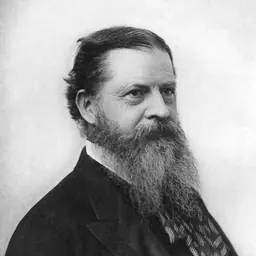
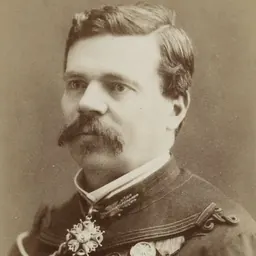

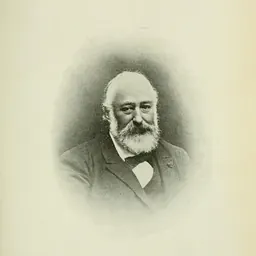
Related people
Same field, nearest in time
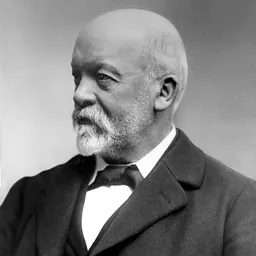


Contemporaries
People whose lives overlapped Carlos Ibáñez de Ibero's



Frequently asked questions
Who was Carlos Ibáñez de Ibero?
Spanish engineer (1825-1891)
When was Carlos Ibáñez de Ibero born?
Carlos Ibáñez de Ibero was born on 14 April 1825 in Barcelona.
When did Carlos Ibáñez de Ibero die?
Carlos Ibáñez de Ibero died on 29 January 1891 in Nice.
What was Carlos Ibáñez de Ibero's occupation?
Carlos Ibáñez de Ibero was an engineer, inventor, geographer, military personnel, geologist and director.
What was Carlos Ibáñez de Ibero known for?
Carlos Ibáñez de Ibero was known for International Committee for Weights and Measures.
What nationality was Carlos Ibáñez de Ibero?
Carlos Ibáñez de Ibero was Spanish.
Sources & further reading
· Wikipedia: Carlos Ibáñez de Ibero
· DBpedia: Carlos Ibáñez e Ibáñez de Ibero
Cite this page
APA: Biography.guide. (2026). Carlos Ibáñez de Ibero. https://biography.guide/carlos-ibanez-de-ibero/
MLA: "Carlos Ibáñez de Ibero." Biography.guide, https://biography.guide/carlos-ibanez-de-ibero/.
Chicago: "Carlos Ibáñez de Ibero." Biography.guide. https://biography.guide/carlos-ibanez-de-ibero/.
Data last updated: 2026-09-23 · Spot an error? Report a correction.
Portrait: Wikimedia Commons · author & licence
Page generated 2026-09-27 05:06 UTC