
About Fred Zinnemann
Lived 1907 – 1997 (aged 89). Fred Zinnemann was an American and Austrian film producer, film director, photographer, director, producer and focus puller.
Alfred Zinnemann (April 29, 1907 – March 14, 1997) was an Austrian and American film director, producer, and screenwriter. Born in Austria-Hungary and educated in France and Germany, Zinnemann began his career in Europe before emigrating to the US, where he specialized in shorts before making 25 feature films during his 50-year career. He won four Academy Awards, both for directing and producing, and made films in a variety of genres including thrillers, westerns, film noir, and stage adaptations.
Among his best-known films were The Search (1948), The Men (1950), High Noon (1952), From Here to Eternity (1953), Oklahoma! (1955), The Nun's Story (1959), The Sundowners (1960), A Man for All Seasons (1966), The Day of the Jackal (1973), and Julia (1977). His films received 65 Oscar nominations, winning 24; Zinnemann himself was nominated for 10, and won Best Director for From Here to Eternity (1953), Best Picture and Best Director for A Man for All Seasons (1966), and Best Documentary, Short Subjects for Benjy (1951).
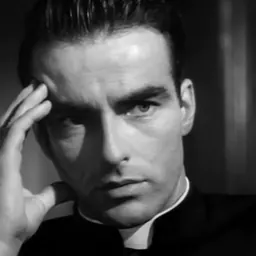
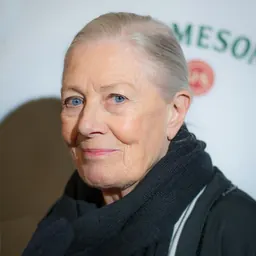
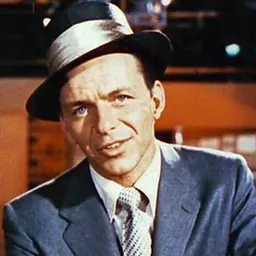
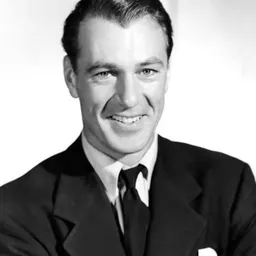
He directed and introduced a number of stars in their American film debuts, including Marlon Brando, Rod Steiger, Pier Angeli, Julie Harris, Brandon deWilde, Montgomery Clift, Shirley Jones and Meryl Streep. He directed 19 actors to Oscar nominations, including Frank Sinatra, Montgomery Clift, Audrey Hepburn, Glynis Johns, Paul Scofield, Robert Shaw, Wendy Hiller, Jason Robards, Vanessa Redgrave, Jane Fonda, Gary Cooper and Maximilian Schell.
Zinnemann was among the first directors to insist on using authentic locations and for mixing stars with non-professional actors to give his films more realism. a BAFTA Fellowship, and the French Ordre des Arts et des Lettres.
Early life quote=In Austria, discrimination had been part of life since time immemorial. It was always there, oppressive, often snide, sometimes hostile, seldom violent. It was in the air and one sensed it at all levels, in school, at work and in society. A Jew was an outsider, a threat to the country's culture. Born in Austria-Hungary (now Poland), and raised as an Austrian, he would still never truly belong. — —Fred Zinnemann the son of Jewish parents Anna (née Feiwel) and Oskar Zinnemann. He had one younger brother.
Zinnemann grew up in Vienna during the First World War, during much of which his father served as a combat medic with the Austro-Hungarian Army on the Eastern Front. Zinnemann later recalled that his father was severely traumatized by his war experiences and often suffered from nightmares.
While growing up in the First Austrian Republic, which had been formed as a rump state of a fallen Empire in 1918 and which he later described as, "a tiny, defeated, impoverished country", Zinnemann wanted to become a musician, but went on to graduate with a law degree from the University of Vienna in 1927.
1940s
After some directing success with some short films, he graduated to features in 1942, turning out two B mysteries, Kid Glove Killer and Eyes in the Night before getting his big break with The Seventh Cross (1944), starring Spencer Tracy, which became his first hit. The film was based on Anna Seghers' novel and, while filmed entirely on the MGM backlot, made realistic use of refugee German actors in even the smallest roles. The central character—an escaped prisoner played by Tracy—is seen as comparatively passive and fatalistic. He is, however, the subject of heroic assistance from anti-Nazi Germans. In a sense, the most dynamic character of the film is not the Tracy character but a humble German worker played by Hume Cronyn, who changes from Nazi sympathizer to active opponent of the regime as he aids Tracy.
After World War II, Zinnemann learned that both of his parents had been murdered in the Holocaust. However, his next film, The Search (1948), won an Oscar for screenwriting and secured his position in the Hollywood establishment. Shot in war-ravaged Germany, the film stars Montgomery Clift in his screen debut as a GI who cares for a lost Czech boy traumatized by the war. It was followed by Act of Violence (1948), a gritty film noir starring Van Heflin as a haunted POW, Robert Ryan as his hot-tempered former friend, Janet Leigh as Heflin's wife, and Mary Astor as a sympathetic prostitute. Zinnemann considered Act of Violence the first project in which he "felt comfortable knowing exactly what I wanted and exactly how to get it." During production he established a strong rapport with Gary Cooper, photographing the aging actor in many tight close-ups which showed him sweating, and at one point, even crying on screen.
Screenwriter Carl Foreman apparently intended High Noon to be an allegory of Senator Joseph McCarthy's vendetta against alleged Communists. However, Zinnemann disagreed, insisting, late in life, that the issues in the film, for him, were broader, and were more about conscience and independent, uncompromising fearlessness. He says, "High Noon is "not a Western, as far as I'm concerned; it just happens to be set in the Old West."
Film critic Stephen Prince suggests that the character of Kane actually represents Zinnemann, who tried to create an atmosphere of impending threat on the horizon, a fear of potential "fascism", represented by the gang of killers soon arriving. Zinnemann explained the general context for many of his films: "One of the crucial things today [is] trying to preserve our civilization." Zinnemann explains the theme of the film and its relevance to modern times:
For his screen adaptation of the play The Member of the Wedding (1952), Zinnemann chose Julie Harris as the film's 12-year-old protagonist, although she was by then 26 years old. Two years earlier Harris had created the role on Broadway just as the two other leading actors, Ethel Waters and Brandon deWilde, had.
Zinnemann's next film, From Here to Eternity (1953), based on the novel by James Jones, was nominated for 13 Academy Awards and would go on to win 8, including Best Picture and Best Director. Zinnemann fought hard with producer Harry Cohn to cast Montgomery Clift as the character of Prewitt, although Frank Sinatra, who was at the lowest point of his popularity, cast himself in the role of "Maggio" against Zinnemann's wishes. Sinatra would later win an Oscar for Best Supporting Actor. From Here to Eternity also featured Deborah Kerr, best known for prim and proper roles, as a philandering Army wife. Donna Reed played the role of Alma "Lorene" Burke, a prostitute and mistress of Montgomery Clift's character which earned her an Academy Award for Best Supporting Actress for 1953.
In Oklahoma! (1955), Zinnemann's version of the Rodgers and Hammerstein musical, the wide screen format Todd-AO made its debut, as did the film's young star, Shirley Jones. It was also an expression of Zinnemann's continued faith and optimism about America, with its energy and exuberance.
In 1965 he was a member of the jury at the 4th Moscow International Film Festival.
Zinnemann's fortunes changed once again with A Man for All Seasons (1966), scripted by Robert Bolt from his own play and starring Paul Scofield as Sir Thomas More, portraying him as a man driven by conscience to his ultimate fate. The film went on to win six Academy Awards, including Best Picture, Best Actor (Scofield) and Best Director, Zinnemann's second such Oscar to date. The film was also entered into the 5th Moscow International Film Festival.
After this, Zinnemann was all set to direct an adaptation of Man's Fate for MGM. However, the project was shut down in 1969, and the studio attempted to hold Zinnemann responsible for at least $1 million of the $3.5 million that had already been spent on pre-production. In protest, Zinnemann filed a lawsuit against the studio, and it would be four years before he would make his next film.
1970s By the early 1970s, Zinnemann had been out of work since the cancellation of Man's Fate; he believed it had "marked the end of an era in picture making and the dawn of a new one, when lawyers and accountants began to replace showmen as head of the studios and when a handshake was a handshake no longer."
The Day of the Jackal was followed four years later by Julia (1977), based on a story in the book Pentimento: A Book of Portraits by Lillian Hellman. The film starred Jane Fonda as a young Hellman and Vanessa Redgrave as her best friend Julia, an American heiress who forsakes the safety and comfort of both her homeland and great wealth to devote her life with fatal consequences to the Austrian Resistance to Nazism. The film was nominated for eleven Academy Awards and won three, for Best Screenplay (Alvin Sargent), Best Supporting Actor (Jason Robards), and Best Supporting Actress (Vanessa Redgrave); Zinnemann thought that Fonda's acting was extraordinary enough to merit consideration for an award as well. Zinnemann blamed the film's critical and commercial failure for his retirement from filmmaking: "I'm not saying it was a good picture. But there was a degree of viciousness in the reviews. The pleasure some people took in tearing down the film really hurt."
Final years and death Zinnemann is often regarded as striking a blow against ageism in Hollywood. The apocryphal story goes that in the 1980s, during a meeting with a young Hollywood executive, Zinnemann was surprised to find the executive didn't know who he was, despite having won four Academy Awards, and directing many of Hollywood's biggest films. When the young executive asked Zinnemann to list what he had done in his career, Zinnemann reportedly answered, "Sure. You first." In Hollywood, the story is known as "You First," and is often alluded to when veteran creators find that upstarts are unfamiliar with their work.
Zinnemann insisted, "I've been trying to disown that story for years. It seems to me Billy Wilder told it to me about himself."
Zinnemann died of a heart attack in London, England on March 14, 1997. He was 89 years old. Zinneman's remains were cremated at Kensal Green Cemetery and the cremated remains were collected from the cemetery. His wife, Renee Bartlett died on December 18, 1997.
Directing style
In From Here to Eternity, for example, he effectively added actual newsreel footage of the Japanese attack on Pearl Harbor, which enhanced and dramatized the story. Similarly, in A Hatful of Rain, he used a documentary style to present real life drug addiction in New York City. Zinnemann again incorporated newsreel footage in Behold a Pale Horse, about the Spanish Civil War. The Day of the Jackal, a political thriller about an attempt to assassinate Charles de Gaulle, was shot on location in newsreel style, while Julia placed the characters in authentic settings, as in a suspenseful train journey from Paris to Moscow during World War II. 1944 The Clock Vincente Minnelli 1951 His Majesty O'Keefe Byron Haskin 1952 The Young Lions Edward Dmytryk 1955 The Old Man and the Sea John Sturges
Birch Interval Delbert Mann Hawaii George Roy Hill Who's Afraid of Virginia Woolf? Mike Nichols 1965 The Day Custer Fell 1968 The Dybbuk
1969 Man's Fate 1970 Casualties of War Brian De Palma 1972 Abelard and Heloise 1975 The French Lieutenant's Woman Karel Reisz Awards and honours
Over the course of his career, Zinnemann received four Academy Awards, two BAFTA Awards, and two Golden Globe Awards. Academy Award for Best Short Subject, One-Reel: That Mothers Might Live (1938). Golden Globe for Best Film Promoting International Understanding: "The Search" (1948). Academy Award for Best Documentary Short Subject: Benjy (1951). New York Film Critics Circle Award for Best Director: High Noon (1952). Academy Award for Best Director, Directors Guild of America (DGA) Award for Outstanding Directorial Achievement in Motion Pictures: From Here to Eternity (1953). New York Film Critics Circle Award for Best Director: The Nun's Story (1959). Academy Award for Best Director, New York Film Critics Circle Award for Best Director, and Directors Guild of America (DGA) Award for Outstanding Directorial Achievement in Motion Pictures: A Man for All Seasons (1966). D. W. Griffith Award, 1971. BAFTA Fellowship, 1977. The film portrays a widely-reported urban legend that Reeves' role in From Here to Eternity was reduced after a poor response at early screenings. However, the real Zinnemann always denied this.
Don’t just read it —
keep it.
Full-length biographies made to live with: read them, listen on the way to work, watch them tonight.
- E-book
- Audio
- Video
Instant download · yours to keep · every purchase keeps this site free
Important facts
Family & relationships
People in Fred Zinnemann's life
Named in this biography and alive at the same time


Related people
Same field, nearest in time



Contemporaries
People whose lives overlapped Fred Zinnemann's



Frequently asked questions
Who was Fred Zinnemann?
Austrian film director (1907-1997)
When was Fred Zinnemann born?
Fred Zinnemann was born on 29 April 1907 in Vienna, Rzeszów.
When did Fred Zinnemann die?
Fred Zinnemann died on 14 March 1997 in London.
What was Fred Zinnemann's occupation?
Fred Zinnemann was a film producer, film director, photographer, director, producer and focus puller.
What nationality was Fred Zinnemann?
Fred Zinnemann was American and Austrian.
Sources & further reading
Cite this page
APA: Biography.guide. (2026). Fred Zinnemann. https://biography.guide/fred-zinnemann/
MLA: "Fred Zinnemann." Biography.guide, https://biography.guide/fred-zinnemann/.
Chicago: "Fred Zinnemann." Biography.guide. https://biography.guide/fred-zinnemann/.
Data last updated: 2026-09-26 · Spot an error? Report a correction.
Page generated 2026-09-27 05:16 UTC