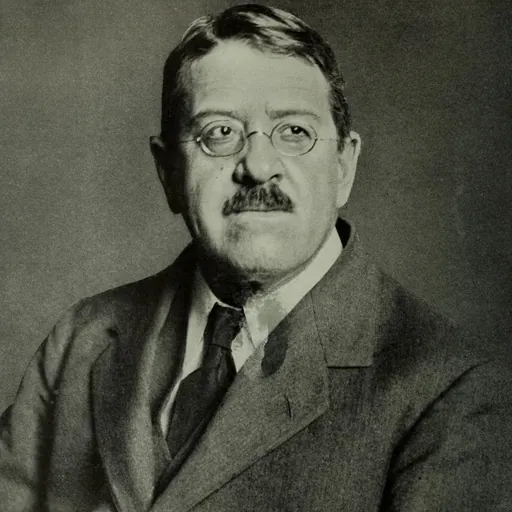
About George Andrew Reisner
Lived 1867 – 1942 (aged 74). George Andrew Reisner was an American egyptologist, archaeologist, university teacher, art historian and writer, known for Ancient Egypt.
George Andrew Reisner Jr. (November 5, 1867 – June 6, 1942) was an American archeologist of Ancient Egypt, Nubia and Palestine.
Early life Reisner was born on November 5, 1867, in Indianapolis. His parents were George Andrew Reisner Sr. and Mary Elizabeth Mason. His father's parents were of German descent.
Academic career Reisner began his studies at Harvard University in 1885. There he gained a B.A. degree in 1889, followed by a M.A. in 1891 and a Ph.D. in Semitic Languages in 1893. With the support of his advisor, assyriologist David Gordon Lyon, he became a traveling fellow and started postdoctoral work in Berlin for three years. In Germany, Reisner studied hieroglyphics with Kurt Sethe and turned towards Egyptology as his main field.
Reisner was elected to the American Academy of Arts and Sciences in 1914 and the American Philosophical Society in 1940.
In 1889, Reisner was head football coach at Purdue University, coaching for one season and compiling a record of 2–1.
Archaeology career On his return from Germany in 1899, Reisner organized his first archaeological expedition to Egypt (1899–1905), funded by philanthropist Phoebe Hearst. In subsequent seasons, he excavated the Middle Kingdom sites of Deir el-Ballas and El-Ahaiwah, where he developed an archaeological methodology that characterized his work from that moment on.
In 1902, permission to excavate the Western cemetery in Giza was granted by Gaston Maspero, director of the Egyptian Antiquities Service. The area was divided into three sections, and chosen by lot. The southern section was given to the Italians under Ernesto Schiaparelli, the northern strip to the Germans under Ludwig Borchardt, and the middle section to Andrew Reisner. He met Queen Marie of Romania in Giza. During this first expedition, Reisner gathered and catalogued approximately 17.000 objects.
In 1907, Reisner was hired by the British occupation government in Egypt to conduct an emergency survey in northern Nubia in response to potential damage of archaeological sites during the construction of the Aswan Low Dam. There, he developed a still-in-use chronology that divided the earliest history of Ancient Nubia according to four successive cultural groups that he named Group A, Group B, Group C, and Group X (although the term "group B" has fallen into disuse).
In 1910, he was appointed Curator of Egyptian Art at Boston Museum of Fine Arts and in 1911 Resiner and his family traveled back to America, where he reassumed teaching at Harvard. In 1913, Reisner was tasked with training the young archaeologist O.G.S. Crawford in excavation techniques, Crawford was later to warmly recall that Reisner was "an excavator of the first rank". Soon after, he organized the joint expedition Harvard-Boston. Between 1913 and 1916 excavations were conducted in the ancient site of Kerma (Nubia).
Reisner found the skull of a Nubian female (who he thought was a king) which is in the collection of the Peabody Museum of Archaeology and Ethnology at Harvard. Reisner believed that Kerma was originally the base of an Egyptian governor and that these Egyptian rulers evolved into the independent monarchs of Kerma. He also created a list of Egyptian viceroys of Kush. He found the tomb of Queen Hetepheres I, the mother of King Khufu (Cheops in Greek) who built the Great Pyramid at Giza. During this time he also explored mastabas. Arthur Merton (London Times) remarked in 1936 in the aftermath of the Abuwtiyuw discovery that Reisner "enjoys an unrivalled position not only as the outstanding figure in present-day Egyptology, but also as a man whose soundness of judgement and extensive general knowledge are widely conceded."
Although Reisner was not the first to acknowledge the importance of stratigraphy in archaeological excavations, he was one of the first archaeologists to apply it during his excavations in Egypt and develop the methodological principles. Previously, only Flinders Petrie had paid some serious attention to this technique in his book Methods and Aims in Archaeology. Reisner took care on identifying different stratigraphic deposits and removing them layer by layer. He insisted on the importance of recording every discovery in order to provide comprehensive interpretations of a site, taking into account the debris and minor artifacts. In this sense, he distanced himself from the work of previous excavators, whose approaches were more similar to those of treasure hunters. Reisner advanced a theory of stratigraphy in an appendix of his manual Archaeological Fieldwork in Egypt: A Method of Historical Research, published posthumously.
Views on Ancient Nubia Reisner's views on Nubia were conditioned by the theoretical ideas of his own time, many of which were based on contemporary considerations about the progress and decline of cultures.
Timeline 1897–1899: Classified Egyptology collection of the Egyptian Museum in Cairo 1899–1905: Led the Hearst Expedition of the University of California to explore burial grounds at and around Qift 1905: Edited The Hearst Medical Papyrus 1905–1914: Assistant professor of Egyptology at Harvard University 1907–1909: Directed archaeological survey of Nubia (Nilotic Sudan) for Egyptian government 1910–1942: Curator of Egyptian collections at the Boston Museum of Fine Arts 1914–1942: Professor of Egyptology at Harvard University 1916: Discovers in Jebel Barkal, in two separate caches, hard stone statues, representing Taharqa and four of his five successors: Tanwetamani, Senkamanisken, Anlamani, and Aspelta 1916–1923: Explored pyramids of Meroë, dug out temple at Napata 1931: Wrote Mycerinus (alternative name of Menkaure) 1942: Published final work, A History of the Giza Necropolis
Personal life Reisner married Mary Putnam Bronson, with whom he had a daughter, also called Mary.
Published works (reprint )
(reprint ) (with Clarence Stanley Fisher and David Gordon Lyon)
(completed by Mohammad Hassan Abd-ul-Rahman) Archaeological Fieldwork in Egypt: A Method of Historical Research. Albany: The Ancient Egyptian Heritage and Archaeology Fund, 2020. (edited Peter Lacovara, Sue D’Auria, and Jonathan P. Elias, originally written in 1924 and submitted for publication in 1937)
Head coaching record
Don’t just read it —
keep it.
Full-length biographies made to live with: read them, listen on the way to work, watch them tonight.
- E-book
- Audio
- Video
Instant download · yours to keep · every purchase keeps this site free
Important facts
People in George Andrew Reisner's life
Named in this biography and alive at the same time


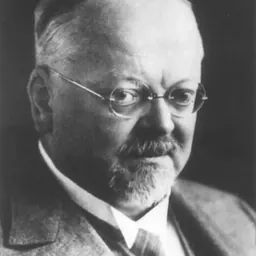
Related people
Same field, nearest in time

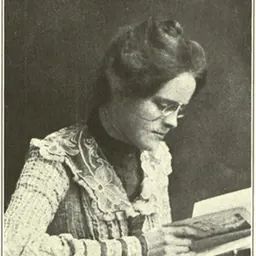

Contemporaries
People whose lives overlapped George Andrew Reisner's
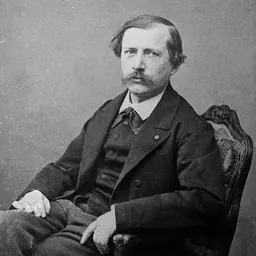




Frequently asked questions
Who was George Andrew Reisner?
American egyptologist (1867-1942)
When was George Andrew Reisner born?
George Andrew Reisner was born on 5 November 1867 in Indianapolis.
When did George Andrew Reisner die?
George Andrew Reisner died on 6 June 1942 in Giza.
What was George Andrew Reisner's occupation?
George Andrew Reisner was an egyptologist, archaeologist, university teacher, art historian and writer.
What was George Andrew Reisner known for?
George Andrew Reisner was known for Ancient Egypt.
What nationality was George Andrew Reisner?
George Andrew Reisner was American.
Sources & further reading
· Wikipedia: George Andrew Reisner
· DBpedia: George Andrew Reisner
Cite this page
APA: Biography.guide. (2026). George Andrew Reisner. https://biography.guide/george-andrew-reisner/
MLA: "George Andrew Reisner." Biography.guide, https://biography.guide/george-andrew-reisner/.
Chicago: "George Andrew Reisner." Biography.guide. https://biography.guide/george-andrew-reisner/.
Data last updated: 2026-09-21 · Spot an error? Report a correction.
Portrait: Wikimedia Commons · author & licence
Page generated 2026-09-27 05:00 UTC