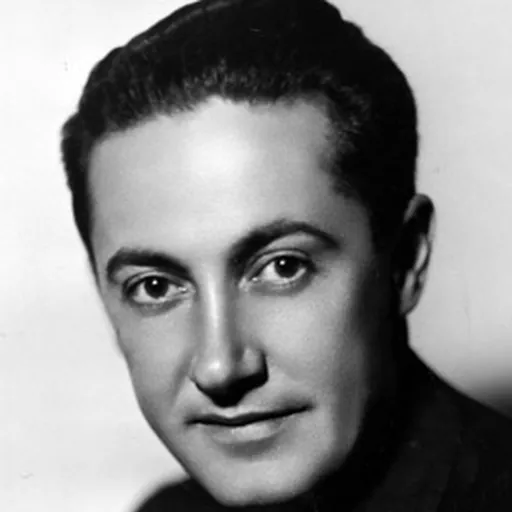
About Irving Thalberg
Lived 1899 – 1936 (aged 37). Irving Thalberg was an American film producer, screenwriter, film editor, manager, film screenwriter and studio manager.
Irving Grant Thalberg (May 30, 1899 – September 14, 1936) was an American film producer during the early years of motion pictures. He was called "The Boy Wonder" for his youth and ability to select scripts, choose actors, gather production staff, and make profitable films, including Grand Hotel, China Seas, A Night at the Opera, Mutiny on the Bounty, Camille, and The Good Earth. His films carved out an international market, "projecting a seductive image of American life brimming with vitality and rooted in democracy and personal freedom", states biographer Roland Flamini.
During his high school years in Brooklyn, he began having attacks of chest pains, dizziness and fatigue. This affected his ability to study, though until that time he was a good student. When he was 17 he contracted rheumatic fever, and was confined to bed for a year. His mother, in order to prevent him falling too far behind other students, brought him homework from school, books, and tutors to teach him at home. She also hoped that the schoolwork and reading would distract him from the "tantalizing sounds" of children playing outside his window. He devoured popular novels, classics, plays, and biographies. His books, of necessity, replaced the streets of New York, and led to his interest in classical philosophy and philosophers, such as William James. and Bernard Shaw, which converted him to socialism. In 1917, his mother (a Socialist Party activist herself), introduced him to mayoral candidate Morris Hillquit, who was impressed with the young Thalberg and hired him as a speechwriter. Besides writing them, Thalberg made his own soapbox speeches in Union Square on Hillquit's behalf, facing intimidation from Tammany Hall thugs as he did so. Although Hillquit put up a strong performance, he ultimately lost the election and Thalberg was jaded to politics in general and socialism in particular.
Thalberg was one among the majority of Hollywood film industry workers who migrated from the East Coast, primarily from New York. Some film actors, such as Conrad Nagel, did not like the five-day train trip or the sudden warmth of the California climate. Neither did Marion Davies, who was not used to such "big wide spaces".
Thalberg had von Stroheim come to his office, which he did still wearing his film costume as a Russian Imperial Guard and escorted by members of his production team. Thalberg calmly told him, "I have seen all the film and you have all you need for the picture. I want you to stop shooting", to which von Stroheim replied, "But I have not finished as yet." "Yes, you have", said Thalberg. "You have spent all the money this company can afford. I cannot allow you to spend any more."
Thalberg likewise gained the respect of leading playwrights, some of whom also looked down on him due to his youth. George S. Kaufman, co-author of Dinner at Eight, several Marx Brothers films, and two George Gershwin plays, came from New York to meet with Thalberg. Afterward he confided to his friend, Groucho Marx: "That man has never written a word, yet he can tell me exactly what to do with a story. I didn't know you had people like that out here."
In the 1934 California gubernatorial election Democrat Upton Sinclair ran against Republican Frank Merriam, the latter of whom MGM supported. Thalberg was to lead MGM's anti-Sinclair campaign and the studio recruited Carey Wilson to create a series of anti-Sinclair propaganda films. These films, directed by Felix E. Feist, included fake newsreels of Sinclair supporters who were portrayed as bums and criminals. They were shown in Californian movie theaters, with one episode featuring hired actors as Sinclair supporters speaking with foreign accents. Supposedly when one actor objected to the films Thalberg replied "Nothing is unfair in politics". This was depicted in the 2020 David Fincher film Mank, with Thalberg being portrayed by Ferdinand Kingsley.
Production innovations
Thalberg's production techniques "broke new ground in filmmaking", adds Vieira. Among his contributions at MGM was his innovation of story conferences, sneak previews and scene retakes. He introduced the first horror films and coauthored the Production Code, the set of moral guidelines that all film studios agreed to follow. Thalberg helped synthesize and merge the world of stage drama and literary classics with Hollywood films. Shortly after shooting began in late 1935, doubts of Rainer's acting ability emerged in the press. However, despite her limited appearances in the film, Rainer "so impressed audiences with one highly emotional scene" that she won the Academy Award for Best Actress.
After her winning role in The Great Ziegfeld, Thalberg wanted her to play a role that was the opposite of her previous character, for The Good Earth (1937). For the part as a Chinese peasant, she was required to act totally subservient to her husband, being perpetually huddled in submission, and barely spoke a word of dialogue during the entire film. Rainer recalls that Mayer did not approve of the film being produced or her part in it: "He was horrified at Irving Thalberg's insistence for me to play O-lan, the poor uncomely little Chinese peasant." However, she again won the Oscar for Best Actress, becoming the first actress to win two consecutive Oscars, a feat not matched until Katharine Hepburn's two Oscar wins thirty years later.
Joan Crawford Joan Crawford's first role was a Thalberg production at MGM and she became one of their leading stars for the next thirty years. Crawford was somewhat jealous of Norma Shearer as she thought she was given the better material by her husband Thalberg out of nepotism. Nevertheless, she felt that his contribution to MGM was vital to the film industry. Not long after his early death, she recalls her concerns: "Thalberg was dead and the concept of the quality 'big' picture pretty much went out the window."
Marie Dressler Thalberg also realized that old stars few had heard of could be made into new ones. Marie Dressler, a fifty-nine-year-old early vaudeville and movie star, who had played the top-billed lead, above Charles Chaplin and Mabel Normand), in the first feature-length comedy, Tillie's Punctured Romance (1914), was unable to get any roles in films after leaving show business for some years, finally working as a maid. MGM screenwriter Frances Marion suggested to Thalberg that she might fit well in a starring role for a new film, and was surprised that he knew of her prior successes. Thalberg approved of using her without a screen test and offered his rationale: My theory is that anybody who once hits the bull's-eye—it doesn't matter in what profession—has the brains and stamina to stage a comeback. So I figure that a woman who held the spotlight for so many years has been the victim of bad writing—and probably a lot of bad advice. His judgment was not always accurate, however. Thalberg's bringing Broadway productions to the screen to develop higher picture standards sometimes resulted in "studied" acting or "stagey" sets, notes Flamini. He initially had difficulty convincing Mayer that he could make the film without making heroes of the mutineers. He achieved that by instead making a hero of the British Royal Navy, whereby the officers and shipmates would from then on display their mutual respect. Thalberg also had to convince Clark Gable to accept the role against his will. He pleaded with Gable, eventually promising him that "If it isn't one of your greatest successes, I'll never ask you again to play a part you don't want."
Thalberg and Mayer partnership At first, Thalberg and studio chief Louis B. Mayer got along splendidly; however, they had different production philosophies. Thalberg preferred literary works, while Mayer preferred glitzy crowd-pleasing films. A clash was inevitable, and their relationship grew decidedly frosty. When Thalberg fell ill in the final weeks of 1932, Mayer took advantage of the situation and replaced him with David O. Selznick and Walter Wanger. Thalberg's reputation by that time for working long hours was widely known, and rumors about the related strain on his fragile health had become front-page news in entertainment trade publications. The Hollywood Reporter in January 1933 updated its readership about his condition and addressed growing concerns that he might be forced, despite his young age, to quit the business:
Once Thalberg recovered sufficiently from his bout with the "flu" and was able to return to work later in 1933, it was as one of MGM's unit producers, albeit one who had first choice on projects as well as preferential access to all the studio's resources, including over casting its stars. Thalberg's good relationship with Nicholas Schenck, then president of Loew's Incorporated, proved to be an ongoing advantage for him. Loew's was the corporate parent of MGM, so Schenck was the true power and ultimate arbiter at the studio; and he usually supported Thalberg's decisions and continued to do so whenever disagreements about projects or production needs arose. As a result, Thalberg also continued to produce or coproduce some of MGM's most prestigious and critically acclaimed ventures in this period, such as The Barretts of Wimpole Street (1934) starring his wife Norma Shearer, China Seas (1935), A Night at the Opera (1935), San Francisco (1936), and Romeo and Juliet (1936).
Personal life During his few years with Universal while living in New York, Thalberg had become romantically involved with Carl Laemmle's daughter, Rosabelle. Still in his early twenties and later spending most of his time in Los Angeles, his feelings toward her were no longer as strong. Flamini suspects that this may have affected his position at Universal and partly caused his decision to leave the company. "The Laemmles prayed that Irving would marry Rosabelle", notes Flamini. "They wanted their sons to be educated and their daughters to marry nice Jewish boys." Rabbi Edgar F. Magnin officiated at the event, with Shearer's brother Douglas Shearer giving the bride away, and Louis B. Mayer serving as best man. The couple drove to Monterey for their honeymoon and then moved into their newly constructed home in Beverly Hills.
Death Thalberg and Shearer took a much-needed Labor Day weekend vacation in Monterey, California, in 1936 (Labor Day fell on September 7 that year), staying at the same beachfront hotel where they had spent their honeymoon. A few weeks earlier, Thalberg's leading screenwriter, Albert Lewin, had proposed doing a film based on a soon-to-be published book, Gone with the Wind. Although Thalberg said it would be a "sensational" role for Gable, and a "terrific picture," he decided not to do it:
Thalberg's legacy to the movie industry is "incalculable", states biographer Bob Thomas. He notes that with his numerous production innovations and grand stories, often turning classic literature and Broadway stage productions into big-screen pictures, he managed to keep "American movies supreme throughout the world for a generation". Darryl F. Zanuck, founder of 20th Century-Fox said that during Thalberg's brief career, he had become the "most creative producer in the history of films".
Cultural legacy The Last Tycoon In October 1939, American novelist F. Scott Fitzgerald began writing The Last Tycoon, a fictionalized biography of Thalberg, naming the protagonist Monroe Stahr to represent Thalberg. "Thalberg has always fascinated me", he wrote to an editor. "His peculiar charm, his extraordinary good looks, his bountiful success, the tragic end of his great adventure. The events I have built around him are fiction, but all of them are things which might very well have happened. ... I've long chosen him for a hero (this has been in my mind for three years) because he is one of the half-dozen men I have known who were built on a grand scale."
In the 1976 film version, directed by Elia Kazan, Monroe Stahr was played by Robert De Niro. Kazan, in his pre-production notes, described the Stahr character as he saw him:
In the 2016 television series based on the novel, Monroe Stahr is played by Matt Bomer.
Others Fitzgerald also based his short story "Crazy Sunday", originally published in the October 1932 issue of American Mercury, on an incident at a party thrown by Thalberg and Shearer. The story is included in Fitzgerald's collection Taps at Reveille (1935).
Thalberg was portrayed in the movie Man of a Thousand Faces (1957) by Robert Evans, who went on to become a studio head himself.
Thalberg is parodied as Irving C. Saltzberg Jnr. in the sketch 20th Century Vole in episode 6 of Monty Python's Flying Circus. Unlike the real-life publicity-shy Thalberg, Saltzberg is obsessed with controlling (and being credited for) every single bit of a production, including writing, directing and producing, and this is likewise reflected in the closing credits (which immediately follow the sketch) for the episode. The episode is also announced as "An Irving C. Saltzberg Productions Ltd. and Saltzberg Art Films, Oil, Real Estate, Banking and Prostitution Inc. Co-Production."
Thalberg was portrayed by Bill Cusack in Young Indiana Jones and the Hollywood Follies (1994), a TV film based on The Young Indiana Jones Chronicles, in which Indiana Jones is depicted as taking part in Thalberg's conflict with Erich von Stroheim over Foolish Wives.
In 2020, Thalberg is played by Ferdinand Kingsley in the David Fincher film Mank. Max Minghella portrays him in Damien Chazelle's 2022 film Babylon. Thalberg was played by Daniel Iofredda in the 2022 Netflix series "Titans: The Rise of Hollywood.
Filmography Producer
Reputation (1921) The Hunchback of Notre Dame (1923) Merry-Go-Round (1923) His Hour (1924) He Who Gets Slapped (1924) The Unholy Three (1925) The Merry Widow (1925) The Tower of Lies (1925) The Big Parade (1925) Ben-Hur: A Tale of the Christ (1925) Torrent (1926) La Bohème (1926) Brown of Harvard (1926) The Road to Mandalay (1926) The Temptress (1926) Valencia (1926) Flesh and the Devil (1926) Twelve Miles Out (1927) The Student Prince in Old Heidelberg (1927) London After Midnight (1927) The Crowd (1928) Laugh, Clown, Laugh (1928) White Shadows in the South Seas (1928) Show People (1928) West of Zanzibar (1928) The Broadway Melody (1929) The Trial of Mary Dugan (1929) The Voice of the City (1929) Where East Is East (1929) The Last of Mrs. Cheyney (1929) The Hollywood Revue of 1929 (1929) Hallelujah (1929) His Glorious Night (1929) The Kiss (1929) Anna Christie (1930) Redemption (1930) The Divorcee (1930) The Rogue Song (1930) The Big House (1930) The Unholy Three (1930) Let Us Be Gay (1930) Billy the Kid (1930) Way for a Sailor (1930) A Lady's Morals (1930) Inspiration (1931) Trader Horn (1931) The Secret Six (1931) A Free Soul (1931) Just a Gigolo (1931) Menschen hinter Gittern (1931), German-language version of The Big House (1930) The Sin of Madelon Claudet (1931) The Guardsman (1931) The Champ (1931) Possessed (1931) Private Lives (1931) Mata Hari (1931) Freaks (1932) Tarzan the Ape Man (1932) Grand Hotel (1932) Letty Lynton (1932) As You Desire Me (1932) Red-Headed Woman (1932) Smilin' Through (1932) Red Dust (1932) Rasputin and the Empress (1932) Strange Interlude (1932) Tugboat Annie (1933) Bombshell (1933) Eskimo (1933) La Veuve Joyeuse (1934) French-language version of The Merry Widow Riptide (1934) The Barretts of Wimpole Street (1934) The Merry Widow (1934) What Every Woman Knows (1934) Biography of a Bachelor Girl (1935) No More Ladies (1935) China Seas (1935) Mutiny on the Bounty (1935) A Night at the Opera (1935) Riffraff (1936) Romeo and Juliet (1936) Camille (1936) Maytime (1937) A Day at the Races (1937) Broadway Melody of 1938 (1937) The Good Earth (1937) Marie Antoinette (1938)
Writer The Trap (1922) The Dangerous Little Demon (1922)
Awards Year Award Category Film 1923Photoplay AwardsMedal of Honor The Big Parade 1932 Smilin' Through 1934 The Barretts of Wimpole Street
Academy Awards Year Result Category Film 1927–28 Nominated Best Unique and Artistic Production The Crowd 1928–29 Won Best Picture The Broadway Melody 1928–29 Nominated Best Picture The Hollywood Revue of 1929 1929–30 Nominated Best Picture The Divorcee 1929–30 Nominated Best Picture The Big House 1930–31 Nominated Best Picture Trader Horn 1931–32 Won Best Picture Grand Hotel 1931–32 Nominated Best Picture The Champ 1932–33 Nominated Best Picture Smilin' Through 1934 Nominated Best Picture The Barretts of Wimpole Street 1935 Won Best Picture Mutiny on the Bounty 1936 Nominated Best Picture Romeo and Juliet 1937 Nominated Best Picture The Good Earth
Don’t just read it —
keep it.
Full-length biographies made to live with: read them, listen on the way to work, watch them tonight.
- E-book
- Audio
- Video
Instant download · yours to keep · every purchase keeps this site free
Important facts
Family & relationships
People in Irving Thalberg's life
Named in this biography and alive at the same time


Related people
Same field, nearest in time



Contemporaries
People whose lives overlapped Irving Thalberg's


Frequently asked questions
Who was Irving Thalberg?
American film producer (1899-1936)
When was Irving Thalberg born?
Irving Thalberg was born on 30 May 1899 in Brooklyn.
When did Irving Thalberg die?
Irving Thalberg died on 14 September 1936 in Santa Monica.
What was Irving Thalberg's occupation?
Irving Thalberg was a film producer, screenwriter, film editor, manager, film screenwriter and studio manager.
What nationality was Irving Thalberg?
Irving Thalberg was American.
Sources & further reading
Cite this page
APA: Biography.guide. (2026). Irving Thalberg. https://biography.guide/irving-thalberg/
MLA: "Irving Thalberg." Biography.guide, https://biography.guide/irving-thalberg/.
Chicago: "Irving Thalberg." Biography.guide. https://biography.guide/irving-thalberg/.
Data last updated: 2026-09-23 · Spot an error? Report a correction.
Portrait: Wikimedia Commons · author & licence
Page generated 2026-09-27 05:05 UTC