
About Augustus Matthiessen
Lived 1831 – 1870 (aged 39). Augustus Matthiessen was a British chemist and physicist, known for Calcium, Matthiessen's rule and Strontium.
Augustus Matthiessen, FRS (2 January 1831 in London – 6 October 1870 in London), the son of a merchant, was a British chemist and physicist who obtained his PhD in Germany at the University of Gießen in 1852 with Johann Heinrich Buff. He then worked with Robert Bunsen at the University of Heidelberg from 1853 to 1856. His work in this period included the isolation of calcium and strontium in their pure states. He then returned to London and studied with August Wilhelm von Hofmann from 1857 at the Royal College of Chemistry, and set up his own research laboratory at 1 Torrington Place, Russell Square, London. He was elected a Fellow of the Royal Society (FRS) in 1861. He worked as a lecturer on chemistry at St Mary's Hospital, London, from 1862 to 1868, and then at St Bartholomew's Hospital, London, from 1868. His research was chiefly on the constitution of alloys and opium alkaloids. He contributed to both physics and chemistry. (Please see references below.) For his work on metals and alloys, he was awarded the Royal Society's Royal Medal in 1869.
Matthiessen committed suicide in 1870 under "severe nervous strain" and died at St Bartholomew's Hospital in the City of London. He left an estate valued at under £7,000, and his brother William Edward Matthiessen was his executor.
Legacy The Matthiessen's rule for carrier mobility probably originated from Augustus Matthiessen's study of electrical conduction of metals and alloys. (Please see references below. Note: In Matthiessen's time, the concept of "mobility" was not established yet. The modern form of Matthiessen's rule for electron mobility (or hole mobility) is actually an extension of Matthiessen's work in the 19th century by subsequent scientists.) In 1997, Rudolf de Bruyn Ouboter briefly mentioned Matthiessen's 1864 paper in a figure inside his article about Heike Kamerlingh Onnes's discovery of superconductivity (Scientific American, March 1997).
Don’t just read it —
keep it.
Full-length biographies made to live with: read them, listen on the way to work, watch them tonight.
- E-book
- Audio
- Video
Instant download · yours to keep · every purchase keeps this site free
Important facts
People in Augustus Matthiessen's life
Named in this biography and alive at the same time
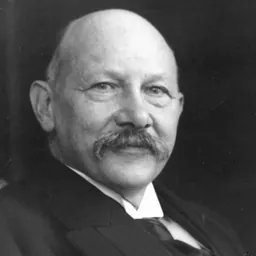

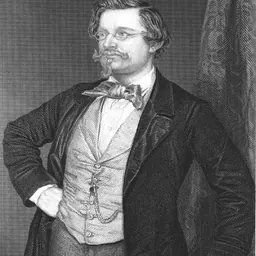
Related people
Same field, nearest in time
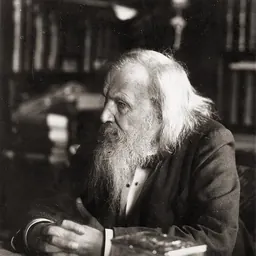



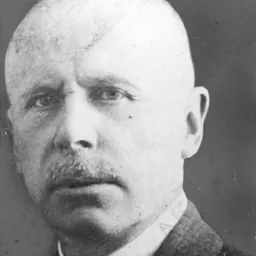
Contemporaries
People whose lives overlapped Augustus Matthiessen's



Frequently asked questions
Who was Augustus Matthiessen?
British scientist
When was Augustus Matthiessen born?
Augustus Matthiessen was born on 2 January 1831 in London.
When did Augustus Matthiessen die?
Augustus Matthiessen died on 6 October 1870 in London.
What was Augustus Matthiessen's occupation?
Augustus Matthiessen was a chemist and physicist.
What was Augustus Matthiessen known for?
Augustus Matthiessen was known for Calcium, Matthiessen's rule and Strontium.
What nationality was Augustus Matthiessen?
Augustus Matthiessen was British.
Sources & further reading
· Wikipedia: Augustus Matthiessen
· DBpedia: Augustus Matthiessen
Cite this page
APA: Biography.guide. (2026). Augustus Matthiessen. https://biography.guide/augustus-matthiessen/
MLA: "Augustus Matthiessen." Biography.guide, https://biography.guide/augustus-matthiessen/.
Chicago: "Augustus Matthiessen." Biography.guide. https://biography.guide/augustus-matthiessen/.
Data last updated: 2026-09-20 · Spot an error? Report a correction.
Page generated 2026-09-27 05:23 UTC