
About W. Ford Doolittle
Born 1941. W. Ford Doolittle is an American biochemist, molecular biologist and university teacher, known for Horizontal gene transfer.
Warren Ford Doolittle (born in November 30, 1941 in Urbana, Illinois) is an evolutionary and molecular biologist. He is a member of the US National Academy of Sciences a Fellow of the Royal Society of Canada, a Fellow of the Royal Society (United Kingdom) and of the Norwegian Academy of Science and Letters. He is also the winner of the 2013 Herzberg Medal of the Natural Sciences and Engineering Research Council of Canada and the 2017 Killam Prize. In June 2025 he was appointed as a Companion of the Order of Canada.
Doolittle has made significant contributions to the study of cyanobacteria. He found evidence for the endosymbiont origins of chloroplasts, and developed a theoretical basis for the initial evolution of eukaryotes. He has shown the importance of horizontal gene transfer in prokaryotic evolution.
, he has been professor emeritus at Dalhousie University in Halifax, Nova Scotia. He received his BA in biochemical sciences from Harvard University in 1963 and his PhD from Stanford University in 1967, under Charles Yanofsky. He went on to do postdoctoral fellowships with Sol Spiegelman and Norman R. Pace.
In 1981, Doolittle received some level of notoriety for his article in The CoEvolution Quarterly entitled "Is Nature Really Motherly?". This was a sharp rebuttal of J. E. Lovelock's formulation of the Gaia Theory. Doolittle's article is often cited by Lovelock's critics. He has had a re-think about Gaia, publishing an open access book, Darwinizing Gaia, in 2024, with MIT Press.
Because of his philosophical musings on the non-existence of an all-encompassing Tree of life, Doolittle has occasionally been cited by Intelligent Design activists. However, though Doolittle argues that a bifurcating tree is not an adequate metaphor for the evolution of life on earth, he is not a supporter of Intelligent Design. A single complete tree relating all of life on earth is not a necessary component of evolution.
Doolittle was involved in a debate about the proper use of function (biology) within evolutionary biology sparked by controversy over the results of the ENCODE consortium stating that 80% of the genome is "functional". He is a supporter of the concept of junk DNA.
In addition to his contributions to evolutionary biology, Doolittle is an artist who studied at NSCAD University, achieving a BA in photography.
Awards and honors 2013 Herzberg Medal of the Natural Sciences and Engineering Research Council of Canada 2017 Killam Prize
Selected publications
Don’t just read it —
keep it.
Full-length biographies made to live with: read them, listen on the way to work, watch them tonight.
- E-book
- Audio
- Video
Instant download · yours to keep · every purchase keeps this site free
Important facts
People in W. Ford Doolittle's life
Named in this biography and alive at the same time
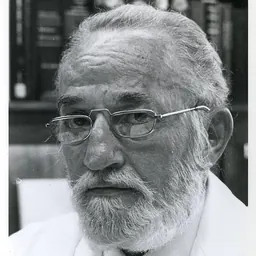

Related people
Same field, nearest in time
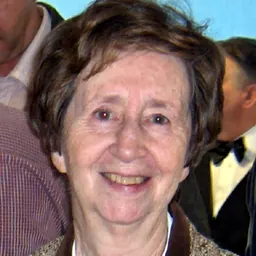

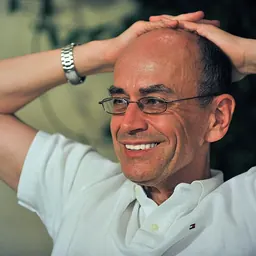



Contemporaries
People whose lives overlapped W. Ford Doolittle's
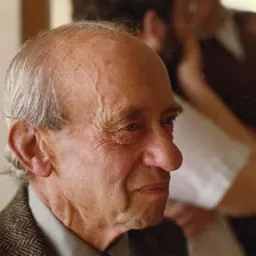


Frequently asked questions
Who is W. Ford Doolittle?
American biochemist
When was W. Ford Doolittle born?
W. Ford Doolittle was born on 30 November 1941 in Urbana.
What is W. Ford Doolittle's occupation?
W. Ford Doolittle is a biochemist, molecular biologist and university teacher.
What is W. Ford Doolittle known for?
W. Ford Doolittle is known for Horizontal gene transfer.
What nationality is W. Ford Doolittle?
W. Ford Doolittle is American.
Sources & further reading
· Wikipedia: W. Ford Doolittle
Cite this page
APA: Biography.guide. (2026). W. Ford Doolittle. https://biography.guide/w-ford-doolittle/
MLA: "W. Ford Doolittle." Biography.guide, https://biography.guide/w-ford-doolittle/.
Chicago: "W. Ford Doolittle." Biography.guide. https://biography.guide/w-ford-doolittle/.
Data last updated: 2026-09-24 · Spot an error? Report a correction.
Page generated 2026-09-27 05:02 UTC