
François Jacob
French biologist and geneticist, winner of the Nobel Prize in 1965
About François Jacob
Lived 1920 – 2013 (aged 92). François Jacob was a French biochemist, university teacher, geneticist, physiologist, autobiographer and professor, known for Operon.
François Jacob (; 17 June 1920 – 19 April 2013) was a French biologist. He shared the 1965 Nobel Prize in Physiology or Medicine with Jacques Monod and André Lwoff "for their discoveries concerning genetic control of enzyme and virus synthesis". He and Monod originated the idea that control of enzyme levels in all cells occurs through regulation of transcription. For his work in the French Resistance, he received the Cross of Liberation, the Légion d'honneur and Croix de guerre.
He wrote popular science, and in 1994 received the inaugural Lewis Thomas Prize.
Early years Jacob was born the only child of Simon, a merchant, and Thérèse (Franck) Jacob, in Nancy, France. An inquisitive child, he learned to read at a young age. Albert Franck, Jacob's maternal grandfather, a four-star general, was Jacob's childhood role model. At seven he entered the Lycée Carnot, where he was schooled for the next ten years; in his autobiography, he describes his impression of it: "a cage". He was antagonized by rightist youth at the Lycée Carnot around 1934. He describes his father as a "conformist in religion", while his mother and other family members important in his childhood were secular Jews; shortly after his bar mitzvah, he became an atheist.
Though interested (and talented) in physics and mathematics, Jacob was horrified at the prospect of spending two additional years in "an even more draconian regime" to prepare for higher study at the Polytechnique. Instead, after observing a surgical operation that cemented his "slight interest" in medicine, he entered medical school.
During the German occupation of France—and on the heels of his mother's death—Jacob left France for Great Britain to join the war effort. Jacob, who had only completed his second year of medical studies, joined the medical company of the French 2nd Armored Division in 1940. He was injured in a German air attack in 1944 and returned to now-liberated Paris on 1 August 1944. For his wartime service, he was awarded France's WWII highest decoration for valor, the Cross of Liberation, as well as Légion d'honneur and Croix de guerre.
After his recovery, Jacob returned to medical school and began researching tyrothricin and learning the methods of bacteriology in the process. He completed a thesis he described as "replicating American work" on the effectiveness of the antibiotic against local infections, and became a medical doctor in 1947. Though attracted to research as a career, he was discouraged by his own perceived ignorance after attending a microbiology congress that summer. Instead, he took a position at the Cabanel Center, where he had done his thesis research; his new work entailed the manufacture of an antibiotic, tyrothricin. Later, the center was contracted to convert gunpowder factories for penicillin production (though this proved impossible).
Also in this period, he met and began courting his future wife, the concert pianist, Lise Bloch. They had four children together. Lise died in 1983 and Jacob married Geneviève Barrier in1999.
Research
In 1958, Monod was watching a film with his wife and told her "I think I’ve just thought up something important." 1965 Nobel Prize in Physiology or Medicine with André Lwoff 1969 elected to the American Philosophical Society 1973 Elected a Foreign Member of the Royal Society (ForMemRS) 1996 Lewis Thomas Prize for Writing about Science 1996 Académie Française Seat 38
Don’t just read it —
keep it.
Full-length biographies made to live with: read them, listen on the way to work, watch them tonight.
- E-book
- Audio
- Video
Instant download · yours to keep · every purchase keeps this site free
Important facts
People in François Jacob's life
Named in this biography and alive at the same time
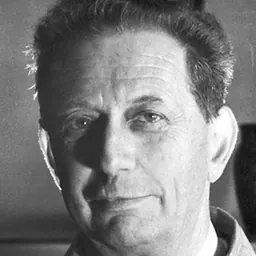



Related people
Same field, nearest in time

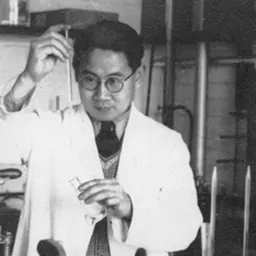


Contemporaries
People whose lives overlapped François Jacob's




Frequently asked questions
Who was François Jacob?
French biologist and geneticist, winner of the Nobel Prize in 1965
When was François Jacob born?
François Jacob was born on 17 June 1920 in Nancy.
When did François Jacob die?
François Jacob died on 19 April 2013 in 14th arrondissement of Paris.
What was François Jacob's occupation?
François Jacob was a biochemist, university teacher, geneticist, physiologist, autobiographer and professor.
What was François Jacob known for?
François Jacob was known for Operon.
What nationality was François Jacob?
François Jacob was French.
Sources & further reading
Cite this page
APA: Biography.guide. (2026). François Jacob. https://biography.guide/francois-jacob/
MLA: "François Jacob." Biography.guide, https://biography.guide/francois-jacob/.
Chicago: "François Jacob." Biography.guide. https://biography.guide/francois-jacob/.
Data last updated: 2026-09-20 · Spot an error? Report a correction.
Page generated 2026-09-27 05:28 UTC