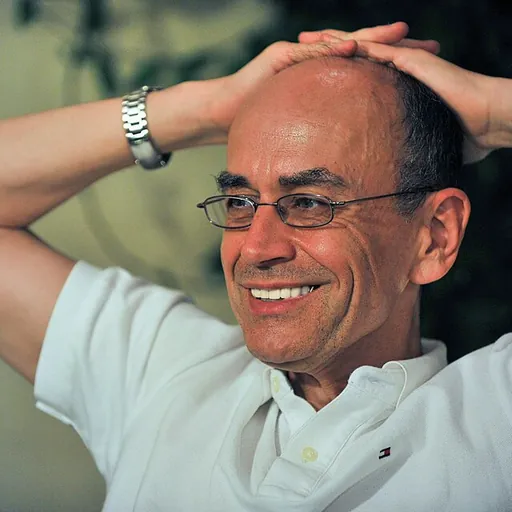
About Thomas C. Südhof
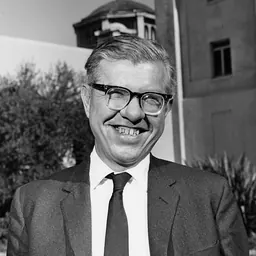
Born 1955. Thomas C. Südhof is a German and American biochemist, physician, university teacher and chemist, known for Chemical synapse and Neurotransmission.
Thomas Christian Südhof (; born December 22, 1955), is a German-American biochemist known for his study of synaptic transmission. Currently, he is a professor in the school of medicine in the department of molecular and cellular physiology, and by courtesy in neurology, and in psychiatry and behavioral sciences at Stanford University.
Südhof, James Rothman and Randy Schekman are the 2013 Nobel Prize in Physiology or Medicine laureates for their work on vesicle trafficking. Early life and education A German native, Südhof was born in Göttingen in 1955. He spent his childhood in Göttingen and Hannover. He studied music in his youth, specifically the bassoon, and has credited his bassoon instructor, Herbert Tauscher, as his "most influential teacher". He was a graduate from the Hannover Waldorf School in 1975. Südhof studied medicine at the RWTH Aachen University, Harvard University, and then the University of Göttingen. In Göttingen Südhof worked on his doctoral thesis, in which he described the structure and function of chromaffin cells, at the Max Planck Institute for Biophysical Chemistry in the lab of Victor P. Whittaker. In 1982, he received his MD in medical science (Dr.med.) from the University of Göttingen.
He was born in an anthroposophical family, but has left anthroposophy since his youth.
Career and research After a brief postdoctoral fellowship in Whittaker's lab, Südhof moved to the United States in 1983, where he began postdoctoral training in the department of molecular genetics at the University of Texas Health Science Center (now the UT Southwestern Medical Center) in Dallas, Texas, under the supervision of Michael Stuart Brown and Joseph L. Goldstein.
During his postdoctoral research fellowship, Südhof worked to describe the role of the LDL receptor in cholesterol metabolism, for which Brown and Goldstein were awarded the Nobel Prize in Physiology or Medicine in 1985. Südhof finished his postdoctoral training in 1986 and was elected to be an investigator of the Howard Hughes Medical Institute. He then established his own laboratory at UT Southwestern Medical Center where he focused on the molecular and cellular neurosciences centered on synapses for over 20 years.
In 2008, Südhof moved to Stanford University and is currently the Avram Goldstein Professor in the School of Medicine as well as a Professor of Molecular & Cellular Physiology, Psychiatry, and Neurology.
Südhof laid the foundations for his scientific career studying the synapse early while studying the mechanisms of neurotransmitter dependent hormone release from neuroendocrine cells for his doctoral thesis at the Max Planck Institute for Biophysical Chemistry. Südhof described the structure and function of chromaffin cells which are responsible for the release of epinephrine, norepinephrine and endorphins from the medulla of the adrenal gland. Innervated by sympathetic nervous system, chromaffin cells are important in the initiation of the fight-or-flight response of animals when exposed to threatening stimuli.
After completing his thesis in 1983, Südhof moved to UT Southwestern Medical Center for his postdoctoral training where he began researching in the department of molecular genetics under the supervision of Joseph L. Goldstein and Michael Stuart Brown. While a postdoctoral fellow, Südhof cloned the gene for the low-density lipoprotein receptor and, soon after, was able to explain its transcriptional regulation by cholesterol. When LDL receptors, found concentrated in the liver, bind specific free blood cholesterol, low-density lipoprotein, they are internalized and recycled removing the cholesterol from circulation. This process is a primary source of blood cholesterol regulation and variations in its efficiency were shown to be present in familial hypercholesterolemia. As a result of the discovery, LDL receptor function had also elucidated the principle of receptor-mediated endocytosis—a now universally understood process in cell biology. Goldstein and Brown were awarded the Nobel Prize in Physiology or Medicine for the discovery in 1985.
After finishing postdoctoral training, Südhof started his own laboratory at UT Southwestern in 1986. Briefly continuing work with Goldstein and Brown, Südhof helped identify a DNA element in the LDL gene that produced sterol mediated end-product repression when inserted in a viral promoter. This domain, known as a sterol regulatory sequence, directly participates in the regulation of sterol biosynthesis. Sterols are a major class of biomolecule and critical for life. Important sterols in humans include cholesterol and steroid hormones. Discovery of sterol regulatory elements and LDL receptor function led to the subsequent development of statin derived cholesterol medications such as atorvastatin (Lipitor)—the top-selling branded pharmaceutical drug in the world in 2008. Südhof maintains that nearly all criticisms were unfounded or allege trivial errors with no impact on scientific conclusions and that publicly available raw data fully support the conclusions because technical details were unresolvable.
Südhof has retracted two papers, a 2017 paper in Neuron and a 2023 paper in the Proceedings of the National Academy of Science.
Motivated by the intense scrutiny of his work and the realization that over the decades, his lab committed several mistakes, Südhof has initiated a general discussion on science integrity. A key question emerging is whether there is a need to publicly expose and formally correct errors in older papers if such errors have no implications for the conclusions of a paper. A broader issue is whether retractions of papers are really warranted if the overall conclusions of a paper are correct.
Science and policy Südhof recently also engages in scientific ethics as exemplified by his recent work at PLOS Biology Truth in Science Publishing: A personal Perspective and various interviews including his discussion about music, policy and medicine with The Lancet. In 2017, he published an article in The Washington Post on basic research vs. drug development.
Other activities In 2023, Südhof was appointed by United Nations Secretary General António Guterres to the United Nations' Scientific Advisory Board.
Awards and honors
1993 W. Alden Spencer Award from Columbia University (shared with Richard Scheller) 1994 Wilhelm Feldberg Award 1997 Roger Eckert Award Lecture, Göttingen 1997 U.S. National Academy Award in Molecular Biology (shared with Richard Scheller) 2002 Elected to the National Academy of Sciences of the U.S.A. 2003 Metlife Foundation Award for Medical Research in Alzheimer's Disease (shared with Roberto Malinow) 2004 Bristol-Myers Squibb Award for Distinguished Achievement in Neuroscience Research 2004 Ulf von Euler Award Lecture, Karolinska Institute 2007 Elected to the Institute of Medicine 2008 Bernhard Katz Award, Biophysical Society (shared with Reinhard Jahn) 2008 Passano Foundation Award 2010 Kavli Prize (shared with Richard Scheller and James Rothman) 2013 Albert Lasker Award for Basic Medical Research (shared with Richard Scheller) 2013 Nobel Prize in Physiology or Medicine - shared with Randy Schekman and James Rothman 2014 Golden Plate Award of the American Academy of Achievement 2017 Elected a Foreign Member of the Royal Society (ForMemRS)
Personal life Südhof is married to Lu Chen, a professor of neurosurgery and of psychiatry and behavioral sciences at Stanford University. The couple have three children. Südhof has four more children from his previous marriage with Annette Südhof.
Don’t just read it —
keep it.
Full-length biographies made to live with: read them, listen on the way to work, watch them tonight.
- E-book
- Audio
- Video
Instant download · yours to keep · every purchase keeps this site free
Important facts
Family & relationships
People in Thomas C. Südhof's life
Named in this biography and alive at the same time






Related people
Same field, nearest in time
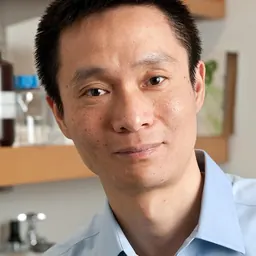
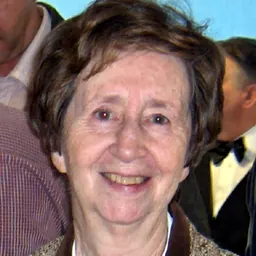
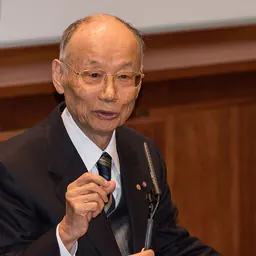


Contemporaries
People whose lives overlapped Thomas C. Südhof's
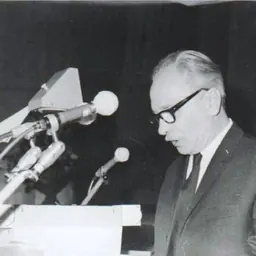
Frequently asked questions
Who is Thomas C. Südhof?
German biochemist
When was Thomas C. Südhof born?
Thomas C. Südhof was born on 22 December 1955 in Göttingen.
What is Thomas C. Südhof's occupation?
Thomas C. Südhof is a biochemist, physician, university teacher and chemist.
What is Thomas C. Südhof known for?
Thomas C. Südhof is known for Chemical synapse and Neurotransmission.
What nationality is Thomas C. Südhof?
Thomas C. Südhof is German and American.
Sources & further reading
Cite this page
APA: Biography.guide. (2026). Thomas C. Südhof. https://biography.guide/thomas-c-sudhof/
MLA: "Thomas C. Südhof." Biography.guide, https://biography.guide/thomas-c-sudhof/.
Chicago: "Thomas C. Südhof." Biography.guide. https://biography.guide/thomas-c-sudhof/.
Data last updated: 2026-09-20 · Spot an error? Report a correction.
Portrait: Wikimedia Commons · author & licence
Page generated 2026-09-27 04:57 UTC