
About Mary Macarthur
Lived 1880 – 1921 (aged 40). Mary Macarthur was a Scottish politician, suffragette, trade unionist and editor, known for Trade union and Women's suffrage in the United Kingdom.
Mary Reid Anderson (née Macarthur; 13 August 1880 – 1 January 1921) was a Scottish suffragist (although at odds with the national groups who were willing to let a minority of women gain the franchise)
In 1910, Macarthur led the women chain makers of Cradley Heath to victory in their fight for a minimum wage and led a strike to force employers to implement the rise.
Around 1901, Macarthur became a trade unionist after hearing a speech made by John Turner about how badly some workers were being treated by their employers. She became secretary of the Ayr branch of the Shop Assistants' Union, and her interest in this union led to her work for the improvement of women's labour conditions. In 1902 Mary became friends with Margaret Bondfield who encouraged her to attend the union's national conference where Macarthur became the first woman to be elected to the union's national executive.
Family life Macarthur was born on 13 August 1880 in Glasgow, the eldest of six children of John Duncan Macarthur, the owner of a drapery business, and his wife, Anne Elizabeth Martin. She attended Glasgow Girls' High School, and, after editing the school magazine, decided she wanted to become a full-time writer. After her Glasgow schooling she spent time studying in Germany before returning to Scotland to work for her father as a bookkeeper. Macarthur's view was criticised by the middle-class leaders of the Votes for Woman movement who thought that a partial enfranchisement was more likely to succeed and that would make it easier to achieve a full suffrage.
The Women's Trade Union League united women-only unions from different trades including a mixed-class membership.
To solve this conflict Macarthur founded the National Federation of Women Workers in 1906. The model for the Federation was a general labour union, "open to all women in unorganised trades or who were not admitted to their appropriate trade union."
In 1910 the women chainmakers of Cradley Heath won a battle to establish the right to a fair wage following a 10-week strike. This landmark victory changed the lives of thousands of workers who were earning little more than 'starvation wages'. Macarthur was the trade unionist who led the women chain makers in their fight for better pay. In reference to female earnings, Macarthur commented that "women are unorganised because they are badly paid, and poorly paid because they are unorganised.". The dispute ended on the 22 October 1910 when the last of the employers agreed to pay the minimum wage. The Cradley Heath Workers' Institute was funded using money left over from the strike fund of the 1910.
Because of the fame she had earned as an organiser at Cradley Heath Macarthur was immediately sent for in August, 1911, when the Bermondsey Uprising began. Early in 1911 Ada Salter had founded a Women's Labour League (WLL) branch in Bermondsey and was recruiting women in the local food and drink factories to Macarthur's NFWW. In August, one of the hottest on record, the appalling conditions in some of these factories became unbearable and 14,000 women suddenly walked out on strike from 22 factories. This was the Bermondsey Uprising. Though inspired by Salter, it was Macarthur who organised the strikers, led the negotiations and secured a historic victory for low-paid women.
The highlight was a mass rally in Southwark Park where the blistering oratory of Macarthur was backed up by suffragists Sylvia Pankhurst, Charlotte Despard and George Lansbury. In 1911, Macarthur also married William Crawford Anderson, chairman of the executive committee of the Labour party,
Although an opponent of the war, Macarthur nonetheless became secretary of the Ministry of Labour's central committee on women's employment.
The Stourbridge Parliamentary Election 1918 After the Representation of the People Act 1918 had enfranchised women over the age of thirty and the Parliament (Qualification of Women) Act 1918 allowed women to stand for Parliament, Macarthur stood as Labour Party candidate in the newly created county constituency Stourbridge, Worcestershire at the General Election on 14 December 1919. This was a large constituency which included Halesowen, Oldbury, Cradley and Warley Woods. It did not include the Cradley Heath area where she had led the chain makers' dispute.
The returning officer insisted that she was listed under her married name of Mrs W.C. Anderson. The defending Liberal MP was John Wilson a director of the Albright and Wilson chemicals firm in Oldbury, which was in the constituency. She was also opposed by Victor Fisher of the National Democratic and Labour Party, who had the support of the Coalition, secret funding from the Unionists, and ran a particularly abusive campaign. During the campaign she worked closely with John Davison, the Labour candidate in neighbouring Smethwick to defeat Christabel Pankhurst who was running as the Coalition candidate with Unionist support. Macarthur was defeated, as were most anti-war candidates, including her husband, William Anderson, who was defending Sheffield, Attercliffe.
Later years and death
Mary Macarthur continued her involvement with the Women's Trade Union League and was instrumental in its eventual integration as the Women's Section of the Trades Union Congress, helping to amplify the voice of working women within the broader labor movement.
In 1918 she employed Dorothy Elliott to be employed by the National Federation of Women Workers. Macarthur was the General Secretary and Elliott was employed to recruit workers into the union. She was paid less than she had earned as a munitions worker during the war and she was expected to work every day of the week on a 14 hour day.
William Anderson died during the 1919 influenza epidemic.
Mary Macarthur Anderson died of cancer on 1 January 1921, at the age of 40, in Golders Green, London. Awards are made in memory of "pioneers of trade unionism",
A statue was unveiled of Mary Macarthur in Mary Macarthur Gardens in Cradley Heath, West Midlands in 2012. She is also remembered in the name of Mary Macarthur Drive, Cradley Heath.
On the eve of International Women's Day 2017, a blue plaque was unveiled at her home at 42 Woodstock Road in Golders Green, where she lived while she was at her most prominent.
Her name and picture (and those of 58 other women's suffrage supporters) are on the plinth of the statue of Millicent Fawcett in Parliament Square, London, unveiled in 2018.
There is social housing in London named after Mary Macarthur at Field Road, Hammersmith; Walter Street, Bethnal Green; and Wythenshawe Road, Dagenham.
In popular culture
Mary Macarthur was featured in the Townsend Theatre Productions touring folk ballad Rouse Ye Women during April 2019. This included a performance at Cradley Heath Library. Bryony Purdue played the role of Macarthur supported by Neil Gore and Rowan Godel.
There is an annual festival organised by local trade unionists each July in Cradley Heath to commemorate the 1910 chain makers' strike.
Gallery
Don’t just read it —
keep it.
Full-length biographies made to live with: read them, listen on the way to work, watch them tonight.
- E-book
- Audio
- Video
Instant download · yours to keep · every purchase keeps this site free
Important facts
Family & relationships
People in Mary Macarthur's life
Named in this biography and alive at the same time


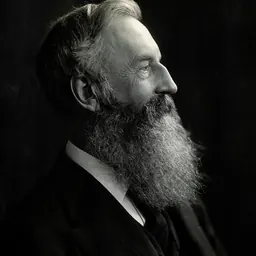
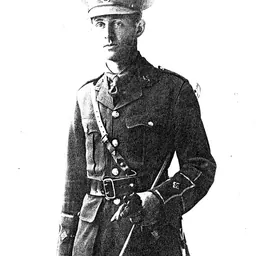
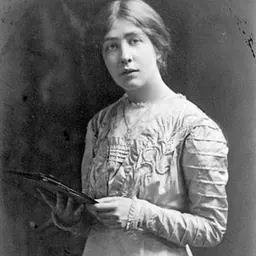
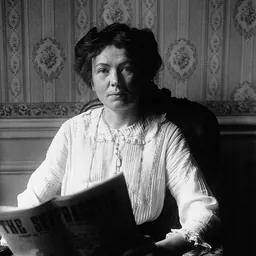
Related people
Same field, nearest in time





Contemporaries
People whose lives overlapped Mary Macarthur's




Frequently asked questions
Who was Mary Macarthur?
British labour organizer, editor
When was Mary Macarthur born?
Mary Macarthur was born on 13 August 1880 in Ayr.
When did Mary Macarthur die?
Mary Macarthur died on 1 January 1921 in Golders Green.
What was Mary Macarthur's occupation?
Mary Macarthur was a politician, suffragette, trade unionist and editor.
What was Mary Macarthur known for?
Mary Macarthur was known for Trade union and Women's suffrage in the United Kingdom.
What nationality was Mary Macarthur?
Mary Macarthur was Scottish.
Sources & further reading
Cite this page
APA: Biography.guide. (2026). Mary Macarthur. https://biography.guide/mary-macarthur-politician/
MLA: "Mary Macarthur." Biography.guide, https://biography.guide/mary-macarthur-politician/.
Chicago: "Mary Macarthur." Biography.guide. https://biography.guide/mary-macarthur-politician/.
Data last updated: 2026-09-20 · Spot an error? Report a correction.
Page generated 2026-09-27 05:33 UTC