
About Ada Salter
Lived 1866 – 1942 (aged 76). Ada Salter was a British political activist, social worker and politician.
Ada Salter (née Brown; 20 July 1866 – 4 December 1942) was an English social reformer, environmentalist, pacifist and Quaker, President of the Women's Labour League and President of the National Gardens Guild. She was one of the first women councillors in London, the first woman mayor in London and the first Labour woman mayor in the British Isles.
Early life and marriage Ada Brown was born on 20 July 1866 into a Methodist family in Raunds, Northamptonshire. She had several sisters - Mary, Beatrice, Alice and Adelaide - and a brother, Richard, who became a minister in Lancaster. Ada Brown was active in the Methodist church and on the radical wing of the Liberal Party before she moved to London. There she joined the West London Mission in Bloomsbury to work as a 'Sister of the People' in the slums of St Pancras. The Sisters were run by Katherine Hughes, wife of the mission's founder Hugh Price Hughes and an inspirational Christian socialist in her own right. In 1897, after the marriage of her sister Mary Baldwin, Joyce's photo was daily decorated with flowers and ivy leaves in Alfred's study.
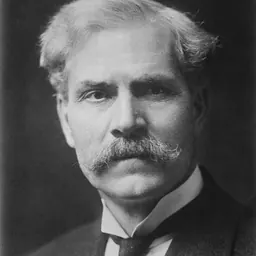
Ada responded by throwing herself into the work of the Women's Labour League, which she had co-founded in 1906 with Margaret MacDonald, wife of Labour's rising star, James Ramsay MacDonald. She rose to be first its National Treasurer and then in 1914 its National President, the leader of all the Labour Party women in Britain. The WLL was not tied to any particular suffragist movement but Ada supported the non-violent Women's Freedom League, led by her friend Charlotte Despard, rather than endorse the tactics of the Women's Social and Political Union led by Emmeline Pankhurst.
In the WLL Ada did pioneering research work on social housing, seeking not only to demolish the slums but to put in their place model council houses (often derided by her opponents as utopian) built specifically with the needs of working-class women in mind. To expedite demolition, she and her WLL comrades called for a Green Belt around London, to absorb the excess population from the slums. Ada followed John Ruskin in believing that fresh air and contact with nature improved people not only physically but mentally and morally. She became a proponent of urban gardening, and a pioneer of organised campaigning against air pollution in London.
What brought her the greatest renown before 1914 was, however, the Bermondsey Uprising of 1911. She had in 1910 started to recruit women in the local factories to a trade union, the National Federation of Women Workers, led by Mary Macarthur. At first the results were disappointing, but in August 1911, 14,000 women walked out on strike in protest against terrible working conditions. They won. Ada was hailed by the ILP and the WLL as the inspiration of this big step forward for women's rights at work (though she was only one factor) and for this, as well as for the huge organisational effort including what we would now consider as family food banks during the dockers' strike of 1912 (see Ben Tillett), she was honoured by the trade unions which are known today as Unite and the GMB. Ada spoke out for equality among workers, not just in the workplace but in the labour movement:“When the trades union movement fully realises that all the workers, men and women, youth and maidens, were members one of another, then they will hear more than the rumble of revolution in the distance, the revolution will be here.” Finally, after the 1934 London County Council election, when Labour led by Herbert Morrison took control, Ada was able to spread her green socialist ideals to every corner of the capital. The Green Belt was secured by law in 1938.
Ada felt the 1939 war as much a catastrophe as the 1914 one. In 1942, Ada and Alfred were bombed out of their home in Storks Road after refusing to leave Bermondsey to its fate, as others did. She died, cared for by her sisters, in Balham Park Road, Battersea, on 4 December 1942 and was accorded a Quaker funeral at Peckham Meeting-House, where she was an elder. There was also a memorial service at her Church of England parish church of St James Bermondsey. Her widower said a month later: "The loneliness grows deeper and has not lessened in the slightest with the lapse of time. Sometimes it is almost unbearable, but I have to learn to bear it."
Memorials to Alfred and Ada Salter
A beautiful garden, overlooking a lake, designed and supervised by Ada herself, was opened in 1936 within Southwark Park, in the Old Surrey Docks area. It was spontaneously referred to by locals as the 'Ada Salter Garden' and in 1943 the name was formally recognised by the LCC.
The Alfred Salter Primary School was opened in 1995 to meet the growing demand for school places in Rotherhithe, due to the redevelopment of the old docks. The Alfred Salter Bridge is a footbridge leading off Watermans Lane, between Stave Hill and Redriff Road, near Greenland Dock as part of the Russia Dock Woodland.
A set of statues was commissioned in 1991, depicting Dr Salter sitting on a bench facing the Thames, little Joyce standing by the river, with a cat perched on the wall. In November 2011 these were stolen, presumably for the value of the bronze. The Salter Statues Campaign group raised £60,000, which Southwark Council matched, to pay for replacement statues by Diane Gorvin, and these were unveiled on 30 November 2014. Ada's statue was only the 15th public statue in London to a woman. The Ada Salter room at Friends House, London, UK is named after her.
In 2015 a play about Ada Salter, Red Flag over Bermondsey, by Lynn Morris was performed all over the country. In 2016 her first full biography appeared: Ada Salter, Pioneer of Ethical Socialism by Graham Taylor.
In January 2023, English Heritage announced that a blue plaque would be unveiled later that year in Southwark which Salter had lived in during the late 1890s. The plaque was unveiled in March 2023 at 149 Lower Road in Rotherhithe where Salter lived in the late 1890.
Don’t just read it —
keep it.
Full-length biographies made to live with: read them, listen on the way to work, watch them tonight.
- E-book
- Audio
- Video
Instant download · yours to keep · every purchase keeps this site free
Important facts
People in Ada Salter's life
Named in this biography and alive at the same time





Related people
Same field, nearest in time




Contemporaries
People whose lives overlapped Ada Salter's


Frequently asked questions
Who was Ada Salter?
British socialist & pacifist (1866–1942)
When was Ada Salter born?
Ada Salter was born on 20 July 1866 in Northamptonshire.
When did Ada Salter die?
Ada Salter died on 5 December 1942 in Battersea.
What was Ada Salter's occupation?
Ada Salter was a political activist, social worker and politician.
What nationality was Ada Salter?
Ada Salter was British.
Sources & further reading
Cite this page
APA: Biography.guide. (2026). Ada Salter. https://biography.guide/ada-salter/
MLA: "Ada Salter." Biography.guide, https://biography.guide/ada-salter/.
Chicago: "Ada Salter." Biography.guide. https://biography.guide/ada-salter/.
Data last updated: 2026-09-25 · Spot an error? Report a correction.
Page generated 2026-09-27 05:13 UTC