
About S. R. Rana
Lived 1870 – 1957 (aged 87). S. R. Rana was an Indian and French political activist, jeweler, merchant, revolutionary and freedom fighter, known for Indian independence movement.
Sardarsinhji Ravaji Rana (1870–1957), often abbreviated S. R. Rana, was an Indian independence activist, founding member of the Paris Indian Society and the vice-president of the Indian Home Rule Society.
Biography Sardarsinhji Rana was born on 10 April 1870 (Chaitra Sud 9 according to Hindu calendar) in Kanthariya village in Kathiawar to a Rajput family of Ravaji II and Fulajiba. He studied at Dhuli School and later joined Alfred High School, Rajkot where he was classmate of Mohandas Gandhi. After completing his matriculation in 1891, he studied at Elphinstone College, graduating with a baccalaureate from Bombay University in 1898.
In 1899, Rana left for Paris after taking his examination of Barrister. He served as a translator to Jivanchand Uttamchand, a jeweller from Cambay who was in Paris for World Trade Show. In 1905, Rana became one of the founding-members of the Indian Home Rule Society, of which he was the vice president. Together with Munchershah Burjorji Godrej and Bhikaji Cama, he founded the Paris Indian Society that same year as an extension of the Indian Home Rule Society on the European continent. As Shyamji Krishna Varma did also, Rana announced three scholarships for Indian students, each worth Rs 2,000 in memory of Maharana Pratap, Chhatrapati Shivaji and Akbar in December, 1905 issue of The Indian Sociologist. and with her attended the second Socialist Congress at Stuttgart on 18 August 1907 where the "Flag of Indian Independence" was presented by Cama. From then on, he was a regular contributor to Bande Mataram (published by Cama from Paris) and The Talvar (from Berlin), which were then smuggled into India.
The years immediately prior to World War I were however the turning point for Rana's personal and political life. In Paris, he is known to have lived with a German woman known as Recy who – although she was not married to him – came to be known as Mrs. Rana. He returned to France in 1920. His German wife died of cancer in 1931. He had visited India in 1947 to perform bone immersion rites of his son Ranjitsinh at Haridwar. He returned on 23 April 1948. He wrapped up his business and moved back to India in 1955 when he had failing health. Later he had a stroke also. He died on 25 May 1957 at the Circuit House of Veraval (now in Gujarat).
Legacy and recognition He was awarded the Chevalier by the French Government in 1951. His portraits are placed in the Gujarat Legislative Assembly and his place of death in Veraval.
His great grandson Rajendrasinh Rana served as the Member of Parliament from 1996 to 2014 representing Bhavnagar.
Don’t just read it —
keep it.
Full-length biographies made to live with: read them, listen on the way to work, watch them tonight.
- E-book
- Audio
- Video
Instant download · yours to keep · every purchase keeps this site free
Important facts
Family & relationships
People in S. R. Rana's life
Named in this biography and alive at the same time

Related people
Same field, nearest in time



Contemporaries
People whose lives overlapped S. R. Rana's

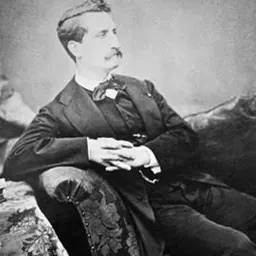


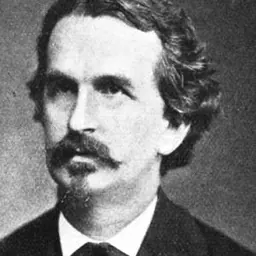
Frequently asked questions
Who was S. R. Rana?
Indian political activist (1870-1957)
When was S. R. Rana born?
S. R. Rana was born on 10 April 1870 in Kanthariya.
When did S. R. Rana die?
S. R. Rana died on 25 May 1957 in Veraval.
What was S. R. Rana's occupation?
S. R. Rana was a political activist, jeweler, merchant, revolutionary and freedom fighter.
What was S. R. Rana known for?
S. R. Rana was known for Indian independence movement.
What nationality was S. R. Rana?
S. R. Rana was Indian and French.
Sources & further reading
Cite this page
APA: Biography.guide. (2026). S. R. Rana. https://biography.guide/s-r-rana/
MLA: "S. R. Rana." Biography.guide, https://biography.guide/s-r-rana/.
Chicago: "S. R. Rana." Biography.guide. https://biography.guide/s-r-rana/.
Data last updated: 2026-09-22 · Spot an error? Report a correction.
Page generated 2026-09-27 05:34 UTC