
About Baba Kharak Singh
Lived 1867 – 1963 (aged 96). Baba Kharak Singh was an Indian political activist and playwright.
Baba Kharak Singh (6 June 1867 — 6 October 1963) was a Sikh playwright born at Sialkot in British India. He was involved in the Indian independence movement and was president of the Central Sikh League. He was also one of the founders of the Shiromani Gurdwara Parbandhak Committee.
Early life Kharak Singh was born in a Sikh Ahluwalia family, having passed his matriculation examination from Mission High School and intermediate from Murray College, both at Sialkot, after graduating in 1889 from University of the Punjab (Lahore), of which he was part of the first batch of the then newly established university, he joined the Law College at Allahabad, but the death of his father and elder brother in quick succession, interrupted his studies as he had to return to Sialkot to manage the family property.
He started his public life in 1912 as chairman of the reception committee of the 5th session of the Sikh Educational Conference held at Sialkot.
Three years later in 1915, as president of the 8th session of the Conference held at Tarn Taran, he surprised everyone by walking to the site of the conference, breaking the stately custom of arriving in a carriage pulled by six horses. He also refused permission for a proposed resolution to be moved at the conference wishing victory to the British in World War I.
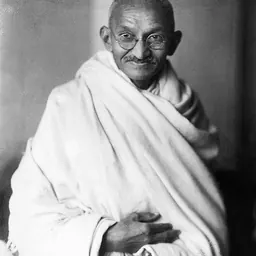
The Jallianwala Bagh massacre of 1919 galvanised Kharak Singh as the virtual core of Sikh politics. Political life After Jallianwala Bagh, Kharak Singh opposed perceived "traitors" within the Sikh leadership and the Chief Khalsa Diwan's pro-British slant. Then government decided to give back the keys of the Toshakhana. On this occasion Mahatma Gandhi sent the following telegram to Baba Kharak Singh: He walked-out of jail only wearing his undergarments.
Also during 1928-29, he vehemently opposed the Nehru Committee Report until the Congress Party shelved it and took action to secure the Sikhs' concurrence in the framing of constitutional proposals in the future. He was again sent to jail in 1931 but was released after six months. He was re-arrested in 1932 and served another 19 months in prison.
The Sikh opposition to the Swaraj colours articulated in as early as 1921 and took shape progressively. In 1929, a deputation of the Sikhs met Mahatma Gandhi at Lahore and made a firm demand that the Sikh colour, a shade of Yellow or black, be added to the Swaraj flag. In March 1930, when Gandhi launched Civil Disobedience Movements, Baba Kharak Singh, President of the Shiromani Gurdwara Prabandhak Committee, refused to join the movement, if the Sikh colour Saffron was not included in the flag.
He spoke out in opposition to the Communal Award, which gave a statutory majority to Muslims in the Punjab, and was in and out of jail on several occasions for making speeches that the British government held to be seditious. In 1935 he was, once again, taken into custody for his scathing criticism of the Communal Award.
In 1940 Kharak Singh was again sent to the jail for participating in the Satyagrah movement, but in spite of his old age, Kharak did not stop his activities.
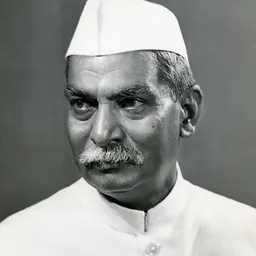
Later life and death In 1947, Kharak Singh travelled across the Punjab to oppose the planned partitioning of India. After the partition of 1947, Kharak Singh stayed in Delhi in virtual retirement from public life. In 1953, he was presented the Abhinandan Granth by Rajendra Prasad, President of India. Kharak Singh died on 6 October 1963, aged 95.
Legacy
His legacy has been forgotten by the Congress party, however the Akali Dal pays minimal tribute to him for being one of the founders of the Shiromani Gurdwara Parbandhak Committee.
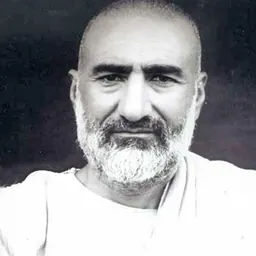
Abdul Ghaffar Khan had been lodged with Kharak Singh in the same prison and stated the following on him:
Don’t just read it —
keep it.
Full-length biographies made to live with: read them, listen on the way to work, watch them tonight.
- E-book
- Audio
- Video
Instant download · yours to keep · every purchase keeps this site free
Important facts
People in Baba Kharak Singh's life
Named in this biography and alive at the same time

Related people
Same field, nearest in time



Contemporaries
People whose lives overlapped Baba Kharak Singh's




Frequently asked questions
Who was Baba Kharak Singh?
Indian playwright and political leader (1867-1963)
When was Baba Kharak Singh born?
Baba Kharak Singh was born on 6 June 1867 in Sialkot.
When did Baba Kharak Singh die?
Baba Kharak Singh died on 6 October 1963 in Delhi.
What was Baba Kharak Singh's occupation?
Baba Kharak Singh was a political activist and playwright.
What nationality was Baba Kharak Singh?
Baba Kharak Singh was Indian.
Sources & further reading
· Wikipedia: Baba Kharak Singh
Cite this page
APA: Biography.guide. (2026). Baba Kharak Singh. https://biography.guide/baba-kharak-singh/
MLA: "Baba Kharak Singh." Biography.guide, https://biography.guide/baba-kharak-singh/.
Chicago: "Baba Kharak Singh." Biography.guide. https://biography.guide/baba-kharak-singh/.
Data last updated: 2026-09-20 · Spot an error? Report a correction.
Page generated 2026-09-27 05:25 UTC