
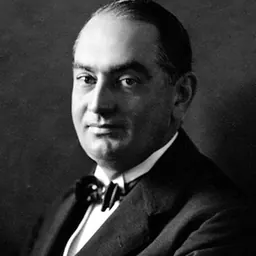
Shyamji Krishna Varma
An Indian revolutionary, lawyer and journalist who founded the Indian Home Rule Society, India House and The Indian Sociologist in London
About Shyamji Krishna Varma
Lived 1857 – 1930 (aged 72). Shyamji Krishna Varma was an Indian journalist, revolutionary, politician, social reformer, lawyer and barrister.
Shyamji Krishna Varma (ISO 15919: Śyāmajī Kr̥ṣṇa-varmā) (1 October 1857 – 30 March 1930) was an Indian revolutionary, lawyer and journalist who founded the Indian Home Rule Society, India House and The Indian Sociologist in London. A graduate of Balliol College, Krishna Varma was a noted scholar in Sanskrit and other Indian languages. He pursued a brief legal career in India and served as the Divan of a number of Indian princely states in India.
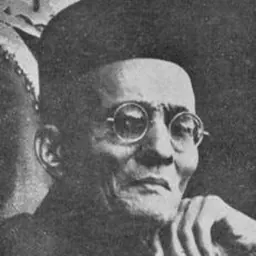
Later in 1905, Shyamji attended the United Congress of Democrats held at Holborn Town Hall as a delegate of the India Home Rule Society. His resolution on India received an enthusiastic ovation from the entire conference. Shyamji's activities in England aroused the concern of the British government: He was disbarred from Inner Temple and removed from the membership list on 30 April 1909 for writing anti-British articles in The Indian Sociologist. Most of the British press were anti–Shyamji and printed several allegations against him and his newspaper. He defended them boldly. The Times referred to him as the "Notorious Krishnavarma". Many newspapers criticised the British progressives who supported Shyamji and his view. His movements were closely watched by the British secret service, so he decided to shift his headquarters to Paris, leaving India House in charge of Vinayak Damodar Savarkar. Shyamji left Britain secretly before the government tried to arrest him.
Cooperation and connections Shyamji maintained connection and collaborated with a variety of varied anti-imperial movements.
In 1906, Shyamji made contacts with members of the National Party (Egypt) and maintained an interest in promoting Egyptian nationalist movements against the British. Shyamji also had contacts with other anti-imperial Islamic movements and members of the Indian House went to Morocco hoping to learn guerilla warfare from Riffians. Shyamji also heavily cooperated with Irish Republican movements in New York City, United States. The Indian Sociologist and The Gaelic American reprinted the other’s articles and expressed mutual support for agitation against British imperialism. With Irish American support, an India House was established in New York City. With Japan’s victory in the Russo-Japanese War, Japan became a symbol of Asian modernity to India. In 1907, Indian students in Tokyo were inspired by Shyamji and instituted their own India House, whose presence paved the way for future Indian political leaders’ exiles in Tokyo. Shyamji promoted Pan-Asianism, promoting a common goal of Asian countries to throw off the yolk of European imperial rule. He particularly focused on Japan and China, losing some faith in the former due to its own imperial ambitions.
Shyamji was in close contact with Henry Hyndman, an English socialist and anti-imperialist. Hyndman was a fierce opponent of British imperialism in Asia and expressed pan-Asianist views. Shyamji also found allies among anarchists; when The Indian Sociologist was declared seditious in 1909, British anarchist Guy Alfred offered his Bakunin Press to Shyamji to continue its publication. Walter Strickland, 9th Baronet, another anarchist, was inspired by Alfred’s actions and wrote articles which were published in The Indian Sociologist. Shyamji also collaborated with positivists like Frederic Harrison who were opposed to British colonialism.
Despite his political connections, Shyamji was a staunch Spencerian conservative and Indian nationalist. His personal lifestyle remained “quasi-brahmanical”; he ate home-cooked vegetarian food, maintained a traditional relationship with his wife, and wore austere black coats.
Paris and Geneva He arrived in Paris in early 1907 to continue his work. The British government tried to have him extradited from France without success as he gained the support of many top French politicians. Shyamji's name was dragged into the sensational trial of Mr Merlin, an Englishman, at Bow Street Magistrates' Court, for writing an article in liberators published by Shyamji's friend, Mr. James.
Shyamji's work in Paris helped gain support for Indian Independence from European countries. He agitated for the release of Savarker and acquired great support all over Europe and Russia. Guy Aldred wrote an article in the Daily Herald under the heading of "Savarker the Hindu Patriot whose sentences expire on 24 December 1960", helping create support in England, too. In 1914 his presence became an embarrassment as French politicians had invited King George V to Paris to set a final seal on the Entente Cordiale. Shyamji foresaw this and shifted his headquarters to Geneva. Here the Swiss government imposed political restrictions during the entire period of World War I. He kept in touch with his contacts, but he could not support them directly. He spent time with Dr. Briess, president of the Pro India Committee in Geneva, whom he later discovered was a paid secret agent of the British government.
Post–World War I He offered a sum of 10,000 francs to the League of Nations to endow a lectureship to be called the President Woodrow Wilson Lectureship for the discourse on the best means of acquiring and safe guarding national independence consistently with freedom, justice, and the right of asylum accorded to political refugees. It is said that the league rejected his offer due to political pressure from British government. A similar offer was made to the Swiss government which was also turned down. He offered another lectureship at the banquet given by Press Association of Geneva where 250 journalists and celebrities, including the presidents of Swiss Federation and the League of Nations. Shyamji's offer was applauded on the spot but nothing came of it. Shyamji was disappointed with the response and he published all his abortive correspondence on this matter in the next issue of the Sociologist appearing in December 1920, after a lapse of almost six years.
Death and commemoration
He published two more issues of Indian Sociologist in August and September 1922, before ill health prevented him continuing. He died in hospital at 11:30 p.m. on 30 March 1930 leaving his wife, Bhanumati Krishnavarma.
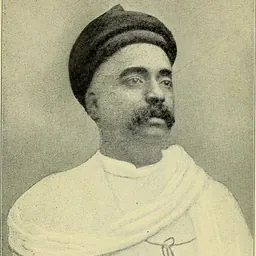
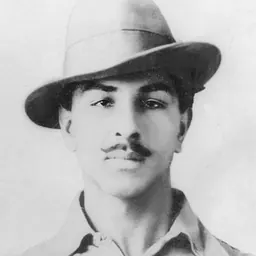
News of his death was suppressed by the British colonial government in India. Nevertheless, tributes were paid to him by Bhagat Singh and other inmates in Lahore Jail where they were undergoing a long-term drawn-out trial. Maratha, an English daily newspaper started by Bal Gangadhar Tilak paid tribute to him.
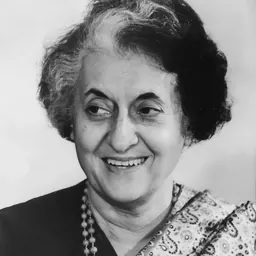
He had made prepaid arrangements with the local government of Geneva and St Georges cemetery to preserve his and his wife's ashes at the cemetery for 100 years and to send their urns to India whenever it became independent during that period. Requested by Paris-based scholar Dr Prithwindra Mukherjee, the then Prime Minister Indira Gandhi agreed to repatriate the ashes. Finally on 22 August 2003, the urns of ashes of Shyamji and his wife Bhanumati were handed over to then Chief Minister of Gujarat State Narendra Modi by the Ville de Genève and the Swiss government 55 years after Indian Independence. They were brought to Mumbai and after a long procession throughout Gujarat, they reached Mandvi, his birthplace. A memorial called Kranti Teerth dedicated to him was built and inaugurated in 2010 near Mandvi. Spread over 52 acres, the memorial complex houses a replica of India House building at Highgate along with statues of Shyamji Krishna Varma and his wife. Urns containing Krishna Verma's ashes, those of his wife, and a gallery dedicated to earlier activists of Indian independence movement is housed within the memorial. Krishna Verma was disbarred from the Inner Temple in 1909. This decision was revisited in 2015, and a unanimous decision taken to posthumously reinstated him.
In the 1970s, a new town developed in his native state of Kutch, was named after him as Shyamji Krishna Varmanagar in his memory and honor. India Post released postal stamps and first day cover commemorating him. Kuchchh University was renamed after him.
The India Post has issued a postal stamp on Shyamji Krishna Varma on 4 October 1989.
Don’t just read it —
keep it.
Full-length biographies made to live with: read them, listen on the way to work, watch them tonight.
- E-book
- Audio
- Video
Instant download · yours to keep · every purchase keeps this site free
Important facts
People in Shyamji Krishna Varma's life
Named in this biography and alive at the same time



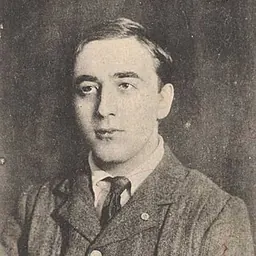
Related people
Same field, nearest in time
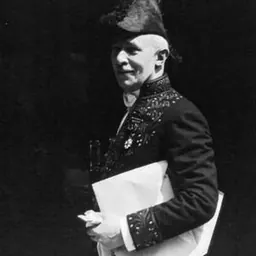
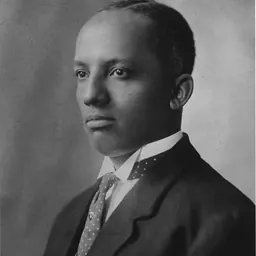

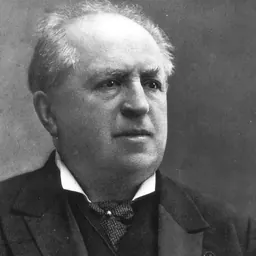
Contemporaries
People whose lives overlapped Shyamji Krishna Varma's





Frequently asked questions
Who was Shyamji Krishna Varma?
an Indian revolutionary, lawyer and journalist who founded the Indian Home Rule Society, India House and The Indian Sociologist in London (1857-1930)
When was Shyamji Krishna Varma born?
Shyamji Krishna Varma was born on 4 October 1857 in Mandvi, Cutch State.
When did Shyamji Krishna Varma die?
Shyamji Krishna Varma died on 30 March 1930 in Geneva, Switzerland.
What was Shyamji Krishna Varma's occupation?
Shyamji Krishna Varma was a journalist, revolutionary, politician, social reformer, lawyer and barrister.
What nationality was Shyamji Krishna Varma?
Shyamji Krishna Varma was Indian.
Sources & further reading
· Wikipedia: Shyamji Krishna Varma
· DBpedia: Shyamji Krishna Varma
Cite this page
APA: Biography.guide. (2026). Shyamji Krishna Varma. https://biography.guide/shyamji-krishna-varma/
MLA: "Shyamji Krishna Varma." Biography.guide, https://biography.guide/shyamji-krishna-varma/.
Chicago: "Shyamji Krishna Varma." Biography.guide. https://biography.guide/shyamji-krishna-varma/.
Data last updated: 2026-09-20 · Spot an error? Report a correction.
Page generated 2026-09-27 05:23 UTC