
About Alfred Salter
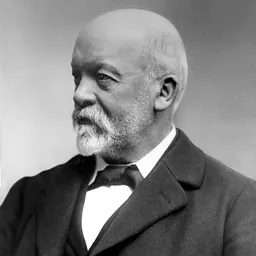
Lived 1873 – 1945 (aged 72). Alfred Salter was a British politician and physician.
Alfred Salter (16 June 1873 – 24 August 1945) was a British medical practitioner and Labour Party politician.
Early life Salter was born in Greenwich in 1873, the son of Walter Hookway Salter and Elizabeth Tester. Following education at The John Roan School, Greenwich, he went on to study medicine at Guy's Hospital, London. and some of the most appalling slums in London. In the 19th century Bermondsey specialised in leather but in the 20th century the major sources of employment were the food factories, employing mostly women, and the docks, employing men. Most of the men working in the docks were employed on a contingent daily basis; the casual nature of this work made it difficult to make a decent living. While at the Settlement, which had been established by Rev. John Scott Lidgett, Salter set up mutual health insurance schemes and adult education classes on health matters. He chose to offer services free to those who could not pay. This work was to lead the establishment of a pioneering comprehensive health service in the area. (See the background to the formation of the NHS.)
Politics Salter decided that by entering politics he could effect changes to the squalid environment in Bermondsey far more quickly and profoundly than he could outside the political arena. He was re-elected to the LCC in 1907.
In October 1909 George Cooper MP died. Cooper had been elected as a Liberal Party Member of Parliament (MP), and although Salter had succeeded him on the county council, he had since become aligned with the Independent Labour Party (ILP). On 8 October, Alfred Salter was officially announced as the party's candidate at the by-election.
In March 1910 the triennial election of the London County Council was held. Salter was chosen to defend the Bermondsey seat as a Labour candidate against both the Progressives and the Conservative-backed Municipal Reform Party. He was heavily defeated, coming at the bottom of the poll of five candidates. He contested the same seat in 1913, but was again unsuccessful.
All elections were postponed for the duration of the First World War. When a general election was called in December 1918, the parliamentary constituencies were revised under the Representation of the People Act 1918. Salter was selected as Labour Party candidate for the new Bermondsey West seat, and was described in the following terms by The Times: "Dr Salter, the Labour candidate, is one of the highly educated idealists who are to be found in the ranks of that party. After a brilliant academic career, he decided to devote himself to work among the poor in Bermondsey, and there he has laboured for many years both as a doctor professionally and as a member of local administrative bodies. Personally, nobody has a word to say against him, but his views are of a very extreme kind. His attitude during the war was that of a pacifist, though he would not, it is said, admit the accuracy of this popular term."
The new constituency was won by the Liberal candidate Harold Glanville, who had been the sitting MP for Bermondsey.
In 1919 municipal elections resumed. In March both Alfred and his wife Ada were Labour Party candidates in the London County Council elections, standing in the neighbouring electoral divisions of Bermondsey West and Rotherhithe. Neither was elected. In November Ada was elected to Bermondsey Borough Council. She held the seat in 1922, and in the same year was elected as the first female mayor of the borough.
Member of Parliament In the 1922 general election he was again nominated as Labour candidate for Bermondsey West. Salter secured 7,550 votes, a majority of 2,325. He was helped to victory by there being three opposing candidates, with the Anti-Labour vote split between Liberal, National Liberal and Independent Unionist opponents. His wife, as mayor of the borough, was the returning officer who declared him elected. He was re-elected in the general elections of 1929, 1931, and 1935, but stood down at the 1945 election, when he was in very poor health, and died soon afterwards, aged 72. Alfred Salter was a committed Christian and pacifist, a Quaker from 1900 onwards, and later an active member of the Peace Pledge Union. He was one of the founders of the Socialist Medical Association and a friend of its President Somerville Hastings, with whom he made a trip to the Soviet Union in 1931. Salter and his friend, George Lansbury, attributed the rise of Hitler to the Treaty of Versailles, which imposed crushing reparations on Germany, and to the existence of the colonial empires. In 1936 he advocated the calling of a world economic conference and the creation of a new League of Nations to which the possessions of the British Empire could be transferred. The failure of appeasement and outbreak of World War II left Salter deeply depressed.
Memorials to Alfred Salter
in 1990 a plaque to mark Dr Salter's birthplace was unveiled in Greenwich. The Alfred Salter Primary School was opened in 1995 to meet the growing demand for school places in Rotherhithe, due to the redevelopment of the old Surrey Docks. The Alfred Salter Bridge is a footbridge leading off Watermans Lane, between Stave Hill and Redriff Road, near Greenland Dock as part of the Russia Dock Woodland. In 2002 a plaque to Alfred Salter, also mentioning Ada, was unveiled at Bermondsey tube station.
In 1991 a statue ensemble of Alfred and his daughter, Joyce, entitled Dr Salter's Daydream, sculpted by Diane Gorvin, was unveiled on the river-front. The statue of Alfred was stolen, presumably for the value of its bronze, in November 2011. The Salter Statues Campaign group raised £60,000, which Southwark Council matched, to pay for replacement statues, including Ada this time, and these were unveiled on 30 November 2014.
A Salter Memorial Lecture is promoted by the Quaker Socialist Society each year as a fringe event at the Britain Yearly Meeting of the Religious Society of Friends (Quakers).
Don’t just read it —
keep it.
Full-length biographies made to live with: read them, listen on the way to work, watch them tonight.
- E-book
- Audio
- Video
Instant download · yours to keep · every purchase keeps this site free
Important facts
People in Alfred Salter's life
Named in this biography and alive at the same time





Related people
Same field, nearest in time




Contemporaries
People whose lives overlapped Alfred Salter's

Frequently asked questions
Who was Alfred Salter?
British politician (1873-1945)
When was Alfred Salter born?
Alfred Salter was born on 16 June 1873 in Greenwich.
When did Alfred Salter die?
Alfred Salter died on 24 August 1945 in Guy's Hospital.
What was Alfred Salter's occupation?
Alfred Salter was a politician and physician.
What nationality was Alfred Salter?
Alfred Salter was British.
Sources & further reading
Cite this page
APA: Biography.guide. (2026). Alfred Salter. https://biography.guide/alfred-salter/
MLA: "Alfred Salter." Biography.guide, https://biography.guide/alfred-salter/.
Chicago: "Alfred Salter." Biography.guide. https://biography.guide/alfred-salter/.
Data last updated: 2026-09-20 · Spot an error? Report a correction.
Page generated 2026-09-27 05:32 UTC