
António Egas Moniz
Portuguese politian and neurosurgeon
About António Egas Moniz
Lived 1874 – 1955 (aged 81). António Egas Moniz was a Portuguese politician, neuroscientist, physician, neurosurgeon, university teacher and psychiatrist, known for Cerebral angiography, Moniz sign and Prefrontal leucotomy.
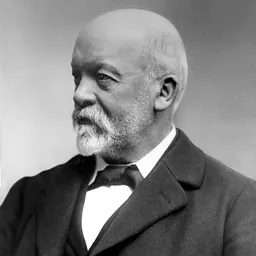
António Caetano de Abreu Freire Egas Moniz (29 November 1874 – 13 December 1955), known as simply Egas Moniz, was a Portuguese neurologist and the developer of cerebral angiography. He is regarded as one of the founders of modern psychosurgery, having developed the surgical procedure leucotomybetter known today as lobotomyfor which he became the first Portuguese national to receive a Nobel Prize in 1949 (shared with Walter Rudolf Hess).
He held academic positions, wrote many medical articles and also served in several legislative and diplomatic posts in the Portuguese government. In 1911, he became professor of neurology in Lisbon until his retirement in 1944.
Early life and training Moniz was born in Avanca, Estarreja, Portugal, as António Caetano de Abreu Freire de Resende. He attended Escola do Padre José Ramos and the Jesuit-run College of Saint Fidelis. Then he studied medicine at the University of Coimbra, graduating in 1899. For the next 12 years, he served as a lecturer for basic medical courses at Coimbra. In 1911, he became a neurology professor at the University of Lisbon, where he worked until his retirement in 1944.
His uncle and godfather, Father Caetano de Pina Resende Abreu e Sá Freire, convinced his family to change his surname to Egas Moniz since he was convinced that the Resende family was descended from medieval nobleman Egas Moniz o Aio.
Politics Politics was an early passion for Moniz. He supported a republican government, diverging from his family's support for the monarchy. As a student activist, he was jailed on two separate occasions for participating in demonstrations. While serving as Dean of the Medical School at the University of Lisbon, he was arrested a third time for preventing police from settling a student-run protest.
Moniz's formal political career began when he was elected to parliament in 1900. During World War I, he was appointed the Ambassador to Spain, and afterward, he became Minister for Foreign Affairs in 1917, and in 1918 led the Portuguese delegation to the Paris Peace Conference.
Research Cerebral angiography
In 1926, at age 51, Moniz returned to medicine full-time. He hypothesized that visualizing blood vessels in the brain with radiographic means would allow for more precise localization of brain tumors. During his experiments, Moniz injected radiopaque dyes into brain arteries and took X-rays to visualize abnormalities. In his initial tests, Moniz used strontium and lithium bromide in three patients with a suspected tumor, epilepsy, and Parkinsonism, but the experiment failed and one patient died.
Moniz presented his findings at the Neurological Society in Paris and the French Academy of Medicine in 1927. He was the first person to successfully visualize the brain using radiopaque substances, as previous scientists had only visualized peripheral structures. He also contributed to the development of Thorotrast for use in the procedure and delivered many lectures and papers on the subject. His work led to the use of angiography to detect internal carotid occlusion, as well as two Nobel Prize nominations in this area.
Moniz hypothesized that surgically removing white matter fibers from the frontal lobe would improve a patient's mental illness. He enlisted his long-time staff member and neurosurgeon Pedro Almeida Lima to test the procedure on a group of 20 patients, mainly with schizophrenia, anxiety, and depression. The surgeries took place under general anesthesia. The first psychosurgery was performed in 1935 on a 63-year-old woman with depression, anxiety, paranoia, hallucinations, and insomnia. The patient experienced a rapid physical recovery, and two months later, a psychiatrist noted that she was calmer, less paranoid, and well oriented. In the first set of surgeries, Moniz reported a total of seven cures, seven improvements, and six unchanged cases. He also claimed that any behavioral and personality deterioration that may occur was outweighed by reduction in the debilitating effects of the illness. He conceded that patients who had already deteriorated from the mental illness did not benefit much. The procedure enjoyed a brief vogue, and in 1949 he received the Nobel Prize "for his discovery of the therapeutic value of leucotomy in certain psychoses."
Critics accused Moniz of understating complications, providing inadequate documentation, and not following up with patients. After his initial procedures, other physicians, such as Walter Jackson Freeman II and James W. Watts, adopted a modified technique in the United States and renamed it "lobotomy." Moniz's legacy suffered towards the end of the 20th century, Well-known experts, including psychologist Elliot Valenstein, and neurologist Oliver Sacks, were particularly critical of Moniz's methods and him earning the Nobel Prize. especially from family members of patients who underwent leucotomies. However, others have defended Moniz for his scientific contributions, stressing the need to examine his legacy in context.
Important publications According to the Nobel Prize, his more important publications are:
Alterações anátomo-patológicas na difteria (Anatomo-pathologic changes in diphtheria), Coimbra, 1900. A vida sexual (fisiologia e patologia) (Physiological and pathological aspects of sex life), 19 editions, Coimbra, 1901. A neurologia na guerra (Neurology in war), Lisbon, 1917. Um ano de política (A year of politics), Lisbon, 1920. Júlio Diniz e a sua obra (Júlio Dinis and his works), 6 editions, Lisbon, 1924. O Padre Faria na história do hipnotismo (Abbé Faria in the history of hypnotism), Lisbon, 1925. Diagnostic des tumeurs cérébrales et épreuve de l'encéphalographie artérielle (Diagnostics of cerebral tumours and application of arterial encephalography), Paris, 1931. L'angiographie cérébrale, ses applications et résultats en anatomie, physiologie et clinique (Cerebral angiography, its applications and results in anatomy, physiology, and clinic), Paris, 1934. Tentatives opératoires dans le traitement de certaines psychoses (Tentative methods in the treatment of certain psychoses), Paris, 1936. La leucotomie préfrontale. Traitement chirurgical de certaines psychoses (Prefrontal leucotomy. Surgical treatment of certain psychoses), Turin, 1937. Clinica dell'angiografia cerebrale (Clinical cerebral angiography), Turin, 1938. Die cerebrale Arteriographie und Phlebographie (Cerebral arteriography and phlebography), Berlin, 1940. Ao lado da medicina (On the side of medicine), Lisbon, 1940. Trombosis y otras obstrucciones de las carótidas (Thrombosis and other obstructions of the carotids), Barcelona, 1941. História das cartas de jogar (History of playing-cards), Lisbon, 1942. Como cheguei a realizar a leucotomia pré-frontal (How I came to perform prefrontal leucotomy), Lisbon, 1948. Die präfrontale Leukotomie (Prefrontal leucotomy), Archiv für Psychiatrie und Nervenkrankheiten, 1949.
Distinctions National orders
Don’t just read it —
keep it.
Full-length biographies made to live with: read them, listen on the way to work, watch them tonight.
- E-book
- Audio
- Video
Instant download · yours to keep · every purchase keeps this site free
Important facts
People in António Egas Moniz's life
Named in this biography and alive at the same time




Related people
Same field, nearest in time






Contemporaries
People whose lives overlapped António Egas Moniz's

Frequently asked questions
Who was António Egas Moniz?
Portuguese politian and neurosurgeon (1874-1955)
When was António Egas Moniz born?
António Egas Moniz was born on 29 November 1874 in Avanca.
When did António Egas Moniz die?
António Egas Moniz died on 13 December 1955 in Lisbon.
What was António Egas Moniz's occupation?
António Egas Moniz was a politician, neuroscientist, physician, neurosurgeon, university teacher and psychiatrist.
What was António Egas Moniz known for?
António Egas Moniz was known for Cerebral angiography, Moniz sign and Prefrontal leucotomy.
What nationality was António Egas Moniz?
António Egas Moniz was Portuguese.
Sources & further reading
· Wikipedia: António Egas Moniz
Cite this page
APA: Biography.guide. (2026). António Egas Moniz. https://biography.guide/antonio-egas-moniz/
MLA: "António Egas Moniz." Biography.guide, https://biography.guide/antonio-egas-moniz/.
Chicago: "António Egas Moniz." Biography.guide. https://biography.guide/antonio-egas-moniz/.
Data last updated: 2026-09-20 · Spot an error? Report a correction.
Page generated 2026-09-27 05:26 UTC