
William Anderson
English civil engineer born in Russia
About William Anderson
Lived 1835 – 1898 (aged 63). William Anderson was a British engineer, entrepreneur and civil engineer.
Sir William Anderson, KCB (5 January 1835 at Saint Petersburg – 11 December 1898 at Woolwich Arsenal) was an English engineer who also served as director-general of the Ordnance Factories from 1889 to 1898.
Early life He was the fourth son of John Anderson (26 June 1796 - 22 January 1870), a member of the firm of Matthews, Anderson, & Co., bankers and merchants of Saint Petersburg, by his wife Frances, daughter of Dr. Simpson. He was educated at the Saint Petersburg high commercial school, of which he became head. He carried off the silver medal, and although an English subject received the freedom of the city in consideration of his attainments. When he left Russia in 1849 he was proficient in English, Russian, German, and French.
In 1849, he became a student in the Applied Sciences department at King's College, London, and on leaving became an associate. He next served a pupilage at the works of Sir William Fairbairn in Manchester, where he remained three years. In 1855 he joined the firm of Courtney, Stephens, & Co., of the Blackhall Place Ironworks, Dublin. There he did much general engineering work. He also designed several cranes, and was the first to adopt the braced web in bent cranes. In 1863 he became president of the Institution of Civil Engineers of Ireland.
Career In 1864 he joined the firm of Easton and Amos of the Grove, Southwark, and went to live at Erith, where the firm had decided to construct new works on a riverside site at Anchor Bay, east of Erith's centre. He became a partner, and eventually head, of the firm which at a later date was styled Easton and Anderson. At Erith he had the chief responsibility in designing and laying out the works. Part of the business of the firm at that time was the construction of pumping machinery. Anderson materially improved the pattern of centrifugal pump devised by John George Appold.
While in Erith, he also contributed to the establishment of local schools, serving for 27 years on the Erith School Board, which he chaired from 1886 until his death. He was also actively involved with local churches. The duties of this post, mainly focused at the Royal Arsenal in Woolwich, prevented him from continuing his work in relation to the cordite machinery, which was committed to his eldest son. Anderson made many improvements in the details of the management of the Arsenal, and introduced greater economy into its administration.
During the 1890s, Anderson's continuing interest in education led to him becoming a trustee of the newly established Woolwich Polytechnic; he was a member of its governing body in 1893, and later (1895) represented the War Department on its board of governors. His coffin was carried by Woolwich Arsenal workers and placed on a special train to Erith where workers from the Erith Iron Works carried the coffin from the train to the hearse.
Don’t just read it —
keep it.
Full-length biographies made to live with: read them, listen on the way to work, watch them tonight.
- E-book
- Audio
- Video
Instant download · yours to keep · every purchase keeps this site free
Important facts
People in William Anderson's life
Named in this biography and alive at the same time

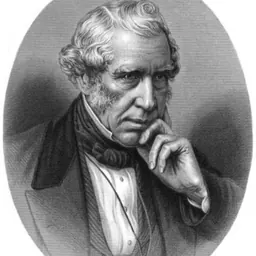

Related people
Same field, nearest in time
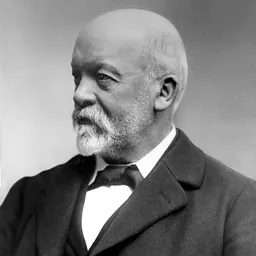

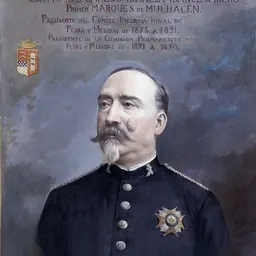
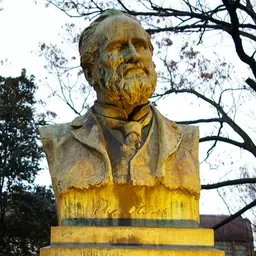
Contemporaries
People whose lives overlapped William Anderson's





Frequently asked questions
Who was William Anderson?
English civil engineer born in Russia
When was William Anderson born?
William Anderson was born on 5 January 1835 in Saint Petersburg.
When did William Anderson die?
William Anderson died on 11 December 1898 in Royal Arsenal.
What was William Anderson's occupation?
William Anderson was an engineer, entrepreneur and civil engineer.
What nationality was William Anderson?
William Anderson was British.
Sources & further reading
· DBpedia: William Anderson (engineer)
Cite this page
APA: Biography.guide. (2026). William Anderson. https://biography.guide/william-anderson-engineer/
MLA: "William Anderson." Biography.guide, https://biography.guide/william-anderson-engineer/.
Chicago: "William Anderson." Biography.guide. https://biography.guide/william-anderson-engineer/.
Data last updated: 2026-09-20 · Spot an error? Report a correction.
Page generated 2026-09-27 05:31 UTC