
Christabel Pankhurst
Suffragette, co-founder of the Women's Social and Political Union, editor
About Christabel Pankhurst
Lived 1880 – 1958 (aged 77). Christabel Pankhurst was a British suffragist, women's rights activist, architect, editor, activist and suffragette.
Dame Christabel Harriette Pankhurst (; 22 September 1880 – 13 February 1958) was a British suffragette and Royalist born in Manchester, England. A co-founder of the Women's Social and Political Union (WSPU) and founder of The Suffragette newspaper, she directed militant actions from exile in France from 1912 to 1913. In 1914, she supported the war against Germany. After the war, she moved to the United States, where she worked as an evangelist for the Second Adventist movement.
She was also a founding member of the White Feather campaign.
Early life
Christabel Pankhurst was born on 22 September 1880 in Trafford, Manchester, England. She was the daughter of women's suffrage movement leader Emmeline Pankhurst Her father was a barrister and her mother owned a small shop. Christabel assisted her mother, who worked as the Registrar of Births and Deaths in Manchester. Despite financial struggles, her family had always been encouraged by their firm belief in their devotion to causes rather than comforts. As a child, Christabel said: "how long you women have been trying for the vote. For my part, I mean to get it."
Nancy Ellen Rupprecht wrote, "She was almost a textbook illustration of the first child born to a middle-class family. In childhood as well as adulthood, she was beautiful, intelligent, graceful, confident, charming, and charismatic." Christabel enjoyed a special relationship with both her mother and father, who had named her after "Christabel", the poem by Samuel Taylor Coleridge ("The lovely lady Christabel / Whom her father loves so well"). Her mother's death in 1928 had a devastating impact on Christabel.
Education Pankhurst learned to read at her home on her own before she went to school. She and her two sisters attended Manchester High School for Girls. and received honours on her LL.B. exam but, as a woman, was not permitted to join an Inn and practise law.
Activism
Suffrage Pankhurst was a founder member of the Women's Social and Political Union (WSPU) with her mother on 10 October 1903. The WSPU aimed to campaign for the parliamentary vote for women on the same terms as it was given to men.thumb
On 25 July 1904 Pankhurst published an article in the Daily Dispatch newspaper covering a visit to Manchester by Susan B. Anthony, titled "Woman's Rights: An American reformer in Manchester." In November 1904, Pankhurst was a North of England Society for Women's Suffrage delegate to the National Union of Women's Suffrage Societies (NUWSS) convention in London. In 1905, Pankhurst interrupted a Liberal Party meeting at Manchester's Free Trade Hall by unfurling a Votes For Women banner hidden in her blouse and shouting demands for voting rights for women. She spat in the policeman's face and was arrested. At Manchester Police Court, along with fellow suffragette Annie Kenney, rather than pay a fine. They were the first suffragettes to be imprisoned, For example, after reading an article about the arrest while in South Africa, Emmeline Pethick-Lawrence joined the WSPU on returning to England. Her mother Emmeline began to take more militant action for the women's suffrage cause after her daughter's arrest and was herself imprisoned on many occasions for her principles. After obtaining her law degree in 1906, Christabel moved to the nearby London headquarters of the WSPU, where she was appointed its organising secretary. thumb Pankhurst, Flora Drummond and Pankhurst's mother Emmeline in court after their arrest over inciting a "rush" on Parliament in October 1908Nicknamed "Queen of the Mob", Pankhurst was jailed again in 1907 after an arrest in Parliament Square. Pankhurst gave a speech at the Nottingham Mechanics Institute in December 1907, which inspired Helen Watts to join the cause. Pankhurst and her mother Emmeline gave speeches at the Royal Albert Hall on 19 March 1908, which were recorded as transcripts by the actress, chauffeur and suffragette Vera Holme. thumb Pankhurst by Ethel Wright, 1909 Pankhurst, her mother Emmeline and "The General" Flora Drummond were arrested for inciting a "rush" on Parliament when speaking to a mass meeting from the plinth of Nelson's Column, Trafalgar Square, London, on 11 October 1908. In 1912, she wrote that: "Militant methods have been good for the souls of women ... they have swept away the evils of ‘ladyism’, of timid gentility, of early Victorian effeminacy as distinct from womanliness."
Illustration of Pankhurst in the London magazine Vanity Fair, 15 June 1910 Between 1913 and 1914 Pankhurst lived at a secret location in Paris, France, to escape imprisonment under the terms of the Prisoners (Temporary Discharge for Ill-Health) Act, better known as the "Cat and Mouse Act."
While in France, Pankhurst continued to provide the editorial lead to The Suffragette through her contact with visitors, such as Annie Kenney and Ida Wylie, who crossed the Channel for her advice. She also wrote an article for New Statesman in October 1913, calling to women for a militant approach in the fight for a female vote.
Pankhurst was influential in the WSPU's "anti-male" phase after the failure of the Conciliation Bills. She wrote a book called The Great Scourge and How to End It on the subject of sexually transmitted diseases and how sexual equality (votes for women) would help the fight against these diseases. In 1921, she wrote an article explaining why she never married, saying that the suffrage cause took all of her primary attention. On 8 September 1914, Pankhurst re-appeared at London's Royal Opera House after her long exile. She was again arrested. She engaged in a hunger strike, ultimately serving only 30 days of a three-year sentence. She began campaigning for the war effort, uttering a declaration on "The German Peril", in campaign led by the former General Secretary of the WSPU, Norah Dacre Fox in conjunction with the British Empire Union and the National Party. Along with Dacre Fox (later known as Norah Elam), Pankhurst toured the country making patriotic recruiting speeches. Her sister Sylvia's memoir included a reference to some of Christabel's supporters handing the white feather to every young man they encountered wearing civilian dress.
The Suffragette appeared again on 16 April 1915 as a war paper and on 15 October changed its name to Britannia, with this new name aiming to communicate "patriotic and imperialist intent." In Britannia's weekly pages, Pankhurst called for the military conscription of men and the industrial conscription of women into national service and advocated to pause the campaign for women's suffrage for the duration of the war. It also published articles covering the skills of "women munition makers" and encouraging women to study science and engineering. She was issued with the "Coalition Coupon" letter, signed by both Liberal and Unionist leaders. Her campaign focussed on a "Victorious Peace", "the Germans must pay for the War" and "Britain for the British". She gained 8,614 votes Some scholars believe that Pankhurst would have won if women under thirty had been enfranchised, as most of her followers were from this demographic. She was critical of "The Red Dean of Canterbury," Hewlett Johnson, and those who she felt diluted the Word of God. Her evangelism further exacerbated her relationship with her sister Sylvia, but she was appreciated for her Bible teaching by the Christian movement. Pankhurst was engaged by the Bible Testimony Fellowship as a speaker At the onset of World War II, she again left for the United States, to live in Los Angeles, California.
Death Pankhurst died on 13 February 1958 in Santa Monica, California, aged 77. She died of a heart attack sitting in a straight-backed chair. She was buried in the Woodlawn Memorial Cemetery in Santa Monica.
Pankhurst features in the Sylvia (musical) and was played by Whitney White.
Posthumous recognition A profile bust of Christabel Pankhurst (left picture) on the right pylon of the Emmeline and Christabel Pankhurst Memorial in Victoria Tower Gardens was added to the memorial in 1959; it was unveiled on 13 July 1959 by Viscount Kilmuir. Her name and image (and those of 58 other women's suffrage supporters) are etched on the plinth of the statue of Millicent Fawcett in Parliament Square, London, that was unveiled in 2018.
In 2023, the Christabel Pankhurst Institute for Health Technology and Innovation was opened at the University of Manchester.
Works
Don’t just read it —
keep it.
Full-length biographies made to live with: read them, listen on the way to work, watch them tonight.
- E-book
- Audio
- Video
Instant download · yours to keep · every purchase keeps this site free
Important facts
Family & relationships
People in Christabel Pankhurst's life
Named in this biography and alive at the same time
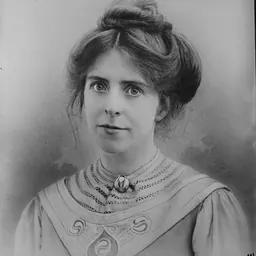

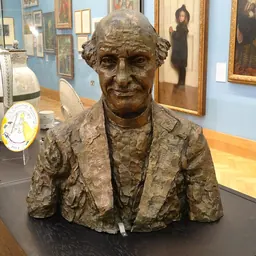

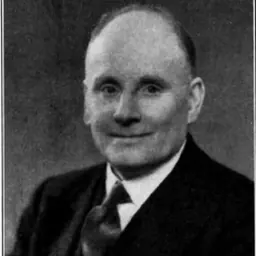
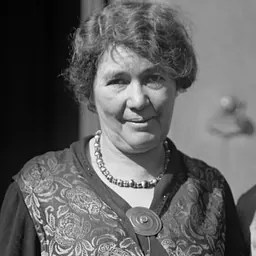
Related people
Same field, nearest in time

Contemporaries
People whose lives overlapped Christabel Pankhurst's

Frequently asked questions
Who was Christabel Pankhurst?
suffragette, co-founder of the Women's Social and Political Union, editor (1880-1958)
When was Christabel Pankhurst born?
Christabel Pankhurst was born on 22 September 1880 in Trafford.
When did Christabel Pankhurst die?
Christabel Pankhurst died on 13 February 1958 in Santa Monica.
What was Christabel Pankhurst's occupation?
Christabel Pankhurst was a suffragist, women's rights activist, architect, editor, activist and suffragette.
What nationality was Christabel Pankhurst?
Christabel Pankhurst was British.
Sources & further reading
· Wikipedia: Christabel Pankhurst
· DBpedia: Christabel Pankhurst
Cite this page
APA: Biography.guide. (2026). Christabel Pankhurst. https://biography.guide/christabel-pankhurst/
MLA: "Christabel Pankhurst." Biography.guide, https://biography.guide/christabel-pankhurst/.
Chicago: "Christabel Pankhurst." Biography.guide. https://biography.guide/christabel-pankhurst/.
Data last updated: 2026-09-26 · Spot an error? Report a correction.
Page generated 2026-09-27 05:13 UTC