
About Kary Mullis
Lived 1944 – 2019 (aged 74). Kary Mullis was an American biochemist, molecular biologist and chemist, known for Polymerase chain reaction.
Early life and education
Mullis was born in Lenoir, North Carolina, near the Blue Ridge Mountains, on December 28, 1944, to Cecil Banks Mullis and Bernice Barker Mullis. His family had a background in farming in this rural area. As a child, Mullis said, he was interested in observing organisms in the countryside. He and his cousins would often taunt livestock by feeding them through electric fences, and Kary was mostly interested in the spiders in his grandparents' basement. graduating in the class of 1962. He recalled his interest in chemistry beginning when he learned how to chemically synthesize and build solid fuel propulsion rockets as a high school student during the 1960s.
He earned a Bachelor of Science in chemistry He earned his PhD in 1973 in biochemistry at the University of California, Berkeley (UC Berkeley), in J. B. Neilands' laboratory, which focused on synthesis and structure of bacterial iron transporter molecules. Although he published a sole-author paper in Nature in the field of astrophysics in 1968, he struggled to pass his oral exams (with a colleague recalling that "He didn't get his propositions right. He didn't know general biochemistry"), and his dissertation was accepted only after several friends pitched in to "cut all the whacko stuff out of it" while his advisor lobbied the committee to reconsider its initial decision.
His doctoral dissertation was on the structure of the bacterial siderophore schizokinen. J. B. Neilands was known for his groundbreaking work on siderophores, and Mullis was a part of that with his characterization of schizokinen. Following his graduation, Mullis completed postdoctoral fellowships in pediatric cardiology at the University of Kansas Medical Center (1973–1977) and pharmaceutical chemistry at the University of California, San Francisco (1977–1979).
Career
After receiving his doctorate, Mullis briefly left science to write fiction before accepting the University of Kansas fellowship. Mullis returned to science at the encouragement of UC Berkeley friend and colleague Thomas White, who secured Mullis's UCSF position and later helped Mullis land a position with the biotechnology company Cetus Corporation of Emeryville, California.
Mullis acquired a reputation for erratic behavior at Cetus, once threatening to bring a gun to work; he also engaged in "public lovers' quarrels" with his then-girlfriend (a fellow chemist at the company) and "nearly came to blows with another scientist" at a staff party, according to California Magazine. White recalled: "It definitely put me in a tough spot. His behavior was so outrageous that the other scientists thought that the only reason I didn't fire him outright was that he was a friend of mine." In the same year, he also founded Atomic Tags in La Jolla, California. The venture sought to develop technology using atomic-force microscopy and bar-coded antibodies tagged with heavy metals to create highly multiplexed, parallel immunoassays.
Mullis was a member of the USA Science and Engineering Festival's Advisory Board. In 2014, he was named a distinguished researcher at the Children's Hospital Oakland Research Institute in Oakland, California.
PCR (polymerase chain reaction) and other inventions
In 1983, Mullis was working for Cetus Corporation as a chemist.
A drawback of the technique was that the DNA polymerase in the reaction was destroyed by the high heat used at the start of each replication cycle and had to be replaced. In 1986, Saiki started to use Thermophilus aquaticus (Taq) DNA polymerase to amplify segments of DNA. The Taq polymerase was heat resistant and needed to be added to the reaction only once, making the technique dramatically more affordable and subject to automation. This modification of Mullis's invention revolutionized biochemistry, molecular biology, genetics, medicine, and forensics. UC Berkeley biologist David Bilder said, "PCR revolutionized everything. It really superpowered molecular biology—which then transformed other fields, even distant ones like ecology and evolution. … It's impossible to overstate PCR's impact. The ability to generate as much DNA of a specific sequence as you want, starting from a few simple chemicals and some temperature changes—it's just magical."
He founded Altermune LLC in 2011 to pursue new ideas on the immune system. Mullis described the company's product thusly: It is a method using specific synthetic chemical linkers to divert an immune response from its nominal target to something completely different which you would right now like to be temporarily immune to. Let's say you just got exposed to a new strain of the flu. You're already immune to alpha-1,3-galactosyl-galactose bonds. All humans are. Why not divert a fraction of those antibodies to the influenza strain you just picked up. A chemical linker synthesized with an alpha-1,3-gal-gal bond on one end and a DNA aptamer devised to bind specifically to the strain of influenza you have on the other end, will link anti-alpha-Gal antibodies to the influenza virus and presto, you have fooled your immune system into attacking the new virus.
Another proof-of-principle of this technology, re-targeting pre-existing antibodies to the surface of a pathogenic strep bacterium using an alpha-gal modified aptamer ("alphamer"), was published in 2015 in collaboration with scientists at the University of California, San Diego. Mullis said he was inspired to fight this particular strep bacterium because it had killed his friend. Using repair replication, Kleppe duplicated and then quadrupled a small synthetic molecule with the help of two primers and DNA polymerase. The method developed by Mullis used repeated thermal cycling, which allowed the rapid and exponential amplification of large quantities of any desired DNA sequence from an extremely complex template. Later a heat-stable DNA polymerase was incorporated into the process.
His co-workers at Cetus contested the notion that Mullis was solely responsible for the idea of using Taq polymerase in PCR. However, biochemist Richard T. Pon has written that the "full potential [of PCR] was not realized" until Mullis's work in 1983, and journalist Michael Gross states that Mullis's colleagues failed to see the potential of the technique when he presented it to them. As a result, some controversy surrounds the balance of credit that should be given to Mullis versus the team at Cetus. on behalf of the defendants (Promega Corporation) that "prior art" (i.e. articles on the subject of Taq polymerase published by other groups prior to the work of Gelfand and Stoffel, and their patent application covering the purification of Taq polymerase) existed, in the form of two articles, published by Alice Chien et al. in 1976, and A. S. Kaledin et al. in 1980.
The anthropologist Paul Rabinow wrote a book on the history of the PCR method in 1996, in which he discusses whether Mullis "invented" PCR or merely came up with the concept of it.
Views on HIV/AIDS and climate change
In his 1998 autobiography, Mullis expressed disagreement with the scientific evidence for humans' role in climate change and ozone depletion. Mullis claimed that scientific theories about ozone depletion and climate change were the product of scientists and government bureaucrats conspiring to secure funding, saying that "science is being practiced by people who are dependent on being paid for what they are going to find out" instead of searching for the truth. leading him widely being called an AIDS denialist. He wrote that he began to question the AIDS consensus while compiling a report for a project's sponsor and being unable to find a published reference for HIV being the cause of AIDS. Mullis published an alternative hypothesis for AIDS in 1994, claiming that AIDS is an arbitrary diagnosis used when HIV antibodies are found in a patient's blood. Seth Kalichman, AIDS researcher and author of Denying AIDS, names Mullis "among the who's who of AIDS pseudoscientists".
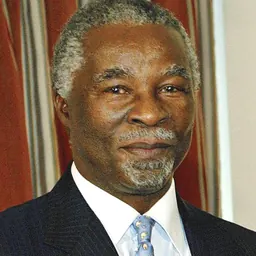
Mullis was often cited in the press as a supporter of molecular biologist and AIDS denialist Peter Duesberg. Mullis's HIV skepticism influenced Thabo Mbeki's denialist policies throughout his tenure as president of South Africa from 1999 to 2008, contributing to as many as 330,000 preventable deaths from AIDS and 35,000 babies born with HIV, which could have been prevented with ordinary prenatal HIV prevention.
Mullis's statements on HIV/AIDS and human-caused climate change have been described as an instance of "Nobel disease". This has been seen especially in regard to contradicting the scientific consensus on climate change and ozone depletion. In a Q&A interview published in the September 1994 issue of California Monthly, Mullis said, "Back in the 1960s and early 1970s I took plenty of LSD. A lot of people were doing that in Berkeley back then. And I found it to be a mind-opening experience. It was certainly much more important than any courses I ever took." During a symposium held for centenarian Albert Hofmann, Hofmann said Mullis had told him that LSD had "helped him develop the polymerase chain reaction that helps amplify specific DNA sequences".
Interest in the paranormal Mullis expressed interest in the paranormal. For example, he said that he had witnessed the "non-substantial form" of his deceased grandfather, even offering it a beer. In his autobiography, Mullis professed a belief in astrology and wrote about an encounter with a fluorescent, talking raccoon that he suggested might have been an extraterrestrial alien.
Personal life
Mullis was a surfer as well as a musician, ). Mullis died on August 7, 2019, at his home in Newport Beach, California, from complications of pneumonia.
Selected publications
Awards and honors 1990: William Allan Memorial Award of the American Society of Human Genetics, Preis Biochemische Analytik of the German Society of Clinical Chemistry and Boehringer Mannheim 1991: National Biotechnology Award, Gairdner Award, 1992: California Scientist of the Year Award 1993: Nobel Prize in Chemistry, Japan Prize, Thomas A. Edison Award 1998: Inducted into the National Inventors Hall of Fame, Ronald H. Brown American Innovator Award 2004: Honorary degree in Pharmaceutical Biotechnology from the University of Bologna, Italy 2010: Honorary degree of Doctor honoris causa in the field of biological sciences from Masaryk University, Czech Republic
Don’t just read it —
keep it.
Full-length biographies made to live with: read them, listen on the way to work, watch them tonight.
- E-book
- Audio
- Video
Instant download · yours to keep · every purchase keeps this site free
Important facts
People in Kary Mullis's life
Named in this biography and alive at the same time


Related people
Same field, nearest in time




Contemporaries
People whose lives overlapped Kary Mullis's



Frequently asked questions
Who was Kary Mullis?
American biochemist (1944–2019)
When was Kary Mullis born?
Kary Mullis was born on 28 December 1944 in Lenoir.
When did Kary Mullis die?
Kary Mullis died on 7 August 2019 in Newport Beach.
What was Kary Mullis's occupation?
Kary Mullis was a biochemist, molecular biologist and chemist.
What was Kary Mullis known for?
Kary Mullis was known for Polymerase chain reaction.
What nationality was Kary Mullis?
Kary Mullis was American.
Sources & further reading
Cite this page
APA: Biography.guide. (2026). Kary Mullis. https://biography.guide/kary-mullis/
MLA: "Kary Mullis." Biography.guide, https://biography.guide/kary-mullis/.
Chicago: "Kary Mullis." Biography.guide. https://biography.guide/kary-mullis/.
Data last updated: 2026-09-26 · Spot an error? Report a correction.
Page generated 2026-09-27 05:14 UTC