
About Philip Hall
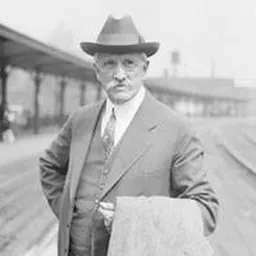
Lived 1904 – 1982 (aged 78). Philip Hall was a British mathematician and university teacher, known for Hall polynomial, Hall subgroup and Hall's marriage theorem.
Philip Hall (11 April 1904 – 30 December 1982) was an English mathematician. His major work was on group theory, notably on finite groups and solvable groups.
Biography He was educated first at Christ's Hospital, where he won the Thompson Gold Medal for mathematics, and later at King's College, Cambridge. He was elected a Fellow of the Royal Society in 1951 and awarded its Sylvester Medal in 1961. He was President of the London Mathematical Society from 1955–1957, and was awarded its Berwick Prize in 1958 and De Morgan Medal in 1965.
Publications
Don’t just read it —
keep it.
Full-length biographies made to live with: read them, listen on the way to work, watch them tonight.
- E-book
- Audio
- Video
Instant download · yours to keep · every purchase keeps this site free
Important facts
Related people
Same field, nearest in time


Contemporaries
People whose lives overlapped Philip Hall's



Frequently asked questions
Who was Philip Hall?
British mathematician (1904–1982)
When was Philip Hall born?
Philip Hall was born on 11 April 1904 in Hampstead.
When did Philip Hall die?
Philip Hall died on 30 December 1982 in Cambridge.
What was Philip Hall's occupation?
Philip Hall was a mathematician and university teacher.
What was Philip Hall known for?
Philip Hall was known for Hall polynomial, Hall subgroup, Hall's marriage theorem and Hall–Littlewood polynomial.
What nationality was Philip Hall?
Philip Hall was British.
Sources & further reading
Cite this page
APA: Biography.guide. (2026). Philip Hall. https://biography.guide/philip-hall/
MLA: "Philip Hall." Biography.guide, https://biography.guide/philip-hall/.
Chicago: "Philip Hall." Biography.guide. https://biography.guide/philip-hall/.
Data last updated: 2026-09-20 · Spot an error? Report a correction.
Page generated 2026-09-27 05:33 UTC