
About Albert W. Tucker
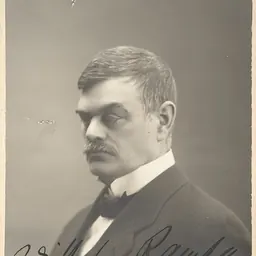
Lived 1905 – 1995 (aged 89). Albert W. Tucker was a Canadian and American mathematician and university teacher, known for Karush–Kuhn–Tucker conditions, Oriented matroid and Prisoner's dilemma.
Early life and education Albert Tucker was born in Oshawa, Ontario, Canada, and earned his B.A. at the University of Toronto in 1928 and his M.A. at the same institution in 1929. In 1932, he earned his Ph.D. at Princeton University under the supervision of Solomon Lefschetz, with a dissertation entitled An Abstract Approach to Manifolds. In 1932–33 he was a National Research Fellow at Cambridge, Harvard, and then University of Chicago.
Career Tucker then returned to Princeton to join the faculty in 1933, where he stayed until 1974. He chaired the mathematics department for about twenty years, one of the longest tenures. His extensive relationships within the field made him a great source for oral histories of the mathematics community.
In 1950, Albert Tucker gave the name and interpretation "prisoner's dilemma" to Merrill M. Flood and Melvin Dresher's model of cooperation and conflict, resulting in the most well-known game theoretic paradox. He is also well known for the Karush–Kuhn–Tucker conditions, a basic result in non-linear programming, which was published in conference proceedings, rather than in a journal.
In the 1960s, he was heavily involved in mathematics education, as chair of the AP Calculus committee for the College Board (1960–1963), through work with the Committee on the Undergraduate Program in Mathematics (CUPM) of the MAA (he was president of the MAA in 1961–1962), and through many NSF summer workshops for high school and college teachers. George B. Thomas Jr. acknowledged Tucker's contribution of many exercises to Thomas's classic textbook, Calculus and Analytic Geometry.
In the early 1980s, Tucker recruited Princeton history professor Charles Coulston Gillispie to help him set up an oral history project to preserve stories about the Princeton mathematical community in the 1930s. With funding from the Sloan Foundation, this project later expanded its scope. Among those who shared their memories of such figures as Einstein, von Neumann, and Gödel were computer pioneer Herman Goldstine and Nobel laureates John Bardeen and Eugene Wigner.
Students and legacy Tucker's Ph.D. students include Michel Balinski, David Gale, Alan J. Goldman, John Isbell, Stephen Maurer, Turing Award winner Marvin Minsky, Nobel Prize winner John Nash, Torrence Parsons, Nobel Prize winner Lloyd Shapley, Robert Singleton, and Marjorie Stein. Tucker advised and collaborated with Harold W. Kuhn on a number of papers and mathematical models.
Tucker noticed the leadership ability and talent of a young mathematics graduate student named John G. Kemeny, whose hiring Tucker suggested to Dartmouth College. Following Tucker's advice, Dartmouth recruited Kemeny, who became Chair of the Mathematics Department and later College President. Years later, Dartmouth College recognized Albert Tucker with an honorary degree.
Tucker died in Hightstown, N.J. in 1995 at age 89. His sons, Alan Tucker and Thomas W. Tucker, and his grandson Thomas J. Tucker are all professional mathematicians.
Tucker Prize At each (triennial) International Symposium of the Mathematical Optimization Society (MOS) the Tucker Prize, in honour of A. W. Tucker, is given for outstanding thesis in the area of discrete mathematics.
Works with H. W. Kuhn (eds.): Contributions to the theory of games, Annals of Mathematics Studies 1950 with H. W. Kuhn (eds.): Linear inequalities and related systems, Annals of Mathematics Studies 1956 with Allan Gewirtz, Harry Sitomer: Constructive linear algebra, Englewood Cliffs 1974 with Evar Nering: Linear Programs and related problems, Academic Press 1993
Don’t just read it —
keep it.
Full-length biographies made to live with: read them, listen on the way to work, watch them tonight.
- E-book
- Audio
- Video
Instant download · yours to keep · every purchase keeps this site free
Important facts
People in Albert W. Tucker's life
Named in this biography and alive at the same time

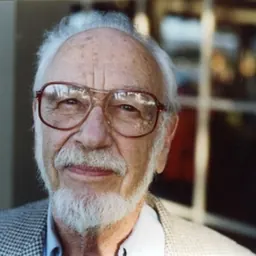
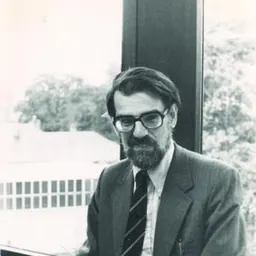

Related people
Same field, nearest in time


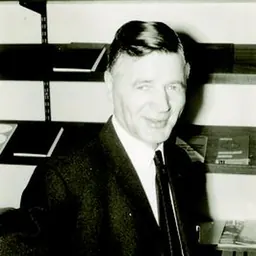
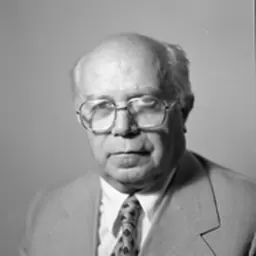
Contemporaries
People whose lives overlapped Albert W. Tucker's





Frequently asked questions
Who was Albert W. Tucker?
Canadian mathematician (1905–1995)
When was Albert W. Tucker born?
Albert W. Tucker was born on 28 November 1905 in Ontario, Oshawa.
When did Albert W. Tucker die?
Albert W. Tucker died on 25 January 1995 in Mercer County, Hightstown.
What was Albert W. Tucker's occupation?
Albert W. Tucker was a mathematician and university teacher.
What was Albert W. Tucker known for?
Albert W. Tucker was known for Karush–Kuhn–Tucker conditions, Oriented matroid and Prisoner's dilemma.
What nationality was Albert W. Tucker?
Albert W. Tucker was Canadian and American.
Sources & further reading
Cite this page
APA: Biography.guide. (2026). Albert W. Tucker. https://biography.guide/albert-w-tucker/
MLA: "Albert W. Tucker." Biography.guide, https://biography.guide/albert-w-tucker/.
Chicago: "Albert W. Tucker." Biography.guide. https://biography.guide/albert-w-tucker/.
Data last updated: 2026-09-20 · Spot an error? Report a correction.
Page generated 2026-09-27 05:28 UTC