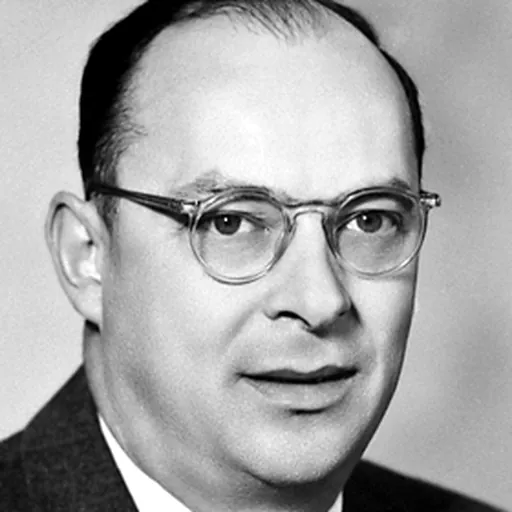
About John Bardeen
Lived 1908 – 1991 (aged 82). John Bardeen was an American physicist, inventor, university teacher and electrical engineer, known for BCS theory, Carrier scattering and Field-effect transistor.
Early life and education John Bardeen was born on May 23, 1908, in Madison, Wisconsin, the son of Charles Russell Bardeen, the first dean of the University of Wisconsin Medical School, and Althea Harmer. Bardeen attended University of Wisconsin High School in Madison, graduating in 1923 at age 15; he could have graduated several years earlier, but this was postponed because he took courses at another high school and because of his mother's death. Bardeen entered the University of Wisconsin in 1923. While in college, he joined the Zeta Psi fraternity. He raised a part of the needed membership fees by playing billiards. Bardeen was initiated as a member of Tau Beta Pi engineering honor society. Not wanting to be an academic like his father, Bardeen chose engineering. He also felt that engineering had good job prospects.
Bardeen received his B.S. in Electrical Engineering in 1928 from the University of Wisconsin. Despite taking a year off to work in Chicago, he graduated in 1928. Taking all the graduate courses in physics and mathematics that had interested him, Bardeen graduated in five years instead of the usual four. This allowed him time to complete his master's thesis, supervised by Leo J. Peters. He received his M.S. in Electrical Engineering in 1929 from Wisconsin. and Percy Williams Bridgman on problems in cohesion and electrical conduction in metals—and also did some work on level density of nuclei. He received his Ph.D. in Mathematical Physics from Princeton in 1936.
Bell Labs
In October 1945, Bardeen began work at Bell Telephone Laboratories as a member of a solid-state physics group led by William Shockley and chemist Stanley Morgan. Other personnel working in the group were Walter Brattain, physicist Gerald Pearson, chemist Robert Gibney, electronics expert Hilbert Moore and several technicians. He moved his family to Summit, New Jersey.
The assignment of the group was to seek a solid-state alternative to fragile glass vacuum tube amplifiers. Their first attempts were based on Shockley's ideas about using an external electrical field on a semiconductor to affect its conductivity. These experiments mysteriously failed every time in all sorts of configurations and materials. The group was at a standstill until Bardeen suggested a theory that invoked surface states that prevented the field from penetrating the semiconductor. The group changed its focus to study these surface states, meeting almost daily to discuss the work. The rapport of the group was excellent and ideas were freely exchanged. By the winter of 1946, they had enough results that Bardeen submitted a paper on the surface states to Physical Review. Brattain started experiments to study the surface states through observations made while shining a bright light on the semiconductor's surface. This led to several more papers (one of them co-authored with Shockley), which estimated the density of the surface states to be more than enough to account for their failed experiments. The pace of the work picked up significantly when they started to surround point contacts between the semiconductor and the conducting wires with electrolytes. Moore built a circuit that allowed them to vary the frequency of the input signal easily and suggested that they use glycol borate (gu), a viscous chemical that did not evaporate. Finally, they began to get some evidence of power amplification when Pearson, acting on a suggestion by Shockley, put a voltage on a droplet of gu placed across a p–n junction.
University of Illinois By 1951, Bardeen was looking for a new job. Fred Seitz, a friend of Bardeen, convinced the University of Illinois to make Bardeen an offer of $10,000 a year. Bardeen accepted the offer and left Bell Labs,
At Illinois, Bardeen established two major research programs, one in the electrical engineering department and one in the physics department. The research program in the electrical engineering department dealt with both experimental and theoretical aspects of semiconductors, and the research program in the physics department dealt with theoretical aspects of macroscopic quantum systems, particularly superconductivity and quantum liquids.
Bardeen was an active professor at Illinois from 1951 to 1975 and then became professor emeritus. that CDW electron transport is a collective quantum phenomenon (see Macroscopic quantum phenomena) were initially greeted with skepticism. However, experiments reported in 2012 show oscillations in CDW current versus magnetic flux through tantalum trisulfide rings, similar to the behavior of superconducting quantum interference devices (see SQUID and Aharonov–Bohm effect), lending credence to the idea that collective CDW electron transport is fundamentally quantum in nature. (See quantum mechanics.) Bardeen continued his research throughout the 1980s, and published articles in Physical Review Letters and Physics Today less than a year before he died.
A collection of Bardeen's personal papers are held by the University of Illinois Archives.
Research Invention of the transistor
On December 23, 1947, Bardeen and Walter Brattain were working without William Shockley when they succeeded in creating a point-contact transistor that achieved amplification. By the next month, Bell Labs' patent attorneys started to work on the patent applications.
Bell Labs' attorneys soon discovered that Shockley's field effect principle had been anticipated and patented in 1930 by Julius Lilienfeld, who filed his MESFET-like patent in Canada on October 22, 1925.
Shockley publicly took the lion's share of the credit for the invention of the transistor; this led to a deterioration of Bardeen's relationship with him. Bell Labs management, however, consistently presented all three inventors as a team. Shockley eventually infuriated and alienated Bardeen and Brattain, essentially blocking the two from working on the junction transistor. Bardeen began pursuing a theory for superconductivity and left Bell Labs in 1951. Brattain refused to work with Shockley further and was assigned to another group. Neither Bardeen nor Brattain had much to do with the development of the transistor beyond the first year after its invention.
The "transistor" (a portmanteau of "transconductance" and "resistor") was 1/50 the size of the vacuum tubes it replaced in televisions and radios, used far less power, was far more reliable, and it allowed electrical devices to become more compact.
BCS theory
In 1957, Bardeen, in collaboration with Leon Cooper and his doctoral student John Robert Schrieffer, proposed the standard theory of superconductivity known as the BCS theory (named for their initials). This was Bardeen's second Nobel Prize in Physics; he became the first person to win two Nobel Prizes in the same field.
In the late 1960s, Bardeen felt that Cooper and Schrieffer deserved the Nobel Prize for BCS. He was concerned that they might not be awarded because of the Nobel Committee's reluctance to award the same person twice, which would be his case as a co-author of the theory. Bardeen nominated scientists who worked on superconducting tunneling effects such as the Josephson effect for the Prize in 1967: Leo Esaki, Ivar Giaever, and Brian Josephson. He recognized that because the tunneling developments depended on superconductivity, it would increase the chances that BCS itself would be awarded first. He also reasoned that the Nobel Committee had a predilection for multinational teams, which was the case for his tunneling nominees, each being from a different country. Bardeen renewed the nominations in 1971, 1972, when BCS received the prize, and finally 1973, when tunneling was awarded.
Josephson effect controversy Bardeen became interested in superconducting tunneling in the summer of 1960 after consulting for the General Electric Research Laboratory in Schenectady, New York, where he learned about experiments done by Ivar Giaever at Rensselaer Polytechnic Institute, which suggested that electrons from a normal material could tunnel into a superconducting one.
On June 8, 1962, Brian Josephson, then 22, submitted to Physics Letters his prediction of a super-current flow across a barrier, effect which later became known as the Josephson effect. Bardeen challenged Josephson's theory on a note in his own paper received ten days later by Physical Review Letters:
In a recent note, Josephson uses a somewhat similar formulation to discuss the possibility of superfluid flow across the tunneling region, in which no quasi-particles are created. However, as pointed out by the author (reference 3), pairing does not extend into the barrier, so that there can be no such superfluid flow.
The matter was further discussed on the 8th International Conference on Low Temperature Physics held September 16 to 22, 1962 at Queen Mary University of London. While Josephson was presenting his theory, Bardeen rose to describe his objections. After an intense debate both men were unable to reach a common understanding, and at points Josephson repeatedly asked Bardeen, "Did you calculate it? No? I did."
In 1963, experimental evidence and further theoretical clarifications were discovered supporting the Josephson effect, notably in a paper by Philip W. Anderson and John Rowell from Bell Labs. After this, Bardeen came to accept Josephson's theory and publicly withdrew his previous opposition to it at a conference held in August 1963. Bardeen also invited Josephson as a postdoc in Illinois for the academic year of 1965–1966, and later nominated Josephson and Giaever for the Nobel Prize in Physics, which they received in 1973.
Personal life While studying at Princeton, Bardeen met Jane Maxwell (1907–1997) during a visit to his old friends in Pittsburgh. He married Jane on July 18, 1938.
Bardeen was a scientist with a very unassuming personality. While he served as a professor for almost 40 years at the University of Illinois, he was best remembered by neighbors for hosting cookouts where he would prepare food for his friends, many of whom were unaware of his accomplishments at the university. He would always ask his guests if they liked the hamburger bun toasted (since he liked his that way). He enjoyed playing golf and going on picnics with his family. Lillian Hoddeson said that because he "differed radically from the popular stereotype of 'genius' and was uninterested in appearing other than ordinary, the public and the media often overlooked him." John Bardeen's children were taken to church by his wife, who taught Sunday school and was a church elder. Despite this, he and his wife made it clear that they did not have faith in an afterlife and other religious ideas. He was the father of James M. Bardeen, William A. Bardeen, and daughter Elizabeth.
Bardeen died of heart disease on January 30, 1991, at Brigham and Women's Hospital in Boston, Massachusetts, at the age of 82.
Recognition Memberships Year Organization Type 1938 American Physical Society Member 1954 National Academy of Sciences Member 1958 American Philosophical Society Member 1959 American Academy of Arts and Sciences Member 1973 Royal Society Foreign Member 1977 Japan Academy Honorary Member
Awards Year Organization Award Citation 1954 American Physical Society Oliver E. Buckley Prize "For contributions to the physics of semiconductor surfaces." 1956 Royal Swedish Academy of Sciences Nobel Prize in Physics "For their researches on semiconductors and their discovery of the transistor effect." 1971 IEEE IEEE Medal of Honor "For his profound contributions to the understanding of the conductivity of solids, to the invention of the transistor, and to the microscopic theory of superconductivity." 1972 Royal Swedish Academy of Sciences Nobel Prize in Physics "For their jointly developed theory of superconductivity, usually called the BCS-theory." 1983 Western Society of Engineers Washington Award "For his outstanding engineering leadership in research and development in solid state and low temperature physics and for service to higher education and to our country." 1987 Academy of Sciences of the Soviet Union Lomonosov Gold Medal "For outstanding achievements in the field of physics." 1988 University of Pennsylvania Harold Pender Award "Co-inventor of the transistor and contributor to the theory of superconductivity."
Bardeen is the only double laureate in Physics, and one of three double laureates of the same prize; the others are Frederick Sanger who won the 1958 and 1980 Prizes in Chemistry and Karl Barry Sharpless who won the 2001 and 2022 Prizes in Chemistry.
Honorary degrees Year University Degree 1955 Union College Doctor of Science 1960 University of Wisconsin Doctor of Science 1968 Princeton University Doctor of Science 1970 University of Notre Dame Doctor of Laws 1973 University of Minnesota Doctor of Science 1974 University of Illinois — 1974 University of Michigan Doctor of Science 1976 University of Pennsylvania Doctor of Science 1977 University of Cambridge Doctor of Science 1981 Clarkson University Doctor of Science
National awards Year Head of state Award Citation 1965 Lyndon B. Johnson National Medal of Science "For his brilliant contributions to the theory of electrical conductivity in solid materials, and especially those which led to the development of a successful theory of superconductivity." 1977 Gerald Ford Presidential Medal of Freedom —
Commemoration
In honor of Bardeen, the engineering quadrangle at the University of Illinois Urbana–Champaign is named the Bardeen Quad.
Also in honor of Bardeen, Sony Corporation endowed a $3 million John Bardeen professorial chair at the University of Illinois Urbana-Champaign, beginning in 1990. Sony Corporation owed much of its success to commercializing Bardeen's transistors in portable TVs and radios, and had worked with Illinois researchers. , the John Bardeen Professor is Yurii Vlasov.
At the time of Bardeen's death, then-University of Illinois chancellor Morton Weir said, "It is a rare person whose work changes the life of every American; John's did." His citation reads: "Theoretical physicist John Bardeen (1908–1991) shared the Nobel Prize in Physics twice—in 1956, as co-inventor of the transistor and in 1972, for the explanation of superconductivity. The transistor paved the way for all modern electronics, from computers to microchips. Diverse applications of superconductivity include infrared sensors and medical imaging systems." The other scientists on the "American Scientists" sheet include biochemist Gerty Cori, chemist Linus Pauling and astronomer Edwin Hubble.
Don’t just read it —
keep it.
Full-length biographies made to live with: read them, listen on the way to work, watch them tonight.
- E-book
- Audio
- Video
Instant download · yours to keep · every purchase keeps this site free
Important facts
more
Superconductivity, Surface scienceFamily & relationships
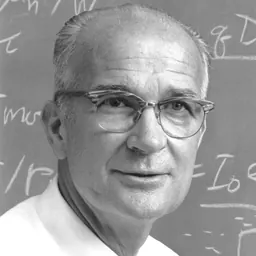
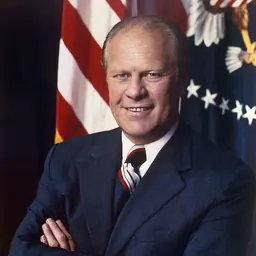
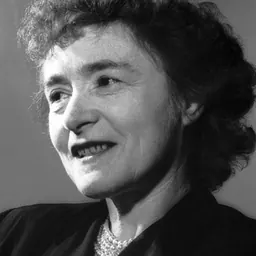
People in John Bardeen's life
Named in this biography and alive at the same time


Related people
Same field, nearest in time


Contemporaries
People whose lives overlapped John Bardeen's


Frequently asked questions
Who was John Bardeen?
American physicist and engineer (1908–1991)
When was John Bardeen born?
John Bardeen was born on 23 May 1908 in Madison.
When did John Bardeen die?
John Bardeen died on 30 January 1991 in Boston.
What was John Bardeen's occupation?
John Bardeen was a physicist, inventor, university teacher and electrical engineer.
What was John Bardeen known for?
John Bardeen was known for BCS theory, Carrier scattering, Field-effect transistor, Mattis–Bardeen theory, Point-contact transistor and Scanning tunneling microscope.
What nationality was John Bardeen?
John Bardeen was American.
Sources & further reading
Cite this page
APA: Biography.guide. (2026). John Bardeen. https://biography.guide/john-bardeen/
MLA: "John Bardeen." Biography.guide, https://biography.guide/john-bardeen/.
Chicago: "John Bardeen." Biography.guide. https://biography.guide/john-bardeen/.
Data last updated: 2026-09-22 · Spot an error? Report a correction.
Portrait: Wikimedia Commons · author & licence
Page generated 2026-09-27 05:04 UTC