
About Leon Cooper
Lived 1930 – 2024 (aged 94). Leon Cooper was an American physicist and university teacher, known for BCM theory, BCS theory and Cooper pairs.
Early life and education Leon N. Kupchick was born on February 28, 1930 in The Bronx, New York City. His father, Irving Kupchik, was from Belarus and moved to the United States after the Russian Revolution in 1917. His mother, Anna Zola, was from Poland; she died when Leon was seven. His father changed the family's surname from Kupchick to Cooper when he remarried.
Leon attended the Bronx High School of Science, graduating in 1947. He then studied at Columbia University, receiving a B.A. in 1951. He remained at Columbia for graduate school, obtaining an M.A. in 1953, and a Ph.D. in 1954. His doctoral thesis was on the subject of muonic atoms and the charge radius.
Career Cooper spent one year as a postdoctoral researcher at the Institute for Advanced Study in Princeton. New Jersey. He then taught at the University of Illinois and Ohio State University before joining Brown University in 1958. Nestor partnered with Intel to develop the Ni1000 neural network computer chip in 1994.
Research Superconductivity
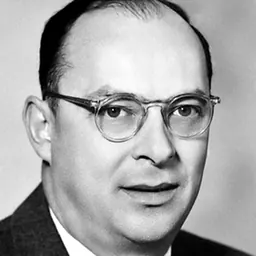
While Cooper was a postdoc at Princeton, he was approached by John Bardeen, a professor at the University of Illinois, and Bardeen's graduate student John Robert Schrieffer. Bardeen and Schrieffer were working on superconductivity, a topic which was new to Cooper, but he agreed to collaborate with them. Superconductivity had been experimentally discovered in 1911, but there was no theoretical explanation for the phenomenon. Cooper moved to Illinois as a postdoc to work with Bardeen.
After a year of theoretical investigation, Cooper developed the idea of a quasiparticle composed of two bound electrons, now known as a Cooper pair. Cooper published his concept of Cooper pairs in Physical Review in September 1956. The movement of Cooper pairs through a low-temperature metal would be almost unimpeded, producing a very low electrical resistance. After further development, Bardeen, Cooper and Schrieffer showed how this could produce superconductivity, publishing their theory in Physical Reviews in two papers during 1957. This theory became known as the BCS theory, after the authors' initials, and is widely accepted as the explanation for conventional superconductivity. Bardeen, Schrieffer and Cooper were awarded the Nobel Prize in Physics in 1972 for their theory. He died at his home in Providence, Rhode Island, on October 23, 2024, at the age of 94. 1972 Swedish Academy of Sciences Nobel Prize in Physics "For their jointly developed theory of superconductivity, usually called the BCS-theory." " 1985 Columbia University John Jay Award
Memberships Year Organization Type 1973 American Philosophical Society Member 1974 American Academy of Arts and Sciences Member 1975 National Academy of Sciences Member
Honorary degrees Year University Degree 1973 University of Sussex Doctor of Science 1974 Brown University Doctor of Science 1976 Ohio State University Doctor of Science
Publications Cooper was the author of Science and Human Experience – a collection of essays, including previously unpublished material, on issues such as consciousness and the structure of space. (Cambridge University Press, 2014).
Cooper also wrote an unconventional liberal-arts physics textbook, originally An Introduction to the Meaning and Structure of Physics (Harper and Row, 1968) and still in print in a somewhat condensed form as Physics: Structure and Meaning (Lebanon: New Hampshire, University Press of New England, 1992).
Cooper, L. N. & J. Rainwater. "Theory of Multiple Coulomb Scattering from Extended Nuclei", Nevis Cyclotron Laboratories at Columbia University, Office of Naval Research (ONR), United States Department of Energy (through predecessor agency the Atomic Energy Commission), (August 1954).
Cooper, L. N., Lee, H. J., Schwartz, B. B. & W. Silvert. "Theory of the Knight Shift and Flux Quantization in Superconductors", Brown University, United States Department of Energy (through predecessor agency the Atomic Energy Commission), (May 1962). Cooper, L. N. & Feldman, D. "BCS: 50 years", World Scientific Publishing Co., (November 2010).
Don’t just read it —
keep it.
Full-length biographies made to live with: read them, listen on the way to work, watch them tonight.
- E-book
- Audio
- Video
Instant download · yours to keep · every purchase keeps this site free
Important facts
People in Leon Cooper's life
Named in this biography and alive at the same time


Related people
Same field, nearest in time


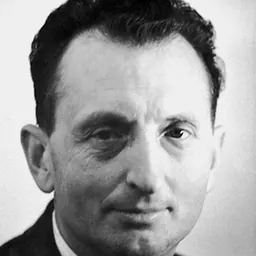
Contemporaries
People whose lives overlapped Leon Cooper's


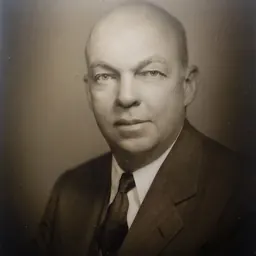
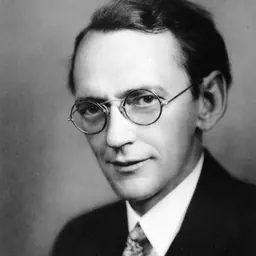
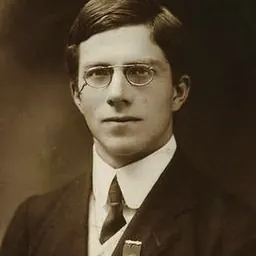
Frequently asked questions
Who was Leon Cooper?
American physicist (1930–2024)
When was Leon Cooper born?
Leon Cooper was born on 28 February 1930 in New York City.
When did Leon Cooper die?
Leon Cooper died on 23 October 2024 in Providence.
What was Leon Cooper's occupation?
Leon Cooper was a physicist and university teacher.
What was Leon Cooper known for?
Leon Cooper was known for BCM theory, BCS theory and Cooper pairs.
What nationality was Leon Cooper?
Leon Cooper was American.
Sources & further reading
Cite this page
APA: Biography.guide. (2026). Leon Cooper. https://biography.guide/leon-cooper/
MLA: "Leon Cooper." Biography.guide, https://biography.guide/leon-cooper/.
Chicago: "Leon Cooper." Biography.guide. https://biography.guide/leon-cooper/.
Data last updated: 2026-09-20 · Spot an error? Report a correction.
Page generated 2026-09-27 05:22 UTC