
About Alexander Prokhorov
Lived 1916 – 2002 (aged 85). Alexander Prokhorov was a Russian physicist, university teacher and editor, known for Laser and Maser.
Alexander Mikhailovich Prokhorov (born Alexander Michael Prochoroff; ; 11 July 1916 – 8 January 2002) was an Australian-born Soviet physicist and researcher whose work focused on quantum electronics. His most famous and well-known works were on optics and electromagnetic research. He was jointly awarded the Nobel Prize in Physics in 1964 with Charles Hard Townes and Nikolay Basov for his fundamental work that led to the development of the laser and the maser.
Early life Alexander Michael Prochoroff was born on 11 July 1916 in Atherton, Australia, to Russian parents who had emigrated from Russia to escape repression by the Tsarist regime. As a child, he attended Butchers Creek State School. The family returned to Russia in 1923, after the culmination of the October Revolution and the Russian Civil War. In 1957, while studying ruby, a chromium-doped variation of aluminium oxide, he came upon the idea of using this material as an active medium of a laser. As a new type of laser resonator, he proposed, in 1958, an "open type" cavity design, which is widely used today. In 1963, together with A. S. Selivanenko, he suggested a laser using two-quantum transitions. For his pioneering work on lasers and masers, in 1964, he received the Nobel Prize in Physics shared with Nikolay Basov and Charles Hard Townes. Between 1982 and 1998, Prokhorov served as acting director of the General Physics Institute of the Russian Academy of Sciences, and after 1998 as honorary director. After his death in 2002, the institute was renamed the of the Russian Academy of Sciences.
In 1969, Prokhorov became a Hero of Socialist Labour, the highest degree of distinction in the Soviet Union for achievements in national economy and culture. He received the second such award in 1986. Starting in 1969, he was the chief editor of the Great Soviet Encyclopedia. He was awarded the Frederic Ives Medal, the highest distinction of the Optical Society of America (OSA), in 2000 and became an Honorary OSA Member in 2001. The same year, he was awarded the Demidov Prize by the government of the Russian Federation.
He died on 8 January 2002 at Moscow and was buried at Novodevichy Cemetery in Moscow.
Politics Prokhorov became a member of the Communist Party of the Soviet Union in 1950. In 1983, together with three other academicians – Andrey Tychonoff, Anatoly Dorodnitsyn and Georgy Skryabin – he signed the famous open letter called "when they lose honor and conscience" (Когда теряют честь и совесть), denouncing Andrey Sakharov's article in the Foreign Affairs.
Family
Both of Prokhorov's parents died during World War II. Prokhorov married geographer Galina Shelepina in 1941, and they had a son, Kiril, born in 1945. Following his father, Kiril Prokhorov became a physicist in the field of optics and is currently leading a laser-related laboratory at the A. M. Prokhorov General Physics Institute.
Honours and awards The list below includes awards and honors from the Soviet Union, Russian federation, foreign research councils and international associations. Mandelstam Prize (1948) Lenin Prize (1959) Five Orders of Lenin (1967, 1969, 1975, 1981 and 1986) Order of the Patriotic War, 1st class (1985) Nobel Prize in Physics in 1964, alongside Nikolay Basov and Charles H. Townes Hero of Socialist Labour, twice (1969, 1986) Medal For Courage USSR State Prize (1980) Order of Merit for the Fatherland, 2nd class (1996) State Prize of the Russian Federation (1998) Medal Frederick Ayvesa (2000) Demidov Prize (2001) Lomonosov Gold Medal (Moscow State University, 1987) Award of the Council of Ministers State Prize of the Russian Federation in science and technology (2003, posthumously) for the development of scientific and technological foundations of metrological support of measurements of length in the microwave and nanometer ranges and their application in microelectronics and nanotechnology Foreign Member of the Czechoslovak Academy of Sciences (1982) Jubilee Medal "In Commemoration of the 100th Anniversary since the Birth of Vladimir Il'ich Lenin" Medal "For the Victory over Germany in the Great Patriotic War 1941–1945" Jubilee Medal "Twenty Years of Victory in the Great Patriotic War 1941-1945" Jubilee Medal "Thirty Years of Victory in the Great Patriotic War 1941-1945" Jubilee Medal "Forty Years of Victory in the Great Patriotic War 1941-1945" Medal "For Valiant Labour in the Great Patriotic War 1941-1945" Medal "Veteran of Labour" Elected member of the American Academy of Arts and Sciences Jubilee Medal "50 Years of the Armed Forces of the USSR" Medal "In Commemoration of the 800th Anniversary of Moscow" Medal "In Commemoration of the 850th Anniversary of Moscow" Honorary membership of the Optical Society of America
Books A. M. Prokhorov (Editor in Chief), J. M. Buzzi, P. Sprangle, K. Wille. Coherent Radiation Generation and Particle Acceleration, 1992. Research Trends in Physics series published by the American Institute of Physics Press (presently Springer, New York) V. Stefan and A. M. Prokhorov (Editors) Diamond Science and Technology Vol 1: Laser Diamond Interaction. Plasma Diamond Reactors (Stefan University Press Series on Frontiers in Science and Technology) 1999 . V. Stefan and A. M. Prokhorov (Editors). Diamond Science and Technology Vol 2 (Stefan University Press Series on Frontiers in Science and Technology) 1999 .
Don’t just read it —
keep it.
Full-length biographies made to live with: read them, listen on the way to work, watch them tonight.
- E-book
- Audio
- Video
Instant download · yours to keep · every purchase keeps this site free
Important facts
People in Alexander Prokhorov's life
Named in this biography and alive at the same time

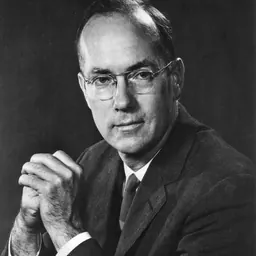
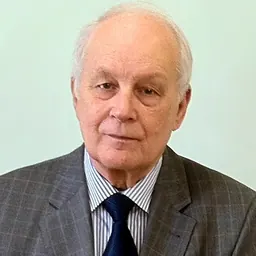
Related people
Same field, nearest in time
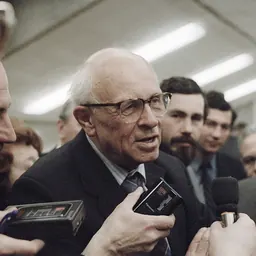


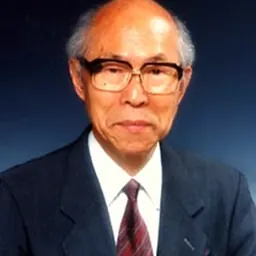
Contemporaries
People whose lives overlapped Alexander Prokhorov's


Frequently asked questions
Who was Alexander Prokhorov?
Soviet and Russian physicist (1916-2002)
When was Alexander Prokhorov born?
Alexander Prokhorov was born on 11 July 1916 in Atherton.
When did Alexander Prokhorov die?
Alexander Prokhorov died on 8 January 2002 in Moscow.
What was Alexander Prokhorov's occupation?
Alexander Prokhorov was a physicist, university teacher and editor.
What was Alexander Prokhorov known for?
Alexander Prokhorov was known for Laser and Maser.
What nationality was Alexander Prokhorov?
Alexander Prokhorov was Russian.
Sources & further reading
· Wikipedia: Alexander Prokhorov
· DBpedia: Alexander Prokhorov
Cite this page
APA: Biography.guide. (2026). Alexander Prokhorov. https://biography.guide/alexander-prokhorov/
MLA: "Alexander Prokhorov." Biography.guide, https://biography.guide/alexander-prokhorov/.
Chicago: "Alexander Prokhorov." Biography.guide. https://biography.guide/alexander-prokhorov/.
Data last updated: 2026-09-25 · Spot an error? Report a correction.
Page generated 2026-09-27 05:12 UTC