
Nikolai Burdenko
Russian and Soviet surgeon, founder of Russian neurosurgery
About Nikolai Burdenko
Lived 1876 – 1946 (aged 70). Nikolai Burdenko was a Russian neurosurgeon, military personnel, non-fiction writer, surgeon, politician and generaloberst, known for Battlefield medicine and Neurosurgery.
Medical career On 11 October 1901, he entered the fourth course of the Imperial University of Yuryev (modern-day University of Tartu), Faculty of Medicine. Once again, he became involved with the student protest movement and had to spend a year in the Kherson Governorate treating children with typhus, tuberculosis and other epidemic diseases. He was then restored in the university. During that time he worked a lot as a surgeon and took part in medical expeditions around the country to fight epidemics of typhus, smallpox and scarlet fever.
In January 1904, Burdenko volunteered for the Russo-Japanese War. He served in the field ambulance detachment in Manchuria and was shot in the arm while saving wounded under hostile fire during the Battle of Te-li-Ssu. He was awarded with the Cross of St. George for his service. On December he demobilized and returned to his studies. In 1905, he was invited to the surgery department of the Riga town hospital for practice.
In 1906, Burdenko graduated from the university and moved back to Penza where he became a surgeon at the local zemstvo hospital. Simultaneously he worked on a thesis on the consequences of portal vein ligation. He was heavily influenced by the works of Ivan Pavlov that inspired him to write five scientific efforts. In March 1909, he earned the Doctor of Medicine degree and the next year he became a privatdozent and an associate professor at the University of Yuryev.
He was diagnosed with the post-concussion syndrome after one of the battles and had to return to his Alma mater where he headed the surgery department. Following the occupation of Yuryev by German forces Burdenko was suggested to continue to carry out his duties under the new power, but he declined the offer and in June 1918 evacuated to Voronezh along with other professors. There, he became one of the founders of the Voronezh State University based on the University of Yuryev.
Burdenko was among the first to introduce surgery of the central and peripheral nervous system to clinical practice; he investigated the reasons behind the appearance of shock and the methods of treating it, made a large contribution to the study of the processes which appear in the central and peripheral nervous system in connection with the surgical operation in the case of sharp injuries; he developed the bulbotomy — operation on the upper division of the spinal cord. Burdenko created the school of surgeons with a sharply pronounced experimental direction. Works in the domains of the oncology of central and vegetative nervous system, pathology of the liquor circulation, and cerebral blood circulation were the valuable contribution of Burdenko and his school to the theory and practice of neurosurgery. The commission's report assigned Nazi Germany the responsibility for the massacre, Documented materials were entered into evidence at the Nuremberg trial. In 1993, a commission of experts under the Russia's Chief Military Prosecutor's Office disapproved the Burdenko commission's report as "false" and "not meeting science requirements".
In 1950, Boris Olshansky, a defector to the United States and a former Soviet Army officer who claimed to be a former associated professor at the Voronezh State University and Burdenko's friend, published an article and in 1952 — testified in court that in April 1946 Burdenko had revealed to him that he knew about the execution been carried out by the NKVD, recognizing it as a "mistake" of the agency, and stating that for him as a medical man "it was quite clear" that the corpses dated back to 1940. In 1957, Olshansky returned to the USSR where he claimed that his testimony was made up by the American Committee for Liberation and was given by him under fear of repressions, although according to Democratic United States Representative Dan Flood, Olshansky "appeared and testified voluntarily". However, other doubts arose as to the credibility of Olshansky's testimony the following years.
Burdenko's name also appeared on the official Soviet report regarding the Auschwitz concentration camp as document USSR-008.
In June 1944, the USSR Academy of Medical Sciences was founded in Moscow. It was designed in accordance with plans developed by Burdenko and was partially based on the Institute of Experimental Medicine — the first Russian research institute that existed from 1890 to 1944. Burdenko served as its president from 20 December until his death.
Death In June 1945, he survived a second stroke, and during the summer of 1946 — a third one. While in hospital, Burdenko finished a report on healing of gunshot wounds.
Honours and awards
Order of Saint Anna, 3rd class with swords (March 1915) Order of Saint Anna, 2nd class (April 1915) Order of Saint Vladimir, 4th class (1916) Hero of Socialist Labour (1943) Three Orders of Lenin Order of the Red Banner Order of the Patriotic War, 1st class Order of the Red Star Medal for Combat Service Medal "For the Defence of Moscow" Medal "For the Victory over Germany in the Great Patriotic War 1941–1945" Medal "For the Victory over Japan" Medal "For Valiant Labour in the Great Patriotic War 1941-1945" Stalin Prize (1941) Honorary member of the International Society of Surgeons, Royal Society of London.
The following were named after Burdenko: SRI of the neurosurgery in Moscow, Central military hospital, the faculty of the surgical clinic of Sechenov's medical academy, Penza provincial clinical hospital, streets in Moscow and Voronezh, an asteroid (6754 Burdenko).
Don’t just read it —
keep it.
Full-length biographies made to live with: read them, listen on the way to work, watch them tonight.
- E-book
- Audio
- Video
Instant download · yours to keep · every purchase keeps this site free
Important facts
People in Nikolai Burdenko's life
Named in this biography and alive at the same time
Related people
Same field, nearest in time


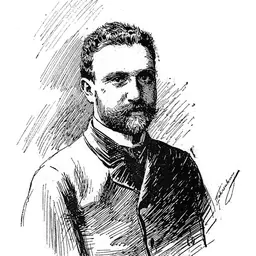
Contemporaries
People whose lives overlapped Nikolai Burdenko's

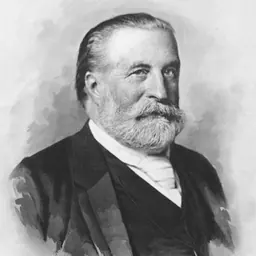
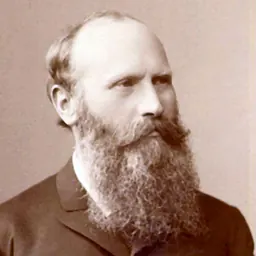
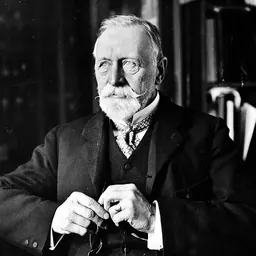
Frequently asked questions
Who was Nikolai Burdenko?
Russian and Soviet surgeon, founder of Russian neurosurgery (1876-1946)
When was Nikolai Burdenko born?
Nikolai Burdenko was born on 22 May 1876 in Kamenka.
When did Nikolai Burdenko die?
Nikolai Burdenko died on 11 November 1946 in Moscow.
What was Nikolai Burdenko's occupation?
Nikolai Burdenko was a neurosurgeon, military personnel, non-fiction writer, surgeon, politician and generaloberst.
What was Nikolai Burdenko known for?
Nikolai Burdenko was known for Battlefield medicine and Neurosurgery.
What nationality was Nikolai Burdenko?
Nikolai Burdenko was Russian.
Sources & further reading
Cite this page
APA: Biography.guide. (2026). Nikolai Burdenko. https://biography.guide/nikolai-burdenko/
MLA: "Nikolai Burdenko." Biography.guide, https://biography.guide/nikolai-burdenko/.
Chicago: "Nikolai Burdenko." Biography.guide. https://biography.guide/nikolai-burdenko/.
Data last updated: 2026-09-20 · Spot an error? Report a correction.
Page generated 2026-09-27 05:33 UTC