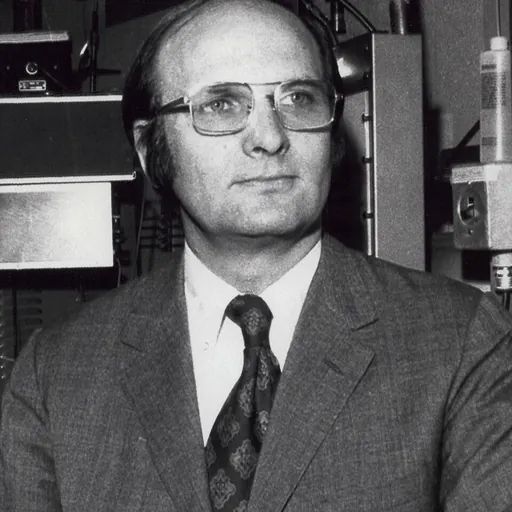
About John Robert Schrieffer
Lived 1931 – 2019 (aged 88). John Robert Schrieffer was an American physicist and university teacher, known for BCS theory, Magnon and Schrieffer–Wolff transformation.
John Robert Schrieffer (; May 31, 1931 – July 27, 2019) was an American theoretical physicist who, with John Bardeen and Leon Cooper, was a recipient of the 1972 Nobel Prize in Physics for developing the BCS theory, the first successful quantum description of superconductivity.
Early life and education John Robert Schrieffer was born on May 31, 1931, in Oak Park, Illinois, the son of John Henry Schrieffer and Louise Anderson. His family moved in 1940 to Manhasset, New York, and then in 1947 to Eustis, Florida, where his father, a former pharmaceutical salesman, began a career in the citrus industry. In his Florida days, Schrieffer enjoyed playing with homemade rockets and ham radio, a hobby that sparked an interest in electrical engineering.
After graduating from Eustis High School in 1949, Schrieffer was admitted to the Massachusetts Institute of Technology, where for two years he majored in electrical engineering before switching to physics in his junior year. He completed a bachelor's thesis on multiplets in heavy atoms under the direction of John C. Slater in 1953. Pursuing an interest in solid-state physics, Schrieffer began graduate studies at the University of Illinois Urbana-Champaign, where he was hired immediately as a research assistant to John Bardeen. After working out a theoretical problem of electrical conduction on semiconductor surfaces, Schrieffer spent a year in the laboratory, applying the theory to several surface problems. In his third year of graduate studies, he joined Bardeen and Leon Cooper in developing the theory of superconductivity.
Schrieffer died on July 27, 2019, at a nursing facility in Florida while sleeping. He was 88 years old.
Recognition Awards Year Organization Award Citation 1968 National Academy of Sciences Comstock Prize in Physics — 1968 American Physical Society Oliver E. Buckley Prize "For his contributions to many-body theory and its application to the interpretation of experiments, especially in the field of superconductivity." 1972 Swedish Academy of Sciences Nobel Prize in Physics "For their jointly developed theory of superconductivity, usually called the BCS-theory."
Memberships Year Organization Type 1970 American Academy of Arts and Sciences Member 1971 National Academy of Sciences Member 1975 American Philosophical Society Member
National awards Year Head of state Award Citation 1983 Ronald Reagan National Medal of Science "In recognition of his insight into cooperative effects in solids and solid surfaces dependent on interacting many-body systems and for his leadership in showing how one couples formal theoretical work with experimental findings to make significant advances in the area of condensed matter physics."
Don’t just read it —
keep it.
Full-length biographies made to live with: read them, listen on the way to work, watch them tonight.
- E-book
- Audio
- Video
Instant download · yours to keep · every purchase keeps this site free
Important facts
People in John Robert Schrieffer's life
Named in this biography and alive at the same time

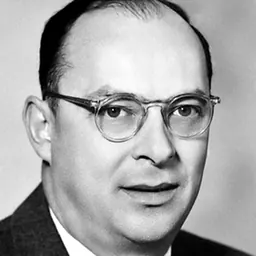




Related people
Same field, nearest in time
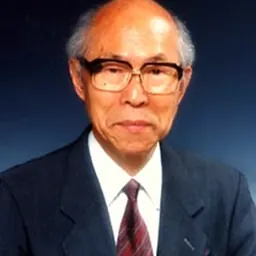



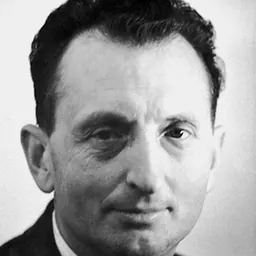
Contemporaries
People whose lives overlapped John Robert Schrieffer's

Frequently asked questions
Who was John Robert Schrieffer?
American physicist (1931-2019)
When was John Robert Schrieffer born?
John Robert Schrieffer was born on 31 May 1931 in Oak Park.
When did John Robert Schrieffer die?
John Robert Schrieffer died on 27 July 2019 in Tallahassee.
What was John Robert Schrieffer's occupation?
John Robert Schrieffer was a physicist and university teacher.
What was John Robert Schrieffer known for?
John Robert Schrieffer was known for BCS theory, Magnon, Schrieffer–Wolff transformation and Su–Schrieffer–Heeger model.
What nationality was John Robert Schrieffer?
John Robert Schrieffer was American.
Sources & further reading
· Wikipedia: John Robert Schrieffer
· DBpedia: John Robert Schrieffer
Cite this page
APA: Biography.guide. (2026). John Robert Schrieffer. https://biography.guide/john-robert-schrieffer/
MLA: "John Robert Schrieffer." Biography.guide, https://biography.guide/john-robert-schrieffer/.
Chicago: "John Robert Schrieffer." Biography.guide. https://biography.guide/john-robert-schrieffer/.
Data last updated: 2026-09-22 · Spot an error? Report a correction.
Portrait: Wikimedia Commons · author & licence
Page generated 2026-09-27 05:03 UTC