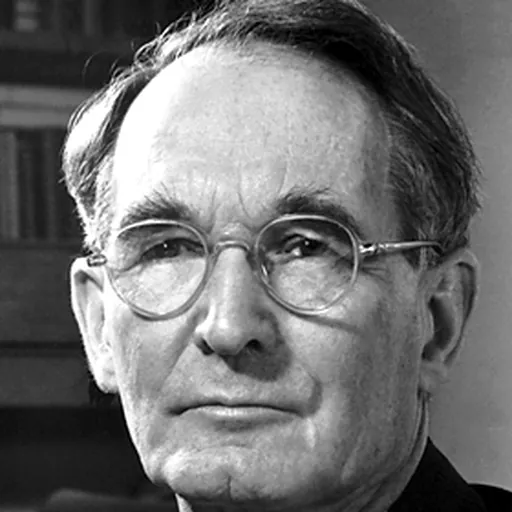
About Percy Williams Bridgman
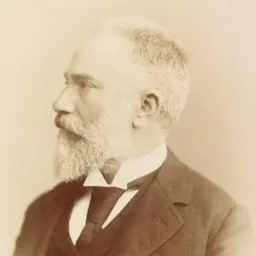
Lived 1882 – 1961 (aged 79). Percy Williams Bridgman was an American physicist and university teacher, known for High-pressure physics, Operational definition and Operationalism.
Early life and education Percy Williams Bridgman was born on April 21, 1882, in Cambridge, Massachusetts, and grew up in nearby Auburndale. His parents were both born in New England. His father, Raymond Landon Bridgman, was "profoundly religious and idealistic" and worked as a newspaper reporter assigned to state politics. His mother, Mary Ann Maria Williams, was described as "more conventional, sprightly, and competitive."
In 1900, Bridgman entered Harvard University, where he received his A.B. in 1904, his A.M. in 1905, and his Ph.D. in 1908.
Career and research From 1910 until his retirement, Bridgman taught at Harvard University, becoming a full professor in 1919. In 1905, he began investigating the properties of matter under high pressure. A machinery malfunction led him to modify his pressure apparatus; the result was a new sealing device enabling him to create pressures eventually exceeding 100,000 kgf/cm2 (10 GPa; 100,000 atmospheres). This was a huge improvement over previous machinery, which could achieve pressures of only 3,000 kgf/cm2 (0.3 GPa). This new apparatus led to an abundance of new findings, including a study of the compressibility, electric and thermal conductivity, tensile strength and viscosity of more than 100 different compounds. Bridgman is also known for his studies of electrical conduction in metals and properties of crystals. He developed the Bridgman seal and is the eponym for Bridgman's thermodynamic equations, which were used to further his research.
Bridgman made many improvements to his high-pressure apparatus over the years, and unsuccessfully attempted the synthesis of diamond many times. The high-pressure torsion apparatus developed by Bridgman significantly contributed to the development of severe plastic deformation field decades later.
His philosophy of science book The Logic of Modern Physics (1927) advocated operationalism and coined the term operational definition. In 1938 he participated in the International Committee composed to organise the International Congresses for the Unity of Science. He was also one of the 11 signatories to the Russell–Einstein Manifesto.
J. Robert Oppenheimer, the director of the Manhattan Project, was an undergraduate student of Bridgman's. Of his teaching abilities, Oppenheimer said that, "I found Bridgman a wonderful teacher because he never really was quite reconciled to things being the way they were and he always thought them out."
Personal life and death
Bridgman married Olive Ware (1882-1972), of Hartford, Connecticut, in 1912. Ware's father, Edmund Asa Ware, was the founder and first president of Atlanta University. The couple had two children and were married for nearly 50 years, living most of that time in Cambridge. The family also had a summer home in Randolph, New Hampshire, where Bridgman was known as a skilled mountain climber. Bridgman's words have been quoted by many in the assisted suicide debate.
Recognition Memberships Year Organization Type 1912 American Academy of Arts and Sciences Member 1916 American Philosophical Society Member 1918 National Academy of Sciences Member 1949 Royal Society Foreign Member
Awards Year Organization Award Citation 1917 American Academy of Arts and Sciences Rumford Prize "For his thermodynamic research at extremely high pressures." 1932 Franklin Institute Elliott Cresson Medal "For work in high pressure." 1933 National Academy of Sciences Comstock Prize in Physics "For his investigations leading to increased understanding of the electrical constitution of matter." 1946 Royal Swedish Academy of Sciences Nobel Prize in Physics "For the invention of an apparatus to produce extremely high pressures, and for the discoveries he made therewith in the field of high pressure physics." 1951 Society of Rheology Bingham Medal —
Honorary degrees Year University Degree 1950 Princeton University Doctor of Science 1951 Yale University Doctor of Science
Commemoration The Percy W. Bridgman House, in Massachusetts, is a U.S. National Historic Landmark designated in 1975.
In 2014, the Commission on New Minerals, Nomenclature and Classification of the International Mineralogical Association approved the name bridgmanite for perovskite-structured , the Earth's most abundant mineral, in honor of his high-pressure research.
Don’t just read it —
keep it.
Full-length biographies made to live with: read them, listen on the way to work, watch them tonight.
- E-book
- Audio
- Video
Instant download · yours to keep · every purchase keeps this site free
Important facts
People in Percy Williams Bridgman's life
Named in this biography and alive at the same time

Related people
Same field, nearest in time

Contemporaries
People whose lives overlapped Percy Williams Bridgman's


Frequently asked questions
Who was Percy Williams Bridgman?
American physicist
When was Percy Williams Bridgman born?
Percy Williams Bridgman was born on 21 April 1882 in Cambridge.
When did Percy Williams Bridgman die?
Percy Williams Bridgman died on 20 August 1961 in Randolph.
What was Percy Williams Bridgman's occupation?
Percy Williams Bridgman was a physicist and university teacher.
What was Percy Williams Bridgman known for?
Percy Williams Bridgman was known for High-pressure physics, Operational definition and Operationalism.
What nationality was Percy Williams Bridgman?
Percy Williams Bridgman was American.
Sources & further reading
· Wikipedia: Percy Williams Bridgman
· DBpedia: Percy Williams Bridgman
Cite this page
APA: Biography.guide. (2026). Percy Williams Bridgman. https://biography.guide/percy-williams-bridgman/
MLA: "Percy Williams Bridgman." Biography.guide, https://biography.guide/percy-williams-bridgman/.
Chicago: "Percy Williams Bridgman." Biography.guide. https://biography.guide/percy-williams-bridgman/.
Data last updated: 2026-09-22 · Spot an error? Report a correction.
Portrait: Wikimedia Commons · author & licence
Page generated 2026-09-27 05:01 UTC