
About Joan A. Steitz
Born 1941. Joan A. Steitz is an American biochemist, university teacher and biophysicist.
Joan Elaine Argetsinger Steitz (born January 26, 1941) is an American biochemist and molecular biologist, Sterling Professor of Molecular Biophysics and Biochemistry at Yale University and Investigator at the Howard Hughes Medical Institute. She also serves as the Director of the Molecular Genetics Program at the Boyer Center for Molecular Medicine. She is known for her discoveries involving RNA, including insights into how ribosomes interact with messenger RNA by complementary base pairing and that introns are spliced by small nuclear ribonucleic proteins (snRNPs), which occur in eukaryotes. In September 2018, Steitz won the Lasker-Koshland Award for Special Achievement in Medical Science. The Lasker award is often referred to as the 'American Nobel' because 87 of the former recipients have gone on to win Nobel prizes.
Early life and education Steitz was born in Minneapolis, Minnesota. She grew up in Minnesota in the 1950s and 60s and attended the all-girls Northrop Collegiate School high school, which only offered three science classes.
In 1963, Steitz received her Bachelor of Science degree in chemistry from Antioch College, Ohio, where she first became interested in molecular biology at Alex Rich's Massachusetts Institute of Technology laboratory as an Antioch "coop" intern.
After completing her undergraduate degree, Steitz applied to medical school rather than graduate school since she knew of women medical doctors but not women scientists. She was accepted to Harvard Medical School, but having been excited by a summer working as a bench scientist in the laboratory of Joseph Gall at the University of Minnesota, she declined the invitation to Harvard Medical School and instead applied to Harvard's new program in biochemistry and molecular biology. There, she was the first woman graduate student to join the laboratory of Nobel Laureate James Watson, with whom she first worked on bacteriophage RNA.
Career Steitz describes her excitement about research in the field of biology, her contributions, and their vast implications on health today. Steitz completed postdoctoral research at the Medical Research Council (MRC) Laboratory of Molecular Biology (LMB) at the University of Cambridge (UK), where she collaborated with Francis Crick, Sydney Brenner, and Mark Bretscher. At the LMB, Steitz focused on the question of how bacteria know where to start the "reading frame" on mRNA. In the process, Steitz discovered the exact sequences on a mature RNA virus encoding three proteins where the virus mRNA binds bacterial ribosomes to produce proteins. In 1969 she published a seminal paper in Nature showing the nucleotide sequence of the binding start points.
In 1970, Steitz joined the faculty at Yale. In 1975, she published a research finding for which she is widely known, demonstrating that ribosomes use complementary base pairing to identify the start site on mRNA.
In 1980, Steitz in collaboration with Michael Lerner published another critical paper, using immunoprecipitation with human antibodies from patients with autoimmunity to isolate and identify snRNPs (pronounced "snurps") and detect their role in splicing. Her discovery of the snRNPs and snoRNPs explains a mysterious finding: humans have only double the number of genes of a fruit fly. "The reason we can get away with so few genes is that when you have these bits of nonsense, you can splice them out in different ways," she said. "Sometimes you can get rid of things and add things because of this splicing process so that each gene has slightly different protein products that can do slightly different things. So it multiplies up the information content in each of our genes."
In 1998 Steitz's research lab reported that the nuclear-cytoplasmic shuttling protein, HuR (ELAV-like protein1), could bind to the AU-rich element (ARE) in unstable mRNAs and increase their stability. This work expanded the mechanistic understanding of the dual role that an ARE can play in posttranscriptional gene regulation.
Steitz's research may yield new insights into the diagnosis and treatment of autoimmune disorders such as lupus, which develop when patients make anti-nuclear antibodies against their own DNA, snRNPs, or ribosomes.
Steitz has commented on the sexist treatment of women in science, and has been a "tireless promoter of women in science," noted Christine Guthrie, who described Steitz as "one of the greatest scientists of our generation."
Awards and honors 2021 - Warren Alpert Foundation Prize. 2021 - Prize Medal Lecture. 2021 – Wolf Prize in Medicine. 2020 – Microbiology Society Prize Medal by the Microbiology Society to those who have made an impact beyond microbiology. 2018 – Lasker-Koshland Award for Special Achievement in Medical Science. 2009 – Biochemical Society Jubilee Lecture Award. 2011 – Columbia University Honorary Doctorate of Science]. 2008 – Albany Medical Center Prize (shared with Elizabeth Blackburn). 2006 – Rosalind E. Franklin Award for Women in Science, National Cancer Institute. 2006 – Gairdner Foundation International Award. 2005 – E.B. Wilson Medal, American Society for Cell Biology. 2004 – RNA Society Lifetime Achievement Award. 2004 – The Caledonian Research Foundation (CRF) Prize Lectureship in Biomedical Sciences and Arts and Letters, Royal Society of Edinburgh. 2003 – FASEB Excellence in Science Award. 2002 – Lewis S. Rosenstiel Award for Distinguished Basic Medical Science. 2001 – L'Oréal-UNESCO Award for Women in Science. 1992 – Golden Plate Award of the American Academy of Achievement. 1992 – Elected to the American Philosophical Society. 1989 – Warren Triennial Prize. 1988 – Dickson Prize for Science. 1986 – National Medal of Science, National Science Foundation. 1983 – Member, National Academy of Sciences. 1983 – Lee Howley, Sr. Award for Arthritis Research. 1982 – NAS Award in Molecular Biology. 1976 – Eli Lilly Award in Biological Chemistry. 1975 – Passano Foundation Young Scientist Award.
Her nomination for the Royal Society reads:
Don’t just read it —
keep it.
Full-length biographies made to live with: read them, listen on the way to work, watch them tonight.
- E-book
- Audio
- Video
Instant download · yours to keep · every purchase keeps this site free
Important facts
more
Joan Argetsinger Steitz, Joan E. Argetsinger, Joan E Argetsinger, Joan Argetsinger, J. Argetsinger, J Argetsinger, Argetsinger, Argetsinger J, Argetsinger J., Argetsinger J. E., Argetsinger J E, Argetsinger JE, Joan A Steitz, J. A. Steitz, J A Steitz, J.A. Steitz, JA Steitz, J. Steitz, J Steitz, Steitz, Steitz J, Steitz J., Steitz J. A., Steitz J A, Steitz JAFamily & relationships
People in Joan A. Steitz's life
Named in this biography and alive at the same time
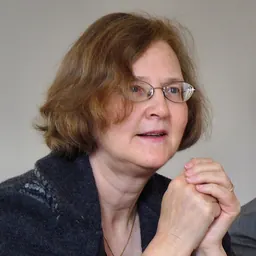
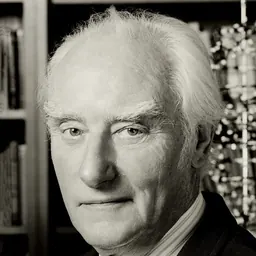


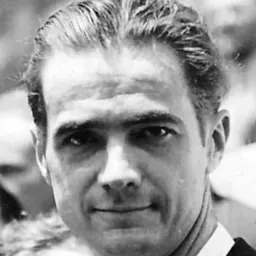



Related people
Same field, nearest in time
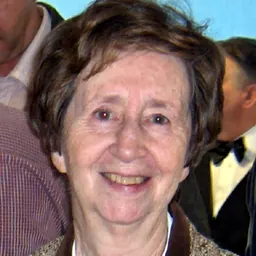





Contemporaries
People whose lives overlapped Joan A. Steitz's

Frequently asked questions
Who is Joan A. Steitz?
American biochemist
When was Joan A. Steitz born?
Joan A. Steitz was born on 26 January 1941 in Minneapolis.
What is Joan A. Steitz's occupation?
Joan A. Steitz is a biochemist, university teacher and biophysicist.
What nationality is Joan A. Steitz?
Joan A. Steitz is American.
Sources & further reading
Cite this page
APA: Biography.guide. (2026). Joan A. Steitz. https://biography.guide/joan-a-steitz/
MLA: "Joan A. Steitz." Biography.guide, https://biography.guide/joan-a-steitz/.
Chicago: "Joan A. Steitz." Biography.guide. https://biography.guide/joan-a-steitz/.
Data last updated: 2026-09-25 · Spot an error? Report a correction.
Page generated 2026-09-27 05:12 UTC