
About Franz-Ulrich Hartl
Born 1957. Franz-Ulrich Hartl is a German biochemist, university teacher, cell biologist, molecular biologist and biologist, known for Chaperone (protein).
Research Hartl was known for his discovery of chaperone-mediated protein folding, made together with Arthur L. Horwich. Protein folding is the process where proteins attain their three-dimensional shapes required to be functional. His research on chaperones began during his time at LMU Munich. Soon after he arrived at Munich in 1985, the scientific field confirmed that proteins inside cells had to unfold before and crossing the mitochondrial membrane to enter mitochondria and then refold afterwards, and that heat shock proteins interacted with proteins before they crossed the mitochondrial or the cell membrane. This made the mitochondria a nice model to study protein folding. However, the long-held belief was that proteins fold spontaneously.
Walter Neupert, the LMU Munich professor under Hartl was working, introduced Hartl to Arthur L. Horwich. Using a mutant strain of yeast that could import a certain protein (ornithine transcarbamylase) into the mitochondria, but the protein could not fold or become functional once inside the mitochondria. They found the gene mutated in this mutant strain was identical to a previously discovered gene, HSP60. The HSP60 protein, encoded by the HSP60 gene, belongs to a family of chaperones called chaperonin.
Next, Hartl and Horwich investigated how the HSP60 protein helped proteins fold. They looked at another protein, dihydrofolate reductase, in Neurospora crassa, a fungus species, and found ATP, the energy currency in cells, is required for the HSP60 protein helping other proteins fold. Their finding showed HSP60-mediated protein folding is dependent on energy.
Hartl continued studying chaperones and protein folding after moving to the Memorial Sloan Kettering Cancer Center, focusing on the mechanism by which chaperones helping other proteins fold. He turned to the E. coli counterpart of the eukaryotic HSP60 protein, known as GroEL, and its helper protein GroES. His group showed chaperone-mediated folding actually consisted of a series of steps, and that multiple chaperones passed off partially folded proteins from one to the next. His group also found GroEL and GroES together formed a cage inside which the target protein was trapped and folded.
More recently, Hartl's work expanded to proteostasis, which a cell's regulation of protein biosynthesis, protein folding, protein trafficking, and protein degradation, and how abnormalities in proteostasis can cause protein aggregation and diseases.
Personal life Hartl is married to Manajit Hayer-Hartl, whom he met in 1986 at a molecular biology summer school on a Greek island. Hayer-Hartl is currently a research group leader at the Max Planck Institute of Biochemistry and a close collaborator of Hartl since 1991.
Honours and awards
1998 – Member of the European Molecular Biology Organization 1999 – Academy Award of the Berlin-Brandenburg Academy of Sciences and Humanities 2000 – International Honorary Member of the American Academy of Arts and Sciences 2002 – Gottfried Wilhelm Leibniz Prize 2002 – Member of the German National Academy of Sciences Leopoldina 2004 – Member of the Bavarian Academy of Sciences 2004 – Canada Gairdner International Award 2005 – Ernst Jung Prize for Medicine 2006 – Stein and Moore Award, Protein Society 2006 – Körber European Science Prize 2007 – Wiley Prize in Biomedical Sciences 2007 – Lewis S. Rosenstiel Award for Distinguished Work in Basic Medical Research 2008 – Louisa Gross Horwitz Prize 2009 – Otto Warburg Medal 2009 – Fellow of the American Association for the Advancement of Science) 2010 – Dr H.P. Heineken Prize for Biochemistry and Biophysics 2011 – Cross of Merit of the Order of Merit of the Federal Republic of Germany 2011 – International member of the National Academy of Sciences 2011 – Albert Lasker Award for Basic Medical Research 2011 – Massry Prize 2011 – Heinrich Wieland Prize 2012 – Shaw Prize in Life Science and Medicine 2012 – Fellow of the American Academy of Microbiology 2012 – Herbert Tabor Research Award, American Society for Biochemistry and Molecular Biology 2016 – Albany Medical Center Prize 2016 – Ernst Schering Prize 2016 – Fellow of the American Society for Cell Biology 2017 – E.B. Wilson Medal 2017 – Debrecen Award for Molecular Medicine 2019 – Paul Ehrlich and Ludwig Darmstaedter Prize 2019 – Dr. Paul Janssen Award for Biomedical Research 2020 – Breakthrough Prize in Life Sciences 2021 – Bavarian Maximilian Order for Science and Art 2022 – HFSP Nakasone Award 2023 – Schleiden Medal 2023 – BBVA Foundation Frontiers of Knowledge Award
Don’t just read it —
keep it.
Full-length biographies made to live with: read them, listen on the way to work, watch them tonight.
- E-book
- Audio
- Video
Instant download · yours to keep · every purchase keeps this site free
Important facts
People in Franz-Ulrich Hartl's life
Named in this biography and alive at the same time



Related people
Same field, nearest in time
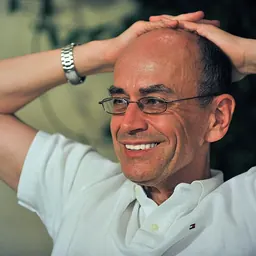
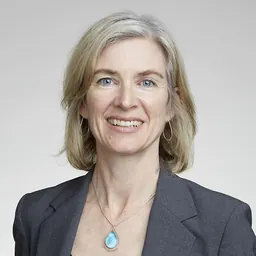
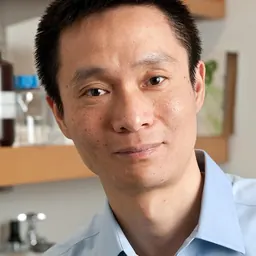
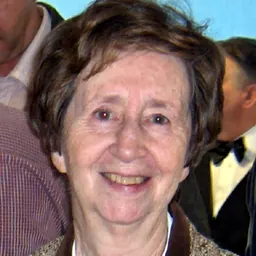

Contemporaries
People whose lives overlapped Franz-Ulrich Hartl's

Frequently asked questions
Who is Franz-Ulrich Hartl?
German chemist
When was Franz-Ulrich Hartl born?
Franz-Ulrich Hartl was born on 10 March 1957 in Essen.
What is Franz-Ulrich Hartl's occupation?
Franz-Ulrich Hartl is a biochemist, university teacher, cell biologist, molecular biologist and biologist.
What is Franz-Ulrich Hartl known for?
Franz-Ulrich Hartl is known for Chaperone (protein).
What nationality is Franz-Ulrich Hartl?
Franz-Ulrich Hartl is German.
Sources & further reading
· Wikipedia: Franz-Ulrich Hartl
Cite this page
APA: Biography.guide. (2026). Franz-Ulrich Hartl. https://biography.guide/franz-ulrich-hartl/
MLA: "Franz-Ulrich Hartl." Biography.guide, https://biography.guide/franz-ulrich-hartl/.
Chicago: "Franz-Ulrich Hartl." Biography.guide. https://biography.guide/franz-ulrich-hartl/.
Data last updated: 2026-09-20 · Spot an error? Report a correction.
Page generated 2026-09-27 05:28 UTC