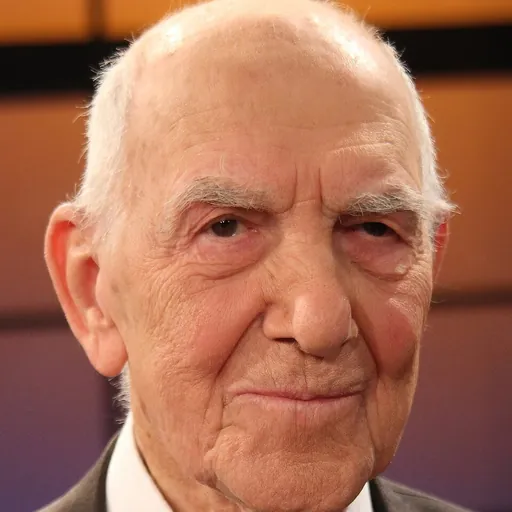
Stéphane Hessel
French diplomat, ambassador, writer, concentration camp survivor
About Stéphane Hessel
Lived 1917 – 2013 (aged 95). Stéphane Hessel was a French and German diplomat, writer, political activist, french resistance fighter, poet and resistance fighter, known for Buchenwald, French Resistance and Human rights defender.
Stéphane Frédéric Hessel (born Stefan Friedrich Kaspar Hessel; 20 October 1917 – 26 February 2013 ) was a French diplomat, ambassador, writer, concentration camp survivor, Resistance member and BCRA agent. Born German, he became a naturalised French citizen in 1939. He became an observer of the editing of the Universal Declaration of Human Rights of 1948. In 2011 he was named by Foreign Policy magazine in its list of top global thinkers. In later years his activism focused on economic inequalities, the Israeli–Palestinian conflict and protection for the post–World War II social vision. His short book Time for Outrage! sold 4.5 million copies worldwide. Hessel and his book were linked and cited as an inspiration for the Spanish Indignados, the Arab Spring, the American Occupy Wall Street movement and other political movements.
Early years Stefan Friedrich Kaspar Hessel was born in Berlin, the son of journalist Helen and writer Franz Hessel, who inspired the characters of Jules and Kathe in Henri-Pierre Roché's novel Jules and Jim (Kathe was called Catherine in the subsequent film adaptation by François Truffaut). His paternal grandparents were Jewish immigrants who joined the Lutheran church, and his mother was from a Christian family. Hessel emigrated to Paris with his parents in 1924. Having received his baccalauréat when 15 years old, he was eventually admitted in 1939 to the École Normale Supérieure. He became a naturalized French citizen in 1939, becoming a member of the Free French intelligence service (Bureau central de renseignement et d'action). Hessel tried unsuccessfully to escape from Dora, but was able to avoid being hanged in reprisal. He later escaped during a transfer to Bergen-Belsen concentration camp, In 1962, he created the Association for Training in Africa and Madagascar (AFTAM) and became its first president. In August 1982, Hessel was appointed for three years to the , the French regulatory agency for audio-visual communication. Hessel continued to hold a diplomatic passport, having been named an "ambassador for life". and served as vice president. He was a member of the Commission nationale consultative des droits de l'homme and the Haut Conseil de la coopération internationale.
In 2003, along with other former Resistance members, he signed the petition "For a Treaty of a Social Europe" and in August 2006, he was a signatory to an appeal against the Israeli air-strikes in Lebanon. The appeal, made by the French member organization of European Jews for a Just Peace, was published in Libération and other French newspapers.
In 2004, he was awarded the North-South Prize by the Council of Europe. having already been given the Grand Cross of the Order of Merit in 1999.
Hessel called for the French government to make funds available to provide housing for the homeless Hessel also received the United Nations Association of Spain Peace Prize Award 2008.
On 5 January 2009, Hessel criticized the Israeli military attacks in the Gaza Strip, saying "In fact, the word that applies—that should be applied—is 'war crime' and even 'crime against humanity'. But this word must be used carefully, especially when one is in Geneva, the seat of the High Commissioner for Human Rights, who may have an important opinion on that issue. For my part, having visited Gaza, having seen the refugee camps with thousands of children, the manner in which they are bombed appears as a veritable crime against humanity."
In 2011, Hessel was named by Foreign Policy magazine to its list of top global thinkers "or bringing the spirit of the French Resistance to a global society that has lost its heart."
Author
Time for Outrage! In October 2010, Hessel's essay, Time for Outrage! (original French title: Indignez-vous !), was published in an edition of 6,000 copies . It has sold more than 3.5 million copies worldwide and has been translated into Swedish, Danish, Basque, Catalan, Italian, Spanish, Korean Dutch and Hungarian. Translations into Japanese and other languages are planned. In the United States, The Nation magazine's 7–14 March 2011 issue published the entire essay in English.
Hessel's booklet argues that the French need to again become outraged, as were those who participated in the Resistance during World War II. Hessel's reasons for personal outrage include the growing gap between the very rich and the very poor, France's treatment of its illegal immigrants, the need to re-establish a free press, the need to protect the environment, importance of protecting the French welfare system, He calls for peaceful and non-violent insurrection. Similarly, 2013 protests in Brazil have taken place questioning the government's corruption and its capability of managing public transport, health and education.
Engagez-vous !
In 2011, Stéphane Hessel published "Engagez-Vous !" ("Get Involved!"), written with the young French journalist Gilles Vanderpooten. In it "Stephane Hessel appeals to his readers to save the environment and to embrace the positive. He also emphasizes the importance of good luck in life". Responding to the controversy raised by these remarks, he clarified that he was drawing "no parallel between the horrors of Nazism and the illegal attitude of a state" (Israel); that he naturally supported the existence of Israel but that he wished to be able to criticise the actions of the Israeli authorities without automatically being accused of "antisemitism". He regretted that his words in the Frankfurter Allgemeine Zeitung had been perhaps "written too quickly, and read too quickly".
He told the Ha'aretz newspaper: "Israel must be led differently to ensure its security". Having seen "firsthand the Jews' suffering" as a Holocaust survivor, he clarified that he wished to see Israelis' safety guaranteed by a responsible government. As a supporter of a two state solution, he also told the newspaper: "s long as Palestinian violence exists, but not a Palestinian state, Israel is in danger, because it cannot obtain assistance from the international community against an entity that is not subordinate to international law".
Death On 26 February 2013, Hessel died overnight at age 95. The following afternoon his name was a top trending term on Twitter in France and Spain. UN Human Rights Council chairman Remigiusz Henczel remarked "Mr Hessel was a monumental figure of human rights. His life will continue to inspire our work."
Previously, Hessel had offered his thoughts on death: "Death is something to savour, and I hope to savour mine."
Hessel was survived by his wife Christiane, and three children from a previous marriage.
Don’t just read it —
keep it.
Full-length biographies made to live with: read them, listen on the way to work, watch them tonight.
- E-book
- Audio
- Video
Instant download · yours to keep · every purchase keeps this site free
Important facts
Family & relationships
People in Stéphane Hessel's life
Named in this biography and alive at the same time

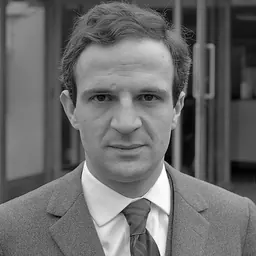
Related people
Same field, nearest in time

Contemporaries
People whose lives overlapped Stéphane Hessel's

Frequently asked questions
Who was Stéphane Hessel?
French diplomat, ambassador, writer, concentration camp survivor (1917–2013)
When was Stéphane Hessel born?
Stéphane Hessel was born on 20 October 1917 in Berlin.
When did Stéphane Hessel die?
Stéphane Hessel died on 27 February 2013 in 14th arrondissement of Paris, Paris.
What was Stéphane Hessel's occupation?
Stéphane Hessel was a diplomat, writer, political activist, french resistance fighter, poet and resistance fighter.
What was Stéphane Hessel known for?
Stéphane Hessel was known for Buchenwald, French Resistance and Human rights defender.
What nationality was Stéphane Hessel?
Stéphane Hessel was French and German.
Sources & further reading
Cite this page
APA: Biography.guide. (2026). Stéphane Hessel. https://biography.guide/stephane-hessel/
MLA: "Stéphane Hessel." Biography.guide, https://biography.guide/stephane-hessel/.
Chicago: "Stéphane Hessel." Biography.guide. https://biography.guide/stephane-hessel/.
Data last updated: 2026-09-20 · Spot an error? Report a correction.
Portrait: Wikimedia Commons · author & licence
Page generated 2026-09-27 04:58 UTC