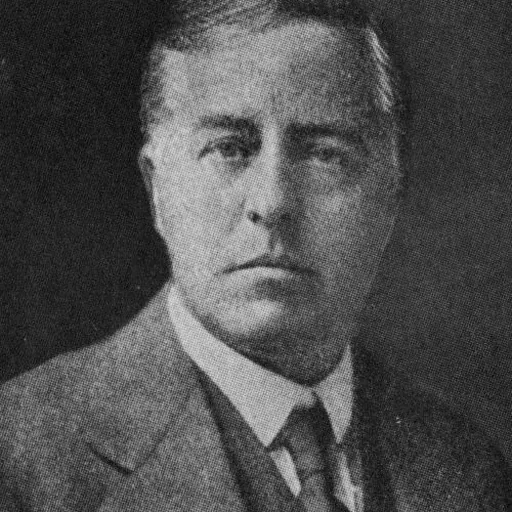
James Hopwood Jeans
British mathematician and astronomer
About James Hopwood Jeans
Lived 1877 – 1946 (aged 69). James Hopwood Jeans was a British mathematician, physicist, astronomer, writer and university teacher, known for Atmospheric escape, History of Solar System formation and evolution hypotheses and Jeans equations.
Sir James Hopwood Jeans
Early life Born in Ormskirk, Lancashire, the son of William Tulloch Jeans, a parliamentary correspondent and author. Jeans was educated at Merchant Taylors' School, Wilson's Grammar School, Camberwell and Trinity College, Cambridge.
He made important contributions in many areas of physics, including quantum theory, the theory of radiation and stellar evolution. His analysis of rotating bodies led him to conclude that Pierre-Simon Laplace's theory that the Solar System formed from a single cloud of gas was incorrect, proposing instead that the planets condensed from material drawn out of the Sun by a hypothetical catastrophic near-collision with a passing star. This theory is not accepted today.
Jeans, along with Arthur Eddington, is a founder of British cosmology. In 1928, Jeans was the first to conjecture a steady state cosmology based on a hypothesized continuous creation of matter in the universe. In his book Astronomy and Cosmogony (1928) he stated: "The type of conjecture which presents itself, somewhat insistently, is that the centers of the nebulae are of the nature 'singular points' at which matter is poured into our universe from some other, and entirely extraneous spatial dimension, so that, to a denizen of our universe, they appear as points at which matter is being continually created." As a birthday present for his wife, he wrote the book Science and Music.
Death Jeans died in 1946 in the presence of his wife and Joy Adamson, who suggested to the widow to create a death mask of Jeans. It is now held by the Royal Society.
Major accomplishments One of Jeans's major discoveries, named the Jeans length, is a critical radius of an interstellar cloud in space. It depends on the temperature, and density of the cloud, and the mass of the particles composing the cloud. A cloud that is smaller than its Jeans length will not have sufficient gravity to overcome the repulsive gas pressure forces and condense to form a star, whereas a cloud that is larger than its Jeans length will collapse.
Jeans came up with another version of this equation, called the Jeans mass or the Jeans instability, that solves for the critical mass a cloud must attain before being able to collapse.
Jeans also helped to discover the Rayleigh–Jeans law, which relates the energy density of black-body radiation to the temperature of the emission source.
Jeans is also credited with calculating the rate of atmospheric escape from a planet due to kinetic energy of the gas molecules, a process known as Jeans escape.
Idealism Jeans espoused a philosophy of science rooted in the metaphysical doctrine of idealism and opposed to materialism in his speaking engagements and books. His popular science publications first advanced these ideas in 1929's The Universe Around Us when he likened "discussing the creation of the universe in terms of time and space," to, "trying to discover the artist and the action of painting, by going to the edge of the canvas." But he turned to this idea as the primary subject of his best-selling
In his 1934 address to the British Association for the Advancement of Science meeting in Aberdeen as the Association's president, Jeans spoke specifically to the work of Descartes and its relevance to the modern philosophy of science. He argued that, "There is no longer room for the kind of dualism which has haunted philosophy since the days of Descartes."
When Daniel Helsing reviewed The Mysterious Universe for Physics Today in 2020, he summarized the philosophical conclusions of the book, "Jeans argues that we must give up science's long-cherished materialistic and mechanical worldview, which posits that nature operates like a machine and consists solely of material particles interacting with each other." His evaluation of Jeans contrasted these philosophical views with modern science communicators such as Neil deGrasse Tyson and Sean Carroll who he suggested, "would likely take issue with Jeans's idealism."
Awards and honours Fellow of the Royal Society in May 1906 Bakerian Lecture to Royal Society in 1917. Royal Medal of the Royal Society in 1919. Hopkins Prize of the Cambridge Philosophical Society 1921–1924. Gold Medal of the Royal Astronomical Society in 1922. He was knighted in 1928. Franklin Medal of the Franklin Institute in 1931. In 1933 Jeans was invited to deliver the Royal Institution Christmas Lecture on Through Space and Time. Mukerjee Medal of the Indian Association for the Cultivation of Science in 1937. President of the 25th session of the Indian Science Congress in 1938. Calcutta Medal of the Indian Science Congress Association in 1938. Lorimer Medal of the Astronomical Society of Edinburgh in 1938 for which he gave the Lorimer Lecture: The Depths of Space. Member of the Order of Merit in 1939. The crater Jeans on the Moon is named after him, as is the crater Jeans on Mars. The String Quartet No.7 by Robert Simpson was written in tribute to him on the centenary of his birth, 1977.
Don’t just read it —
keep it.
Full-length biographies made to live with: read them, listen on the way to work, watch them tonight.
- E-book
- Audio
- Video
Instant download · yours to keep · every purchase keeps this site free
Important facts
more
Jeans's theorem, Method of image charges, Rayleigh–Jeans lawmore
J.H. Jeans, J H JeansPeople in James Hopwood Jeans's life
Named in this biography and alive at the same time




Related people
Same field, nearest in time


Contemporaries
People whose lives overlapped James Hopwood Jeans's




Frequently asked questions
Who was James Hopwood Jeans?
British mathematician and astronomer (1877 – 1946)
When was James Hopwood Jeans born?
James Hopwood Jeans was born on 11 September 1877 in Ormskirk.
When did James Hopwood Jeans die?
James Hopwood Jeans died on 16 September 1946 in Dorking.
What was James Hopwood Jeans's occupation?
James Hopwood Jeans was a mathematician, physicist, astronomer, writer and university teacher.
What was James Hopwood Jeans known for?
James Hopwood Jeans was known for Atmospheric escape, History of Solar System formation and evolution hypotheses, Jeans equations, Jeans instability, Jeans length and Jeans mass.
What nationality was James Hopwood Jeans?
James Hopwood Jeans was British.
Sources & further reading
· Wikipedia: James Hopwood Jeans
Cite this page
APA: Biography.guide. (2026). James Hopwood Jeans. https://biography.guide/james-hopwood-jeans/
MLA: "James Hopwood Jeans." Biography.guide, https://biography.guide/james-hopwood-jeans/.
Chicago: "James Hopwood Jeans." Biography.guide. https://biography.guide/james-hopwood-jeans/.
Data last updated: 2026-09-20 · Spot an error? Report a correction.
Portrait: Wikimedia Commons · author & licence
Page generated 2026-09-27 04:58 UTC