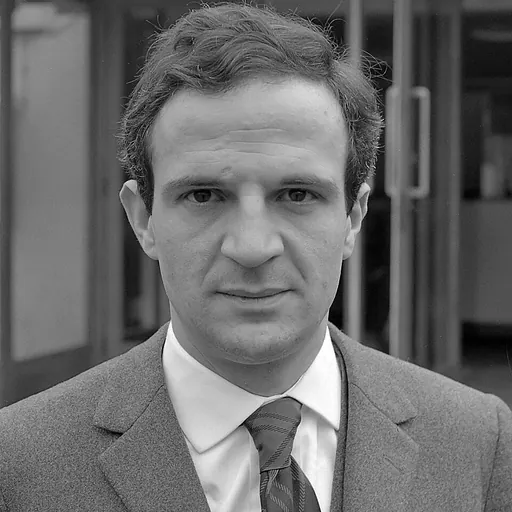
About François Truffaut
Lived 1932 – 1984 (aged 52). François Truffaut was a French film director, film producer, film critic, actor, director and film screenwriter.
François Roland Truffaut ( , ; ; 6 February 1932 – 21 October 1984) was a French filmmaker, actor, and critic. Widely regarded as one of the founders of the French New Wave, he came under the tutelage of film critic André Bazin as a young man and was hired to write for the latter's Cahiers du Cinéma, where Truffaut became a proponent of the auteur theory, which posits that a film's director is its true author.
The 400 Blows (1959), starring Jean-Pierre Léaud as Truffaut's alter ego Antoine Doinel, was a defining film of the New Wave. Truffaut's films Stolen Kisses (1968), Bed and Board (1970) and Love on the Run (1979) continued to chronicle the story of the couple Antoine and Christine (Claude Jade). Truffaut contributed to another significant milestone of the movement with his work on Breathless (1960), a film directed by his Cahiers colleague Jean-Luc Godard.
Truffaut's other notable films include Shoot the Piano Player (1960), Jules and Jim (1962), The Soft Skin (1964), Two English Girls (1971) and The Last Metro (1980). Truffaut's Day for Night (1973) earned him the BAFTA Award for Best Film and the Academy Award for Best Foreign Language Film. He played the doctor in The Wild Child (1970), the director of the film-within-the-film in Day For Night and the scientist in Steven Spielberg's Close Encounters of the Third Kind (1977). He starred in The Green Room (1978), based on Henry James's "The Altar of the Dead". He wrote Hitchcock/Truffaut (1966), a book-length interview with his hero Alfred Hitchcock which tied for second on Sight and Sounds list of the greatest books on film. Truffaut paid homage to Hitchcock in The Bride Wore Black (1968), Mississippi Mermaid (1969) and his last film, Confidentially Yours (1983).
Truffaut was married from 1957 until 1964 to Madeleine Morgenstern. In 1968, he became engaged to leading actress Claude Jade from three of his films, and lived together with Fanny Ardant, actress in his two last films, until his death. David Thomson writes that "for many people who love film Truffaut will always seem like the most accessible and engaging crest of the New Wave".
Early life Truffaut was born in Paris on 6 February 1932. His mother was Janine de Montferrand. His mother's future husband, Roland Truffaut, accepted him as an adopted son and gave him his surname. He was passed around to live with various nannies and his grandmother for a number of years. His grandmother instilled in him her love of books and music. He lived with her until her death, when Truffaut was eight years old. It was only after her death that he lived with his parents. Truffaut's biological father's identity is unknown, but a private detective agency in 1968 revealed that its inquiry into the matter led to a Roland Levy, a Jewish dentist from Bayonne. Truffaut's mother's family disputed the finding but Truffaut believed and embraced it.
Truffaut often stayed with friends and tried to be out of the house as much as possible. He knew Robert Lachenay from childhood, and they were lifelong best friends. Lachenay was the inspiration for the character René Bigey in The 400 Blows and worked as an assistant on some of Truffaut's films. Cinema offered Truffaut the greatest escape from an unsatisfying home life. He was eight years old when he saw his first movie, Abel Gance's Paradis Perdu (Paradise Lost, 1939), beginning his obsession. He frequently skipped school and sneaked into theaters because he lacked the money for admission. At age eleven, he read Émile Zola's Thérèse Raquin (1868), which inspired him to become a novelist.
"What switched me to films was the flood of American pictures into Paris after the Liberation".
Career André Bazin After starting his own film club in 1948, Truffaut met André Bazin, who had a great effect on his professional and personal life. Bazin was a critic and the head of another film society at the time. He became a personal friend of Truffaut's and helped him out of various financial and criminal situations during his formative years.
Truffaut joined the French Army in 1950, aged 18, but spent the next two years trying to escape. He was arrested for attempting to desert the army and incarcerated in military prison. Bazin used his political contacts to get Truffaut released and set him up with a job at his new film magazine, Cahiers du Cinéma.
Cahiers du Cinéma Over the next few years, Truffaut became a critic (and later editor) at Cahiers, where he became notorious for his brutal, unforgiving reviews. He was called "The Gravedigger of French Cinema" and was the only French critic not invited to the 1958 Cannes Film Festival. He supported Bazin in developing one of the most influential theories of cinema, the auteur theory.
In 1954, Truffaut wrote an article in Cahiers du cinéma, "Une Certaine Tendance du Cinéma Français" ("A Certain Trend of French Cinema"),
Thomson writes that "The speed of farce chasing pathos was very influential, not least on the writers of Bonnie and Clyde. In Jules et Jim, Truffaut formed his most fruitful collaboration, with the novelist Henri-Pierre Roché, author of Les Deux Anglaises and of a situation dear to Truffaut—the passionate triangle in which three people are trapped, all in love with all, all reluctant to hurt the others." A 2014 consideration of the film by Charles Silver praises it.
Thrillers and Stolen Kisses Stolen Kisses (1968) was a continuation of the Antoine Doinel Cycle starring Claude Jade as Antoine's fiancée and later wife Christine Darbon. During its filming Truffaut fell in love with Jade and was briefly engaged to her. It was a big hit on the international art circuit. A short time later, Jade made her Hollywood debut in Hitchcock's Topaz.
Truffaut worked on projects with varied subjects. The Bride Wore Black (1968), a brutal tale of revenge, is a stylish homage to the films of Hitchcock, once again starring Moreau. Mississippi Mermaid (1969), with Catherine Deneuve and Jean-Paul Belmondo, is an identity-bending romantic thriller. Both films are based on novels by Cornell Woolrich.
The Wild Child (1970) included Truffaut's acting debut in the lead role of 18th-century physician Jean Marc Gaspard Itard, who treated the feral child Victor of Aveyron.
Doinel marries Christine Bed and Board (1970) was another Antoine Doinel film, also with Jade, now Léaud's on-screen-wife.
Two English Girls (1971), a story of "Proust and the Brontë sisters" It is probably his most reflective work, telling the story of a film crew trying to finish a film while dealing with the personal and professional problems that accompany making a movie. Truffaut plays the director of the film-within-the film, Meet Pamela. Day For Night features scenes from his previous films. It is considered his best film since his early work. Thomson notes "the pleasure with all cinema's tricks and the way it makes them clear to a lay audience."
In 1975, Truffaut gained more notoriety with The Story of Adèle H.; Isabelle Adjani in the title role earned a nomination for an Academy Award for Best Actress. Small Change (1976) was nominated for the Golden Globe Award for Best Foreign Language Film.
Final films The Man Who Loved Women (1977), a romantic drama, was a minor hit.
Truffaut appeared in Steven Spielberg's Close Encounters of the Third Kind (1977) as scientist Claude Lacombe. He also starred in his own The Green Room (1978), based on Henry James's "The Altar of the Dead". It was a box-office flop, so he made Love on the Run (1979) starring Léaud and Jade as the final movie of the Doinel Cycle.
One of Truffaut's final films gave him an international revival. The Last Metro (1980) garnered 12 César Award nominations and 10 wins, including Best Director.
Truffaut's last film was black and white, making it a bookend to his career: Confidentially Yours (1983), Truffaut's homage to Hitchcock. It touches on numerous Hitchcockian themes such as private guilt vis-à-vis public innocence, a woman investigating a murder, and anonymous locations.
Legacy Many filmmakers admire Truffaut, and homages to his work have appeared in films such as Almost Famous, Face and The Diving Bell and the Butterfly and in Haruki Murakami's novel Kafka on the Shore. In conversation with Michael Ondaatje, film editor Walter Murch mentions the influence Truffaut had on him as a young man, saying he was "electrified" by the freeze-frame at the end of The 400 Blows, and that Godard's Breathless and Truffaut's Shoot the Piano Player reinforced the idea that he could make films. In the estimation of the historian Tony Judt, "it was the incomparable François Truffaut who would come to incarnate the style and impact of the New Wave...Truffaut was not only the main theorist behind the revolution in French cinema, he was also by far its most consistently successful practitioner". Known as a lifelong cinephile, Truffaut once (according to the 1993 documentary film François Truffaut: Stolen Portraits) threw a hitchhiker out of his car after learning that he did not like films.
Roger Ebert included The 400 Blows in his canon of Great Movies, writing of Truffaut: one of his most curious, haunting films is The Green Room (1978), based on the Henry James story "The Altar of the Dead", about a man and a woman who share a passion for remembering their dead loved ones. Jonathan Rosenbaum, who thinks The Green Room may be Truffaut's best film, told me he thinks of it as the director's homage to the auteur theory. That theory, created by Bazin and his disciples (Truffaut, Godard, Resnais, Chabrol, Rohmer, Malle), declared that the director was the true author of a film—not the studio, the screenwriter, the star, the genre. If the figures in the green room stand for the great directors of the past, perhaps there is a shrine there now to Truffaut. One likes to think of the ghost of Antoine Doinel lighting a candle before it.
Commentary on other filmmakers In his book The Film in My Life Truffaut wrote "I demand that a film express either the joy of making cinema or the agony of making cinema."
Truffaut expressed his admiration for filmmakers such as Luis Buñuel, Ingmar Bergman, Robert Bresson, Roberto Rossellini and Alfred Hitchcock. He wrote Hitchcock/Truffaut, a book about Hitchcock, based on a lengthy series of interviews.
Of Jean Renoir, he said: "I think Renoir is the only filmmaker who's practically infallible, who has never made a mistake on film. And I think if he never made mistakes, it's because he always found solutions based on simplicity—human solutions. He's one film director who never pretended. He never tried to have a style, and if you know his work—which is very comprehensive, since he dealt with all sorts of subjects—when you get stuck, especially as a young filmmaker, you can think of how Renoir would have handled the situation, and you generally find a solution". Truffaut named his production company "Les Films du Carrosse" after Renoir's The Golden Coach (La Carrosse d'Or).
Truffaut and Jean-Luc Godard, his colleague from Les Cahiers du Cinéma, worked together closely during their start as film directors although they had different working methods. Tensions came to the surface after May 68: Godard wanted a more political, specifically Marxist cinema, Truffaut was critical of creating films for primarily political purposes. In 1973, Godard wrote Truffaut a lengthy and raucous private letter peppered with accusations and insinuations, several times stating that as a filmmaker "you're a liar" and that his latest film (Day for Night) had been unsatisfying, lying and evasive: "You're a liar, because the scene between you and Jacqueline Bisset last week at Francis [a Paris restaurant] isn't included in your movie, and one also can't help wondering why the director is the only guy who isn't sleeping around in Day for Night" (Truffaut directed the film, wrote it and played the role of the director). Godard also implied that Truffaut had gone commercial and easy.
Truffaut replied with an angry 20-page letter in which he accused Godard of being a radical-chic hypocrite, a man who believed everyone to be "equal" in theory only. "The Ursula Andress of militancy—like Brando—a piece of shit on a pedestal." Godard later tried to reconcile with Truffaut, but they never spoke to or saw each other again. After Truffaut's death, Godard wrote the introduction to a generous selection of his correspondence, and included his own 1973 letter. He also offered a long tribute in his film Histoire(s) du cinéma.
Truffaut was philosophically opposed to attempts to portray anti-war themes through cinema, famously stating that "there is no such thing as an anti-war film" due to the medium's inherent glorification of such subjects, no matter how they are portrayed.
Personal life Truffaut was married to Madeleine Morgenstern from 1957 to 1965, and they had two daughters.
In 1968, Truffaut was engaged to actress Claude Jade. He and Fanny Ardant lived together from 1981 to 1984 and had a daughter.
He had a "fetishistic collection of Eiffel Towers".
Truffaut was an atheist, but had great respect for the Catholic Church and requested a Requiem Mass for his funeral.
Death
In July 1983, following his first stroke and being diagnosed with a brain tumour, Truffaut rented France Gall's and Michel Berger's house outside Honfleur, Normandy. He was expected to attend his friend Miloš Forman's Amadeus premiere when he died on 21 October 1984, aged 52, at the American Hospital of Paris in Neuilly-sur-Seine in France.
At the time of his death, he was said to have numerous further films in preparation. He is buried in Montmartre Cemetery.
Filmography Short film Year Title Director Writer Notes 1955 Une Visite 1957 Les Mistons 1961 A Story of Water Co-directed with Jean-Luc Godard 1962 Antoine and Colette Segment from Love at Twenty
Feature film Year Title Director Writer Producer Notes 1959 The 400 Blows 1960 Breathless Shoot the Piano Player The Army Game Co-directed with Claude de Givray 1962 Jules and Jim 1964 The Soft Skin 1966 Fahrenheit 451 English debut 1968 The Bride Wore Black Stolen Kisses 1969 Mississippi Mermaid 1970 The Wild Child Bed and Board 1971 Two English Girls 1972 A Gorgeous Girl Like Me based on Henry Farrell’s novel ‘’Such a Gorgeous Kid Like Me’’ 1973 Day for Night 1975 The Story of Adèle H. 1976 Small Change 1977 The Man Who Loved Women 1978 The Green Room 1979 Love on the Run 1980 The Last Metro 1981 The Woman Next Door 1983 Confidentially Yours 1988 The Little Thief Posthumous release
TV writer (Posthumous releases) Year Title Notes 1995 Belle Époque Miniseries 2019–2022 Lire 3 episodes
Acting roles
Awards and nominations Academy Awards Year Title Category Result Ref. 1959 The 400 Blows Best Original Screenplay 1968 Stolen Kisses Best Foreign Language Film 1973 Day for Night
BAFTA Awards Year Title Category Result 1973 Day for Night Best Film Best Direction 1977 Close Encounters of the Third Kind Best Actor in a Supporting Role
Berlin International Film Festival Year Title Category Result Ref. 1976 Small Change Golden Bear 1977 The Man Who Loved Women 1979 Love on the Run
Cannes Film Festival Year Title Category Result 1959 The 400 Blows Palme d'Or Best Director 1964 The Soft Skin Palme d'Or
César Awards Year Title Category Result 1975 The Story of Adèle H. Best Director 1980 The Last Metro Best Film Best Director Best Screenplay, Dialogue or Adaptation 1983 Confidentially Yours Best Director
Mar del Plata International Film Festival Year Title Category Result 1962 Jules and Jim Best Film Best Director
Venice International Film Festival Year Title Category Result 1966 Fahrenheit 451 Golden Lion
Don’t just read it —
keep it.
Full-length biographies made to live with: read them, listen on the way to work, watch them tonight.
- E-book
- Audio
- Video
Instant download · yours to keep · every purchase keeps this site free
Important facts
Family & relationships
People in François Truffaut's life
Named in this biography and alive at the same time
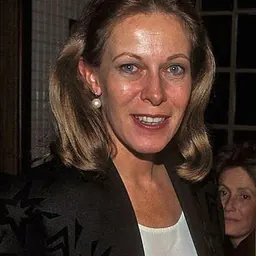




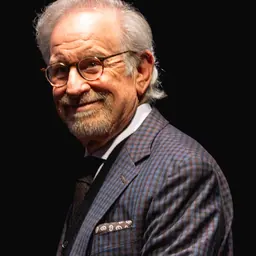
Related people
Same field, nearest in time
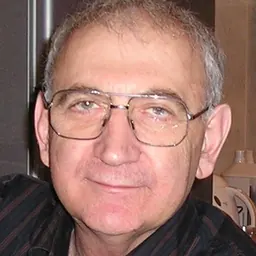
Contemporaries
People whose lives overlapped François Truffaut's


Frequently asked questions
Who was François Truffaut?
French film director (1932–1984)
When was François Truffaut born?
François Truffaut was born on 6 February 1932 in Paris, 17th arrondissement of Paris.
When did François Truffaut die?
François Truffaut died on 21 October 1984 in Neuilly-sur-Seine.
What was François Truffaut's occupation?
François Truffaut was a film director, film producer, film critic, actor, director and film screenwriter.
What nationality was François Truffaut?
François Truffaut was French.
Sources & further reading
· Wikipedia: François Truffaut
Cite this page
APA: Biography.guide. (2026). François Truffaut. https://biography.guide/francois-truffaut/
MLA: "François Truffaut." Biography.guide, https://biography.guide/francois-truffaut/.
Chicago: "François Truffaut." Biography.guide. https://biography.guide/francois-truffaut/.
Data last updated: 2026-09-20 · Spot an error? Report a correction.
Portrait: Wikimedia Commons · author & licence
Page generated 2026-09-27 04:57 UTC