
About Marston Morse
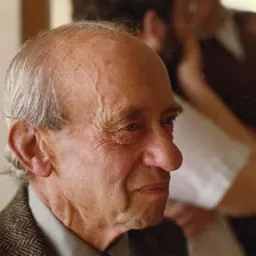
Lived 1892 – 1977 (aged 85). Marston Morse was an American mathematician, topologist and university teacher, known for Morse theory.
Harold Calvin Marston Morse (March 24, 1892 – June 22, 1977) was an American mathematician best known for his work on the calculus of variations in the large, a subject where he introduced the technique of differential topology now known as Morse theory. The Morse–Palais lemma, one of the key results in Morse theory, is named after him, as is the Thue–Morse sequence, an infinite binary sequence with many applications.
He was elected to the American Academy of Arts and Sciences in 1929, the United States National Academy of Sciences in 1932, and the American Philosophical Society in 1936. In 1933 he was awarded the Bôcher Memorial Prize for his work in mathematical analysis. J. Robert Oppenheimer described Morse as "almost a statesman of mathematics."
Biography Morse was born in Waterville, Maine to Ella Phoebe Marston and Howard Calvin Morse in 1892. He received his bachelor's degree from Colby College (also in Waterville) in 1914. At Harvard University, he received both his master's degree in 1915 and his PhD in 1917. He wrote his PhD thesis, Certain Types of Geodesic Motion of a Surface of Negative Curvature, under the direction of George David Birkhoff.
Morse was married on June 20, 1922 to Celeste Phelps and they had two children, Meroe and Dryden. The couple divorced. He later married Louise Jefferys on June 13, 1940. They had five children, Julia, William, Elizabeth, Peter, and Louise.
Morse spent most of his career on a single subject, now known as Morse theory, a branch of differential topology that enables one to analyze the topology of a smooth manifold by studying differentiable functions on that manifold. Morse originally applied his theory to geodesics (critical points of the energy functional on paths); these techniques were used in Raoul Bott's proof of his periodicity theorem. Morse theory is a very important subject in modern mathematical physics, such as string theory.
Morse died on June 22, 1977, at his home in Princeton, New Jersey. His second wife, Louise Jeffreys, died in 2016.
Selected publications
Articles
Books
with Stewart Cairns: 2nd edn. Dover, 2007
Film , Mathematical Association of America Lecture Films, 1966
Don’t just read it —
keep it.
Full-length biographies made to live with: read them, listen on the way to work, watch them tonight.
- E-book
- Audio
- Video
Instant download · yours to keep · every purchase keeps this site free
Important facts
People in Marston Morse's life
Named in this biography and alive at the same time


Related people
Same field, nearest in time

Contemporaries
People whose lives overlapped Marston Morse's

Frequently asked questions
Who was Marston Morse?
American mathematician (1892–1977)
When was Marston Morse born?
Marston Morse was born on 24 March 1892 in Waterville.
When did Marston Morse die?
Marston Morse died on 22 June 1977 in Princeton.
What was Marston Morse's occupation?
Marston Morse was a mathematician, topologist and university teacher.
What was Marston Morse known for?
Marston Morse was known for Morse theory.
What nationality was Marston Morse?
Marston Morse was American.
Sources & further reading
Cite this page
APA: Biography.guide. (2026). Marston Morse. https://biography.guide/marston-morse/
MLA: "Marston Morse." Biography.guide, https://biography.guide/marston-morse/.
Chicago: "Marston Morse." Biography.guide. https://biography.guide/marston-morse/.
Data last updated: 2026-09-20 · Spot an error? Report a correction.
Page generated 2026-09-27 05:32 UTC