
About George Paget Thomson
Lived 1892 – 1975 (aged 83). George Paget Thomson was a British physicist, nuclear physicist and university teacher, known for Electron diffraction.
Sir George Paget Thomson (3 May 1892 – 10 September 1975) was a British experimental physicist who shared the 1937 Nobel Prize in Physics with Clinton Davisson "for their experimental discovery of the diffraction of electrons by crystals." His father, J. J. Thomson, won the Nobel Prize in 1906 "for his theoretical and experimental investigations on the conduction of electricity by gases". It has been said that the elder Thomson won the Nobel for showing the electron is a particle, the younger for showing it is a wave.
Education and military service George Paget Thomson was born on 3 May 1892 in Cambridge, England, the son of physicist and Nobel laureate J. J. Thomson and Rose Elisabeth Paget, the daughter of George Edward Paget.
Thomson attended The Perse School, before going on to read mathematics and physics at Trinity College, Cambridge. After graduating in 1913, he went to the Cavendish Laboratory to do research under his father, until the outbreak of World War I the following year, when he was commissioned into the Queen's Royal West Surrey Regiment. After brief service in France, he transferred to the Royal Flying Corps the following year to undertake research on aerodynamics at the Royal Aircraft Establishment at Farnborough and elsewhere. He resigned from his commission as a captain in 1920.
Career and research In 1919, Thomson became a Fellow of and a lecturer at Corpus Christi College, Cambridge. In 1922, he was appointed Professor of Natural Philosophy at the University of Aberdeen in Scotland. By scattering electrons through thin metallic films (3 × 10⁻⁸ m thick) with known crystal structures, such as aluminium, gold and platinum, he found the dimensions of the observed diffraction patterns. In each case, his observed diffractions were within 5 percent of the predicted values given by Louis de Broglie's wave theory. This discovery provided further evidence for the principle of wave–particle duality, which had first been posited by de Broglie in the 1920s as what is often called the de Broglie hypothesis.
In 1937, Thomson was awarded the Nobel Prize in Physics for his work in discovering the wave-like properties of matter. He shared the prize with the American physicist Clinton Davisson, who had made the same discovery independently.
In 1929, Thomson became a non-resident lecturer at Cornell University in Ithaca, New York.
Thomson died on 10 September 1975 in Cambridge at the age of 83. He is buried in Grantchester parish churchyard to the south of Cambridge.
Family In 1924, Thomson married Kathleen Buchanan Smith, the daughter of George Adam Smith, who served as Principal of the University of Aberdeen (1909–1935). They had two sons and two daughters. Kathleen died in 1941.
One of their sons, John Thomson (1927–2018), became a senior diplomat who served as High Commissioner to India (1977–1982) and as Permanent Representative to the United Nations (1982–1987). Their grandson, Adam Thomson (born 1955), also became a senior diplomat, serving as High Commissioner to Pakistan (2010–2013) and as Permanent Representative to NATO (2014–2016). Another son, David Paget Thomson (1931–2022), was a merchant banker. One daughter, Lillian Clare Thomson (born 1929), married the South African economist and mountaineer Johannes de Villiers Graaff.
Recognition Memberships Year Organisation Type 1923 Royal Society of Edinburgh Fellow 1930 Royal Society Fellow
Awards Year Organisation Award Citation 1932 Franklin Institute Howard N. Potts Medal "For diffraction of electrons by thin films." 1937 Royal Swedish Academy of Sciences Nobel Prize in Physics "For their experimental discovery of the diffraction of electrons by crystals." 1949 Royal Society Royal Medal "For his distinguished contributions to many branches of atomic physics, and especially for his work in establishing the wave properties of the electron." 1960 Institution of Electrical Engineers Faraday Medal —
Chivalric titles Year Head of state Title 1943 George VI Knight Bachelor
Don’t just read it —
keep it.
Full-length biographies made to live with: read them, listen on the way to work, watch them tonight.
- E-book
- Audio
- Video
Instant download · yours to keep · every purchase keeps this site free
Important facts
People in George Paget Thomson's life
Named in this biography and alive at the same time
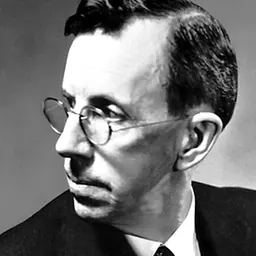
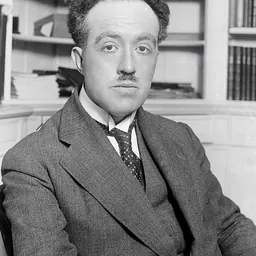





Related people
Same field, nearest in time
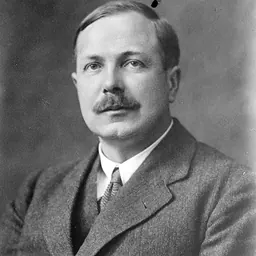
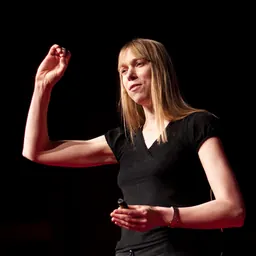
Contemporaries
People whose lives overlapped George Paget Thomson's






Frequently asked questions
Who was George Paget Thomson?
English physicist (1892–1975)
When was George Paget Thomson born?
George Paget Thomson was born on 3 May 1892 in Cambridge.
When did George Paget Thomson die?
George Paget Thomson died on 10 September 1975 in Cambridge.
What was George Paget Thomson's occupation?
George Paget Thomson was a physicist, nuclear physicist and university teacher.
What was George Paget Thomson known for?
George Paget Thomson was known for Electron diffraction.
What nationality was George Paget Thomson?
George Paget Thomson was British.
Sources & further reading
· Wikipedia: George Paget Thomson
· DBpedia: George Paget Thomson
Cite this page
APA: Biography.guide. (2026). George Paget Thomson. https://biography.guide/george-paget-thomson/
MLA: "George Paget Thomson." Biography.guide, https://biography.guide/george-paget-thomson/.
Chicago: "George Paget Thomson." Biography.guide. https://biography.guide/george-paget-thomson/.
Data last updated: 2026-09-20 · Spot an error? Report a correction.
Page generated 2026-09-27 05:30 UTC