
About Atle Selberg
Lived 1917 – 2007 (aged 90). Atle Selberg was a Norwegian and American mathematician and university teacher, known for Chowla–Selberg formula, Critical line theorem and Local rigidity.
Institute for Advanced Study C.L. Siegel invited Selberg to visit the Institute for Advanced Study in Princeton, New Jersey in 1947. He moved to the United States and was an associate professor at Syracuse University briefly. He returned to the IAS in 1949, where he remained until his death. During the 1950s, he worked on introducing spectral theory into number theory, culminating in his development of the Selberg trace formula, the most famous and influential of his results. In its simplest form, this establishes a duality between the lengths of closed geodesics on a compact Riemann surface and the eigenvalues of the Laplacian, which is analogous to the duality between the prime numbers and the zeros of the zeta function.
He generally worked alone. His only coauthor was Sarvadaman Chowla.
Selberg was awarded the 1986 Wolf Prize in Mathematics. He was also awarded an honorary Abel Prize in 2002, its founding year, before the awarding of the regular prizes began.
Selberg received many distinctions for his work, in addition to the Fields Medal, the Wolf Prize and the Gunnerus Medal. He was elected to the Norwegian Academy of Science and Letters, the Royal Danish Academy of Sciences and Letters and the American Academy of Arts and Sciences.
In 1972, he was awarded an honorary degree, doctor philos. honoris causa, at the Norwegian Institute of Technology, later part of Norwegian University of Science and Technology.
His first wife, Hedvig Liebermann, who Selberg married in 1947, died in 1995. With her, Selberg had two children: Ingrid Selberg (married to playwright Mustapha Matura) and Lars Selberg. In 2003, Atle Selberg married Betty Frances "Mickey" Compton (born in 1929).
He died at home in Princeton, New Jersey on 6 August 2007 of heart failure. Upon his death, he was survived by his widow, daughter, son, and four grandchildren.
Selected publications
Selberg's collected works were published in two volumes. The first volume contains 41 articles, and the second volume contains three additional articles, in addition to Selberg's lectures on sieves. Description at M.I.T. Press Bookstore Description at M.I.T. Press Bookstore
Don’t just read it —
keep it.
Full-length biographies made to live with: read them, listen on the way to work, watch them tonight.
- E-book
- Audio
- Video
Instant download · yours to keep · every purchase keeps this site free
Important facts
more
Selberg class, Selberg integral, Selberg sieve, Selberg trace formula, Selberg zeta function, Selberg's conjecture, Selberg's identity, Weakly symmetric spacePeople in Atle Selberg's life
Named in this biography and alive at the same time


Related people
Same field, nearest in time

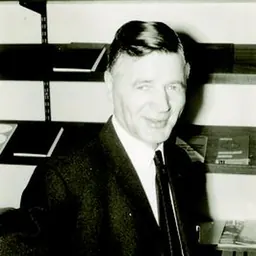
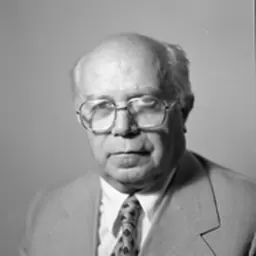
Contemporaries
People whose lives overlapped Atle Selberg's

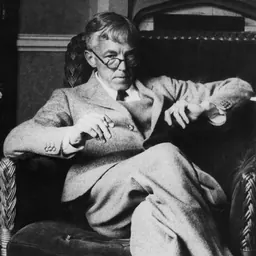
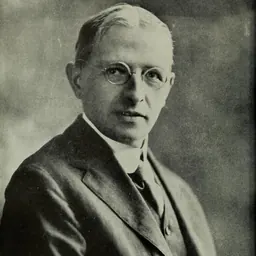
Frequently asked questions
Who was Atle Selberg?
Norwegian mathematician (1917–2007)
When was Atle Selberg born?
Atle Selberg was born on 14 June 1917 in Langesund, Langesund Municipality.
When did Atle Selberg die?
Atle Selberg died on 6 August 2007 in Princeton.
What was Atle Selberg's occupation?
Atle Selberg was a mathematician and university teacher.
What was Atle Selberg known for?
Atle Selberg was known for Chowla–Selberg formula, Critical line theorem, Local rigidity, Maass–Selberg relations, Parity problem (sieve theory) and Rankin–Selberg method.
What nationality was Atle Selberg?
Atle Selberg was Norwegian and American.
Sources & further reading
Cite this page
APA: Biography.guide. (2026). Atle Selberg. https://biography.guide/atle-selberg/
MLA: "Atle Selberg." Biography.guide, https://biography.guide/atle-selberg/.
Chicago: "Atle Selberg." Biography.guide. https://biography.guide/atle-selberg/.
Data last updated: 2026-09-20 · Spot an error? Report a correction.
Page generated 2026-09-27 05:21 UTC