
About Andrew Gleason
Lived 1921 – 2008 (aged 86). Andrew Gleason was an American mathematician, university teacher and cryptographer, known for Gleason's theorem, Gleason–Prange theorem and Greenwood–Gleason graph.
Andrew Mattei Gleason (November 4, 1921 – October 17, 2008) was an American mathematician who made fundamental contributions to widely varied areas of mathematics, including the solution of Hilbert's fifth problem, and was a leader in reform and innovation in teaching at all levels. Gleason's theorem in quantum logic and the Greenwood–Gleason graph, an important example in Ramsey theory, are named for him.
As a young World War II naval officer, Gleason broke German and Japanese military codes. After the war he spent his entire academic career at Harvard University, from which he retired in 1992. His numerous academic and scholarly leadership posts included chairmanship of the Harvard Mathematics Department and the Harvard Society of Fellows, and presidency of the American Mathematical Society. He continued to advise the United States government on cryptographic security, and the Commonwealth of Massachusetts on education for children, almost until the end of his life.
Gleason won the Newcomb Cleveland Prize in 1952 and the Gung–Hu Distinguished Service Award of the American Mathematical Society in 1996. He was a member of the National Academy of Sciences and of the American Philosophical Society, and held the Hollis Chair of Mathematics and Natural Philosophy at Harvard.
He was fond of saying that proofs "really aren't there to convince you that something is truethey're there to show you why it is true." He grew up in Bronxville, New York, where his father was the curator of the New York Botanical Garden.
After the Japanese attacked Pearl Harbor during his senior year, Gleason applied for a commission in the US Navy, and on graduation joined the team working to break Japanese naval codes. Berko, a psycholinguist, was a professor at Boston University for many years.
He retired from Harvard in 1992 but remained active in service to Harvard (as chair of the Society of Fellows, for example) and working with the Massachusetts Board of Education.
At Harvard he "regularly taught at every level", That effort led to publication of his Fundamentals of Abstract Analysis, of which one reviewer wrote:
Cryptanalysis work Report (1945) by Gleason and colleagues the German Enigma. "The recovery of wiring from a depth can be a very and try it." During World War II Gleason was part of OP-20-G, the U.S. Navy's signals intelligence and cryptanalysis group. and combinatorics. Gleason was a frog: he worked as a problem solver rather than a visionary formulating grand theories.
Hilbert's fifth problem Journal entry (1947): "July 10. We hung out the clothes to dry this fifth." In 1900 David Hilbert posed 23 problems he felt would be central to next century of mathematics research. Hilbert's fifth problem concerns the characterization of Lie groups by their actions on topological spaces: to what extent does their topology provide information sufficient to determine their geometry?
The "restricted" version of Hilbert's fifth problem (solved by Gleason) asks, more specifically, whether every locally Euclidean topological group is a Lie group. That is, if a group G has the structure of a topological manifold, can that structure be strengthened to a real analytic structure, so that within any neighborhood of an element of G, the group law is defined by a convergent power series, and so that overlapping neighborhoods have compatible power series definitions? Prior to Gleason's work, special cases of the problem had been solved by L. E. J. Brouwer, John von Neumann, Lev Pontryagin, and Garrett Birkhoff, among others.
Quantum mechanics
The Born rule states that an observable property of a quantum system is defined by a Hermitian operator on a separable Hilbert space, that the only observable values of the property are the eigenvalues of the operator, and that the probability of the system being observed in a particular eigenvalue is the square of the absolute value of the complex number obtained by projecting the state vector (a point in the Hilbert space) onto the corresponding eigenvector. George Mackey had asked whether Born's rule is a necessary consequence of a particular set of axioms for quantum mechanics, and more specifically whether every measure on the lattice of projections of a Hilbert space can be defined by a positive operator with unit trace. Though Richard Kadison proved this was false for two-dimensional Hilbert spaces, Gleason's theorem (published 1957) shows it to be true for higher dimensions. In 1953, the calculation of R(3,3) was given as a question in the Putnam Competition. In 1955, motivated by this problem, Gleason and his co-author Robert E. Greenwood made significant progress in the computation of Ramsey numbers with their proof that R(3,4) = 9, R(3,5) = 14, and R(4,4) = 18. Since then, only five more of these values have been found. In the same 1955 paper, Greenwood and Gleason also computed the multicolor Ramsey number R(3,3,3): the smallest number r such that, if a complete graph on r vertices has its edges colored with three colors, then it necessarily contains a monochromatic triangle. As they showed, R(3,3,3) = 17; this remains the only nontrivial multicolor Ramsey number whose exact value is known. (sometimes called the Greenwood–Gleason graph).
Ronald Graham writes that the paper by Greenwood and Gleason "is now recognized as a classic in the development of Ramsey theory".
Coding theory
Gleason published few contributions to coding theory, but they were influential ones, During the 1950s and 1960s, he attended monthly meetings on coding theory with Vera Pless and others at the Air Force Cambridge Research Laboratory. Pless, who had previously worked in abstract algebra but became one of the world's leading experts in coding theory during this time, writes that "these monthly meetings were what I
Other areas Gleason founded the theory of Dirichlet algebras, and made other contributions including work on finite geometry and on the enumerative combinatorics of permutations. for his work on Hilbert's fifth problem. He was elected to the National Academy of Sciences and the American Philosophical Society, was a Fellow of the American Academy of Arts and Sciences, and belonged to the Société Mathématique de France.
In 1981 and 1982 he was president of the American Mathematical Society, In 1986 he chaired the organizing committee for the International Congress of Mathematicians in Berkeley, California, and was president of the Congress. that same year, the Mathematics Association of America awarded him the Yueh-Gin Gung and Dr. Charles Y. Hu Distinguished Service to Mathematics Award. A past president of the Association wrote:
After his death a 32-page collection of essays in the Notices of the American Mathematical Society recalled "the life and work of [this] eminent American mathematician", calling him "one of the quiet giants of twentieth-century mathematics, the consummate professor dedicated to scholarship, teaching, and service in equal measure."
Selected publications Research papers
. . . . . .
Books . Corrected reprint, Boston: Jones and Bartlett, 1991. . . Unclassified reprint of a book originally published in 1957 by the National Security Agency, Office of Research and Development, Mathematical Research Division. . Since its original publications this book has been extended to many different editions and variations with additional co-authors.
Film . 63 minutes, black & white. Produced by Richard G. Long and directed by Allan Hinderstein.
Don’t just read it —
keep it.
Full-length biographies made to live with: read them, listen on the way to work, watch them tonight.
- E-book
- Audio
- Video
Instant download · yours to keep · every purchase keeps this site free
Important facts
Family & relationships
People in Andrew Gleason's life
Named in this biography and alive at the same time


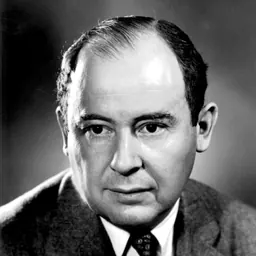
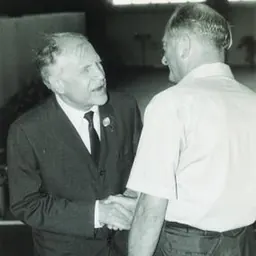
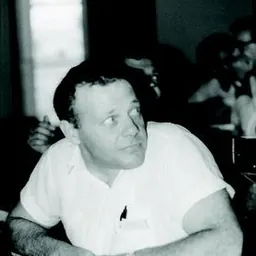
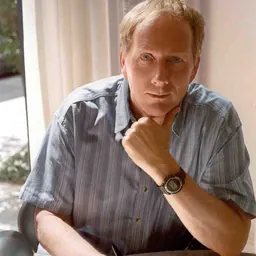
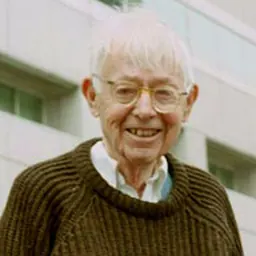

Related people
Same field, nearest in time

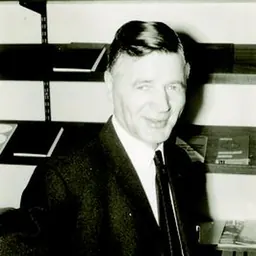
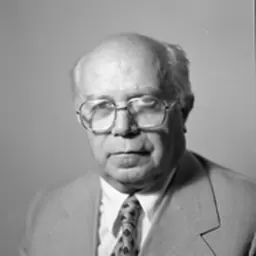

Contemporaries
People whose lives overlapped Andrew Gleason's




Frequently asked questions
Who was Andrew Gleason?
American mathematician (1921-2008)
When was Andrew Gleason born?
Andrew Gleason was born on 4 November 1921 in Fresno.
When did Andrew Gleason die?
Andrew Gleason died on 17 October 2008 in Cambridge.
What was Andrew Gleason's occupation?
Andrew Gleason was a mathematician, university teacher and cryptographer.
What was Andrew Gleason known for?
Andrew Gleason was known for Gleason's theorem, Gleason–Prange theorem, Greenwood–Gleason graph and Hilbert's fifth problem.
What nationality was Andrew Gleason?
Andrew Gleason was American.
Sources & further reading
Cite this page
APA: Biography.guide. (2026). Andrew Gleason. https://biography.guide/andrew-gleason/
MLA: "Andrew Gleason." Biography.guide, https://biography.guide/andrew-gleason/.
Chicago: "Andrew Gleason." Biography.guide. https://biography.guide/andrew-gleason/.
Data last updated: 2026-09-20 · Spot an error? Report a correction.
Page generated 2026-09-27 05:26 UTC