
About Lev Pontryagin
Lived 1908 – 1988 (aged 79). Lev Pontryagin was a Russian mathematician and university teacher, known for Andronov–Pontryagin criterion, Pontryagin class and Pontryagin cohomology operation.
Lev Semyonovich Pontryagin (, also written Pontriagin or Pontrjagin, first name sometimes anglicized as Leon) (3 September 1908 – 3 May 1988) was a Soviet mathematician. Completely blind from the age of 14, he made major discoveries in a number of fields of mathematics, including algebraic topology, differential topology and optimal control.
Early life and career Pontryagin was born in Moscow and lost his eyesight completely due to an unsuccessful eye surgery after a primus stove explosion when he was 14. His mother Tatyana Andreyevna, who did not know mathematical symbols, read mathematical books and papers (notably those of Heinz Hopf, J. H. C. Whitehead, and Hassler Whitney) to him, and later worked as his secretary. His mother used alternative names for math symbols, such as "tails up" for the set-union symbol .
In 1925 he entered Moscow State University, where he was strongly influenced by the lectures of Pavel Alexandrov who would become his doctoral thesis advisor. After graduating in 1929, he obtained a position at Moscow State University. In 1934 he joined the Steklov Institute in Moscow. In 1970 he became vice president of the International Mathematical Union.
Work Pontryagin worked on duality theory for homology while still a student. He went on to lay foundations for the abstract theory of the Fourier transform, now called Pontryagin duality. Using these tools, he was able to solve the case of Hilbert's fifth problem for abelian groups in 1934.
In 1935, he was able to compute the homology groups of the classical compact Lie groups, which he would later call his greatest achievement.
With René Thom, he is regarded as one of the co-founders of cobordism theory, and co-discoverers of the central idea of this theory, that framed cobordism and stable homotopy are equivalent. This led to the introduction around 1940 of a theory of certain characteristic classes, now called Pontryagin classes, designed to vanish on a manifold that is a boundary.
In 1942 he introduced the cohomology operations now called Pontryagin squares. Moreover, in operator theory there are specific instances of Krein spaces called Pontryagin spaces.
Starting in 1952, he worked in optimal control theory. His maximum principle is fundamental to the modern theory of optimization. He also introduced the idea of a bang–bang principle, to describe situations where the applied control at each moment is either the maximum positive 'steer', or the maximum negative 'steer'.
Pontryagin authored several influential monographs as well as popular textbooks in mathematics.
Pontryagin's students include Dmitri Anosov, Vladimir Boltyansky, Revaz Gamkrelidze, Yevgeny Mishchenko, Mikhail Postnikov, Vladimir Rokhlin, and Mikhail Zelikin.
Controversy and antisemitism allegations Pontryagin participated in a few notorious political campaigns in the Soviet Union. In 1930, he and several other young members of the Moscow Mathematical Society publicly denounced as counter-revolutionary the Society's head Dmitri Egorov, who openly supported the Russian Orthodox Church and had recently been arrested. They then proceeded to follow their plan of reorganizing the Society. When a prominent Soviet Jewish mathematician, Grigory Margulis, was selected by the IMU to receive the Fields Medal at the upcoming 1978 ICM, Pontryagin, who was a member of the executive committee of the IMU at the time, vigorously objected. Although the IMU stood by its decision to award Margulis the Fields Medal, Margulis was denied a Soviet exit visa by the Soviet authorities and was unable to attend the 1978 ICM in person. In his memoirs Pontryagin claims that he struggled with Zionism, which he considered a form of racism. 1952 - Foundations of Combinatorial Topology (translated from 1947 original Russian edition) 2015 Dover reprint 1962 - Ordinary Differential Equations (translated from Russian by Leonas Kacinskas and Walter B. Counts)
1962 - with Vladimir Boltyansky, Revaz Gamkrelidze, and : The Mathematical Theory of Optimal Processes
Don’t just read it —
keep it.
Full-length biographies made to live with: read them, listen on the way to work, watch them tonight.
- E-book
- Audio
- Video
Instant download · yours to keep · every purchase keeps this site free
Important facts
People in Lev Pontryagin's life
Named in this biography and alive at the same time


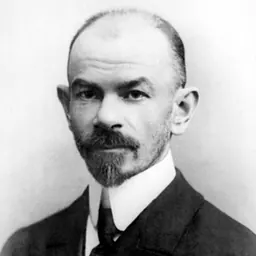

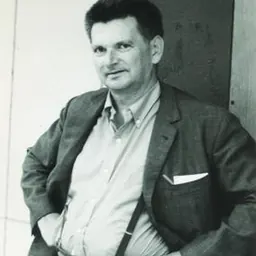
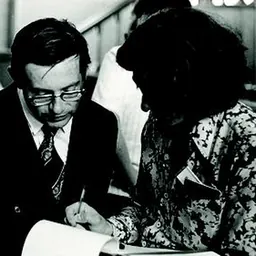

Related people
Same field, nearest in time

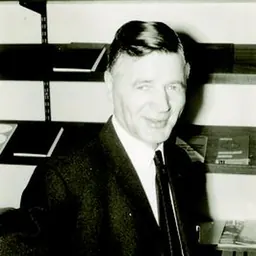
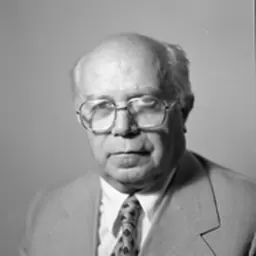
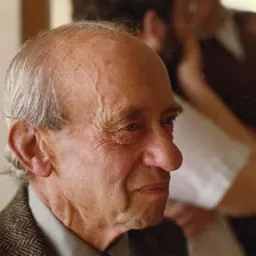
Contemporaries
People whose lives overlapped Lev Pontryagin's


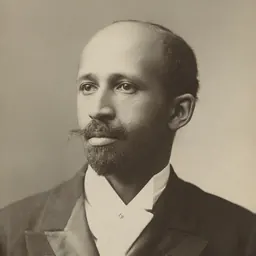

Frequently asked questions
Who was Lev Pontryagin?
Soviet mathematician (1908–1988)
When was Lev Pontryagin born?
Lev Pontryagin was born on 3 September 1908 in Moscow.
When did Lev Pontryagin die?
Lev Pontryagin died on 3 May 1988 in Moscow.
What was Lev Pontryagin's occupation?
Lev Pontryagin was a mathematician and university teacher.
What was Lev Pontryagin known for?
Lev Pontryagin was known for Andronov–Pontryagin criterion, Pontryagin class, Pontryagin cohomology operation, Pontryagin duality and Pontryagin's maximum principle.
What nationality was Lev Pontryagin?
Lev Pontryagin was Russian.
Sources & further reading
Cite this page
APA: Biography.guide. (2026). Lev Pontryagin. https://biography.guide/lev-pontryagin/
MLA: "Lev Pontryagin." Biography.guide, https://biography.guide/lev-pontryagin/.
Chicago: "Lev Pontryagin." Biography.guide. https://biography.guide/lev-pontryagin/.
Data last updated: 2026-09-25 · Spot an error? Report a correction.
Page generated 2026-09-27 05:12 UTC